Table of Contents
When travelers think of Agra, the world-famous Taj Mahal often comes to mind first. However, just a short distance away stands another masterpiece of Mughal grandeur—the Agra Fort. A UNESCO World Heritage Site, the Agra Fort is one of India’s most significant historical monuments and an essential stop for anyone interested in Mughal history, royal palaces, and architectural brilliance.
Known as the Akbar Fort Agra, this massive red sandstone fortress served as the primary residence of Mughal emperors for generations. The fort showcases remarkable Agra Fort architecture, blending Persian, Islamic, and Indian design traditions into one extraordinary complex.
In this detailed guide, you’ll discover the history, architecture, attractions, visitor information, and fascinating stories hidden inside Agra Fort.
Agra Fort History: A Legacy of Mughal Power
One of the most frequently asked questions is: Who constructed Agra Fort?
The answer is Emperor Akbar.
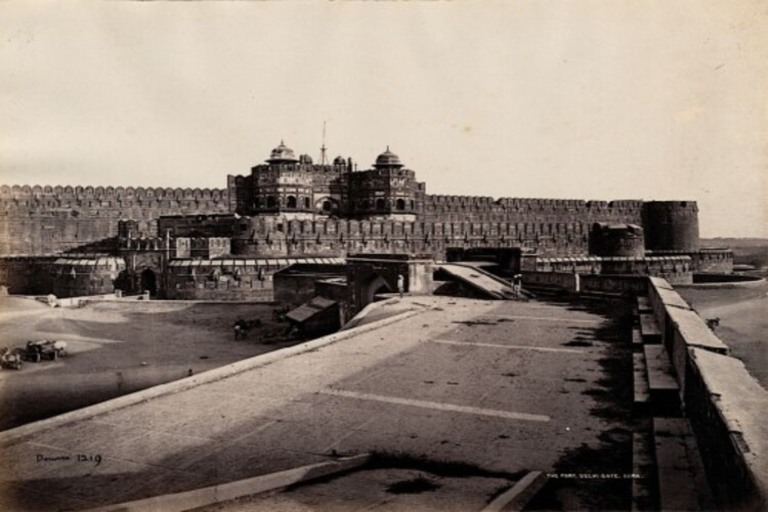
The Agra Fort is built by Mughal Emperor Akbar in 1565 and completed around 1573. Therefore, if you wonder who made Red Fort of Agra, Agra Fort made by whom, or Agra Red Fort built by whom, the answer remains Emperor Akbar.
Before the Mughal era, the site was occupied by a brick fort known as Badalgarh. Recognizing its strategic importance, Akbar ordered the construction of a magnificent red sandstone fortress that would become the center of Mughal administration.
The Red Fort of Agra was built by thousands of skilled artisans and laborers under Akbar’s supervision. Over time, his successors Jahangir and Shah Jahan added marble palaces, audience halls, and beautiful gardens that enhanced the fort’s beauty.
The fort later became famous as the place where Shah Jahan spent his final years imprisoned by his son Aurangzeb, gazing toward the Taj Mahal from a marble pavilion.
Agra Fort Architecture: A Masterpiece of Mughal Design
The most impressive feature of the monument is undoubtedly its stunning Agra Fort architecture.
Spread across approximately 94 acres, the fort is protected by massive walls rising nearly 70 feet high. The fort combines military strength with royal luxury, making it one of the finest examples of Mughal construction.
Key Features of Agra Fort Architecture
- Massive red sandstone walls
- Defensive gates and watchtowers
- Marble palaces
- Persian-inspired gardens
- Intricate carvings and inlay work
- Islamic and Hindu architectural influences
- Courtyards and royal chambers
The fort beautifully reflects Akbar art and architecture, where different cultural styles were merged into one harmonious design.
Visitors often search for Agra Fort plan before visiting because the complex contains numerous palaces, halls, gardens, and royal residences spread across a large area.
Where Is Agra Fort Located?
Many travelers ask, where is Agra Fort located?
The answer is simple.
The Agra Fort location is on the banks of the Yamuna River in Agra, Uttar Pradesh. It is situated just 2.5 kilometers from the Taj Mahal, making it easy to visit both monuments on the same day.
Because of its central location, Fort Agra remains one of the most visited attractions in northern India.
Visitors booking an Agra tour with Taj Explorer often combine Agra Fort with the Taj Mahal, Mehtab Bagh, and Itmad-ud-Daulah’s Tomb for a complete heritage experience.
Inside Agra Fort: Top Attractions You Must See
Exploring inside Agra Fort is like stepping into a living museum of Mughal royalty. Every courtyard, palace, and pavilion tells a fascinating story.
Amar Singh Gate
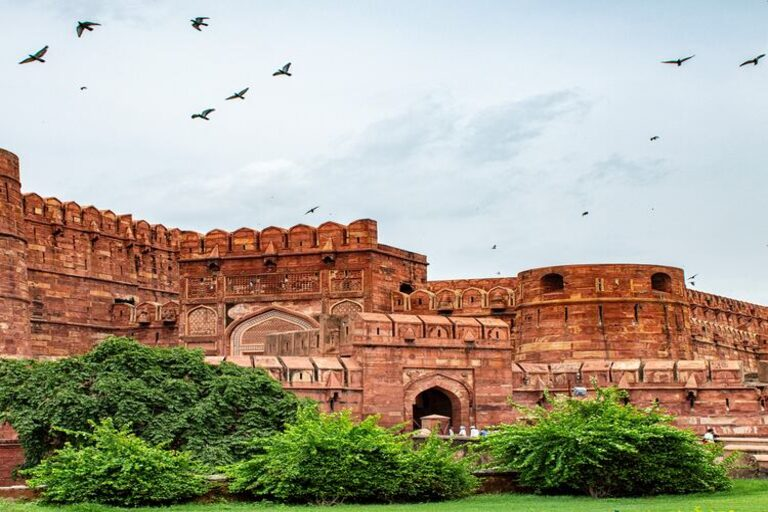
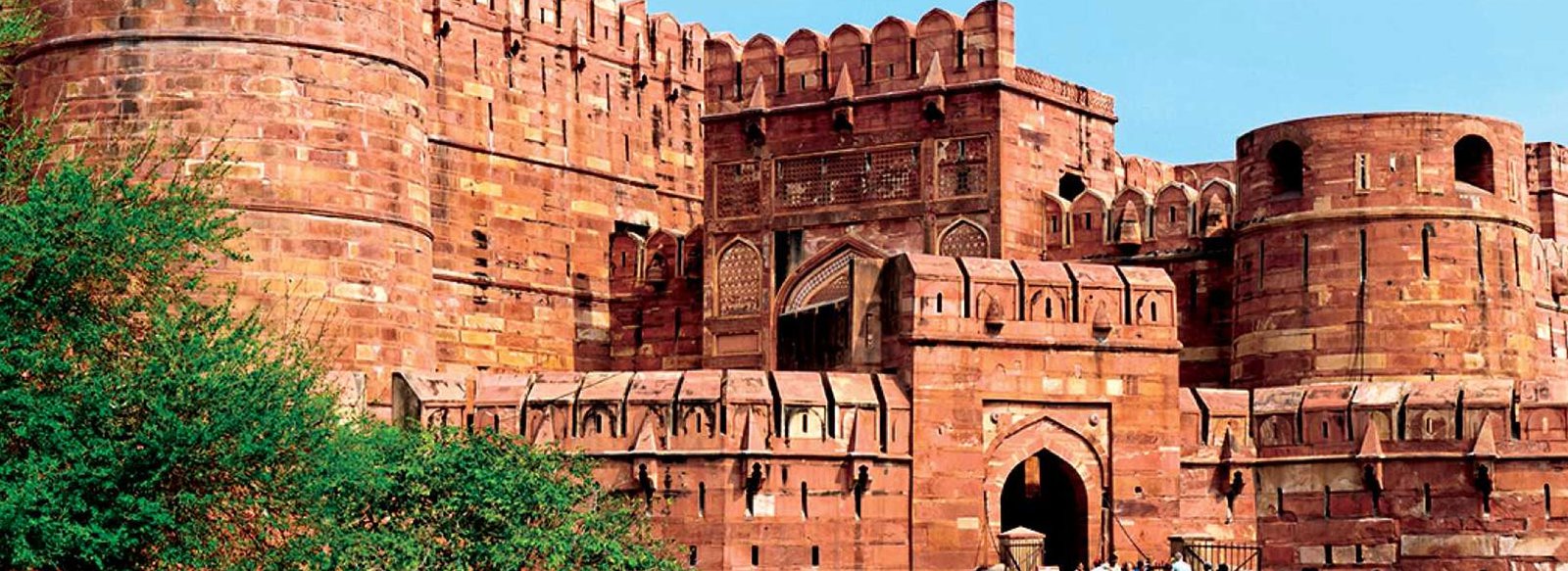
The Amar Singh Gate serves as the main entrance for tourists today.
Originally known as Akbar Gate, this grand entrance showcases impressive defensive architecture. Massive red sandstone walls, intricate carvings, and strategic passageways highlight the military brilliance of the Mughal Empire.
Jahangir Palace (Akbar Palace Agra)
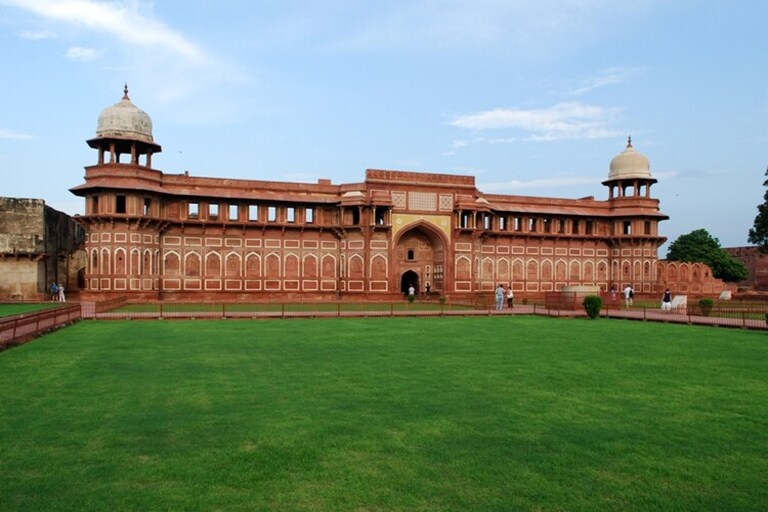
One of the most beautiful structures inside the fort is Akbar Palace Agra, commonly known as Jahangir Mahal.
Built by Akbar for his son Jahangir, the palace combines Rajput and Islamic architectural styles. The palace features:
- Ornate balconies
- Decorative stone brackets
- Beautiful courtyards
- Intricate carvings
It remains one of the finest examples of Akbar art and architecture.
Khas Mahal
Built by Shah Jahan, Khas Mahal represents the emperor’s love for white marble.
The elegant palace features:
- Marble pavilions
- Decorative arches
- Beautiful fountains
- Stunning river views
The structure contrasts beautifully with Akbar’s red sandstone buildings.
Anguri Bagh
Located near Khas Mahal, Anguri Bagh is a beautifully designed Mughal garden.
Its symmetrical layout follows the traditional Charbagh pattern, featuring pathways, fountains, and flower beds.
This garden once served as a private retreat for royal women.
Diwan-i-Khas
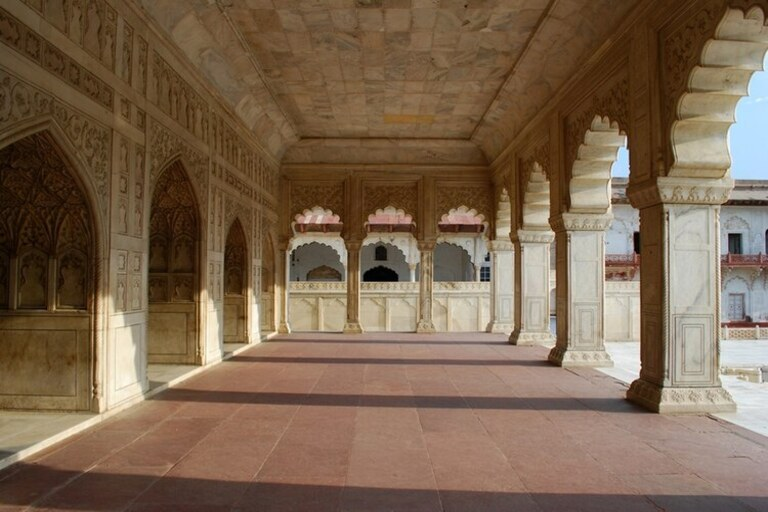
The Hall of Private Audience, known as Diwan-i-Khas, hosted meetings between emperors and important guests.
Its elegant marble columns, floral carvings, and Persian-inspired decorations make it one of the highlights of inside Agra Fort.
Diwan-i-Am
The Hall of Public Audience allowed emperors to hear public grievances and administer justice.
This impressive structure contains:
- Decorative arches
- Marble throne platform
- Large audience space
It represents the administrative heart of Mughal governance.
Sheesh Mahal
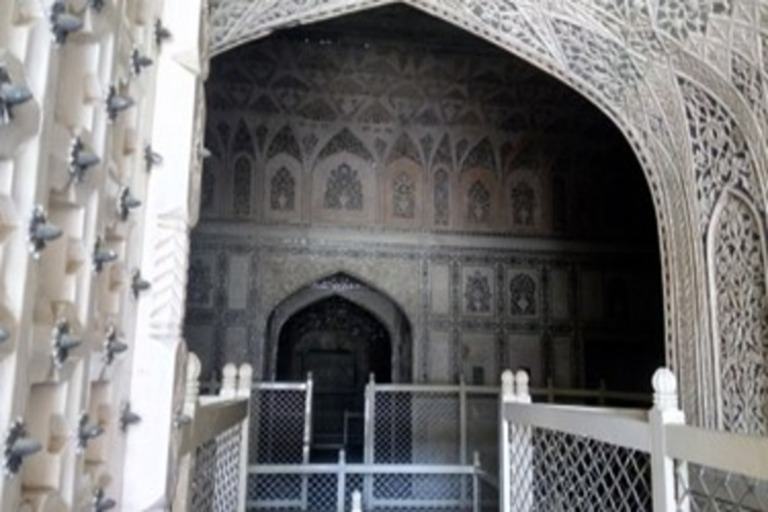
The Sheesh Mahal, or Mirror Palace, dazzles visitors with intricate mirror work and decorative glass mosaics.
Built as a royal bathhouse, the palace reflects luxury and craftsmanship at their finest.
Although parts of the palace are restricted today, visitors can still admire its remarkable exterior.
Musamman Burj
This octagonal tower holds special historical significance.
It is believed Shah Jahan spent his final years here after being imprisoned by Aurangzeb. From this pavilion, he could see the Taj Mahal across the Yamuna River.
The views are among the most memorable experiences in the fort.
Machchi Bhawan
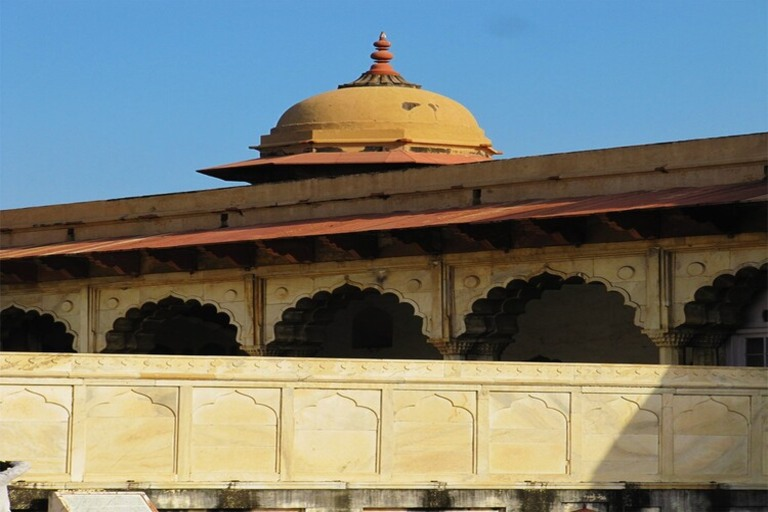
Once a royal leisure area, Machchi Bhawan featured ornamental pools filled with fish and beautiful fountains.
The courtyard remains a fascinating reminder of the luxurious lifestyle enjoyed by Mughal rulers.
Agra Fort Top View: A Bird’s-Eye Perspective
Travelers often search online for Agra Fort top view images because the fort’s layout is truly impressive when seen from above.
An Agra Fort top view reveals:
- Massive defensive walls
- Geometric garden layouts
- Palatial complexes
- Strategic riverfront positioning
The aerial perspective highlights the scale and sophistication of Mughal urban planning.
Interesting Facts About Agra Fort
Who Made Red Fort of Agra?
If you’re still wondering who made Red Fort of Agra, the credit goes primarily to Emperor Akbar, who initiated its construction in 1565.
Agra Fort Is Built By Which Emperor?
The Agra Fort is built by Akbar, while later additions were made by Jahangir and Shah Jahan.
Agra Fort Made By Whom?
The fort was commissioned by Akbar and expanded by future Mughal rulers.
Snowfall in Agra in History Akbar
An unusual search phrase often seen online is snowfall in Agra in history Akbar.
Historically, Agra’s climate has been too warm for regular snowfall. There are no verified records indicating actual snowfall during Akbar’s reign. However, Mughal chronicles occasionally mention extreme winter conditions, which may have contributed to this curiosity.
Agra Fort Information for Visitors
Here is essential Agra Fort information for travelers planning a visit.
Opening Hours
- Open Daily
- 6:00 AM to 6:00 PM
Entry Fee
Indian Visitors:
- ₹50 (cash)
- ₹35 (online)
Foreign Visitors:
- ₹650 (cash)
- ₹550 (online)
Children below 15 years:
- Free Entry
Sound and Light Show
The evening show provides fascinating insights into the fort’s history through storytelling, lights, and music.
Best Time to Visit Agra Fort
The ideal time to visit is between October and March.
During these months:
- Pleasant temperatures
- Comfortable sightseeing conditions
- Better photography opportunities
- Clear views of the Taj Mahal
Early mornings are particularly rewarding for photography enthusiasts.
Agra Fort Images Worth Capturing
Photography lovers will find endless opportunities throughout the monument.
Popular Agra Fort images include:
- Amar Singh Gate
- Jahangir Palace
- Khas Mahal
- Sheesh Mahal
- Diwan-i-Khas
- Anguri Bagh
- Taj Mahal views from Musamman Burj
The contrast between red sandstone and white marble creates stunning visual compositions.
Frequently Asked Questions About Agra Fort
Who constructed Agra Fort?
Agra Fort was constructed by Mughal Emperor Akbar in 1565. If you are wondering who made Red Fort of Agra, the answer is Emperor Akbar, who transformed an older brick fort into the magnificent red sandstone fortress seen today.
Agra Fort is built by which emperor?
Agra Fort is built by Emperor Akbar. Later Mughal rulers, including Jahangir and Shah Jahan, added marble palaces, audience halls, and gardens that enhanced its beauty and grandeur.
Where is Agra Fort located?
The Agra Fort location is in Agra, Uttar Pradesh, on the banks of the Yamuna River. It is located approximately 2.5 kilometers from the Taj Mahal, making it easy to visit both monuments in a single day.
What is special about Agra Fort architecture?
Agra Fort architecture is a remarkable blend of Islamic, Persian, and Hindu design influences. Massive red sandstone walls, marble palaces, decorative carvings, gardens, and royal courtyards make it one of the finest examples of Mughal architecture in India.
What can visitors see inside Agra Fort?
Inside Agra Fort, visitors can explore Jahangir Palace, Khas Mahal, Sheesh Mahal, Diwan-i-Am, Diwan-i-Khas, Anguri Bagh, Musamman Burj, and several other historic structures that showcase Mughal royal life.
What is the best time to visit Agra Fort?
The best time to visit Agra Fort is between October and March when the weather is pleasant and ideal for sightseeing. Early morning visits are recommended for photography and fewer crowds.
Is Agra Fort a UNESCO World Heritage Site?
Yes, the Agra Fort is a UNESCO World Heritage Site recognized for its historical importance, architectural excellence, and role in Mughal history.
How much time is needed to explore Agra Fort?
Most travelers spend 2 to 3 hours exploring the Agra Fort. History enthusiasts and photographers may wish to spend longer discovering the fort’s palaces, gardens, and viewpoints.
Can you see the Taj Mahal from Agra Fort?
Yes. One of the most famous viewpoints inside Agra Fort is Musamman Burj, from where visitors can enjoy beautiful views of the Taj Mahal across the Yamuna River.
Is Agra Fort included in Taj Explorer tours?
Yes. Taj Explorer offers private Agra sightseeing tours, Taj Mahal tours, same-day Agra tours from Delhi, and luxury Golden Triangle itineraries that include Agra Fort along with other major attractions.
Experience Agra Fort with Taj Explorer
A visit to Agra becomes even more memorable when planned with Taj Explorer.
Whether you’re looking for a private heritage tour, a luxury cultural journey, or a same-day excursion, our customized experiences ensure comfort, expert guidance, and seamless travel arrangements.
For travelers visiting Agra, explore our:
- Agra Taj Mahal Tour From Delhi
- Same Day Agra Tour By Car
- Taj Mahal Sunrise Tour
- Agra Sightseeing Tour
- Luxury Golden Triangle Tours
Our carefully designed itineraries help you experience the best of Mughal India while enjoying premium hospitality.
Final Thoughts
The story of the Agra Fort is the story of the Mughal Empire itself. From Akbar’s vision and military genius to Shah Jahan’s passion for marble architecture, every corner reflects centuries of history.
Whether you are fascinated by Agra Fort architecture, curious about who constructed Agra Fort, interested in exploring inside Agra Fort, or searching for detailed Agra Fort information, this UNESCO World Heritage Site offers an unforgettable journey into India’s royal past.
Standing proudly beside the Yamuna River, the fort remains one of the finest examples of Mughal grandeur and one of the most rewarding heritage experiences in India.