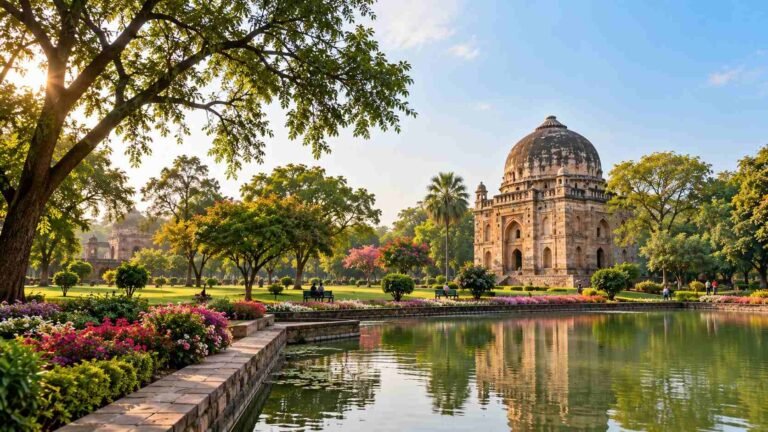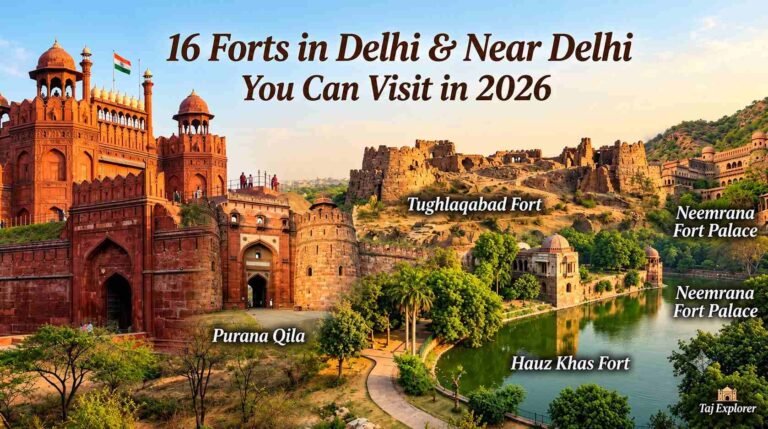


Delhi is more than just India’s capital—it’s a city where every monument tells a fascinating story. From majestic Mughal forts and ancient Islamic architecture to colonial landmarks and centuries-old observatories, the historical places in Delhi offer an unforgettable journey through more than a thousand years of Indian history.
Whether you’re a history enthusiast, architecture lover, photographer, or first-time traveler, exploring the historical sites in Delhi is one of the most rewarding experiences in India. Every monument reflects the grandeur of different dynasties including the Tomars, Delhi Sultanate, Mughals, British Empire, and modern India.
If you’re planning a heritage vacation, a luxury city tour, or adding Delhi to your Golden Triangle itinerary, this guide covers the most iconic historical places in Delhi India that deserve a place on your bucket list.
With Taj Explorer, you can experience these incredible landmarks through private guided tours, luxury transportation, and personalized itineraries that make your journey comfortable, informative, and memorable.
If you’re short on time, our Same Day Delhi Tour by Car lets you experience Delhi’s top heritage attractions comfortably with a private guide.
Why Delhi is India’s Ultimate Historical Destination
Very few cities in the world have witnessed as many empires as Delhi. Over the centuries, rulers built magnificent forts, tombs, palaces, temples, mosques, observatories, gardens, and marketplaces, many of which still stand proudly today.
Today, these Delhi historical sites attract millions of visitors from across the globe every year.
Some of the reasons travelers love Delhi include:
- UNESCO World Heritage Sites
- Magnificent Mughal architecture
- Ancient Sultanate monuments
- Colonial-era landmarks
- Beautiful gardens and archaeological parks
- Vibrant street food and bustling heritage markets
- Easy access through luxury guided tours
Whether you’re exploring Old Delhi’s narrow lanes or New Delhi’s grand boulevards, every corner has a story waiting to be discovered.
1. Qutub Minar Complex – Delhi’s Tallest Historical Masterpiece
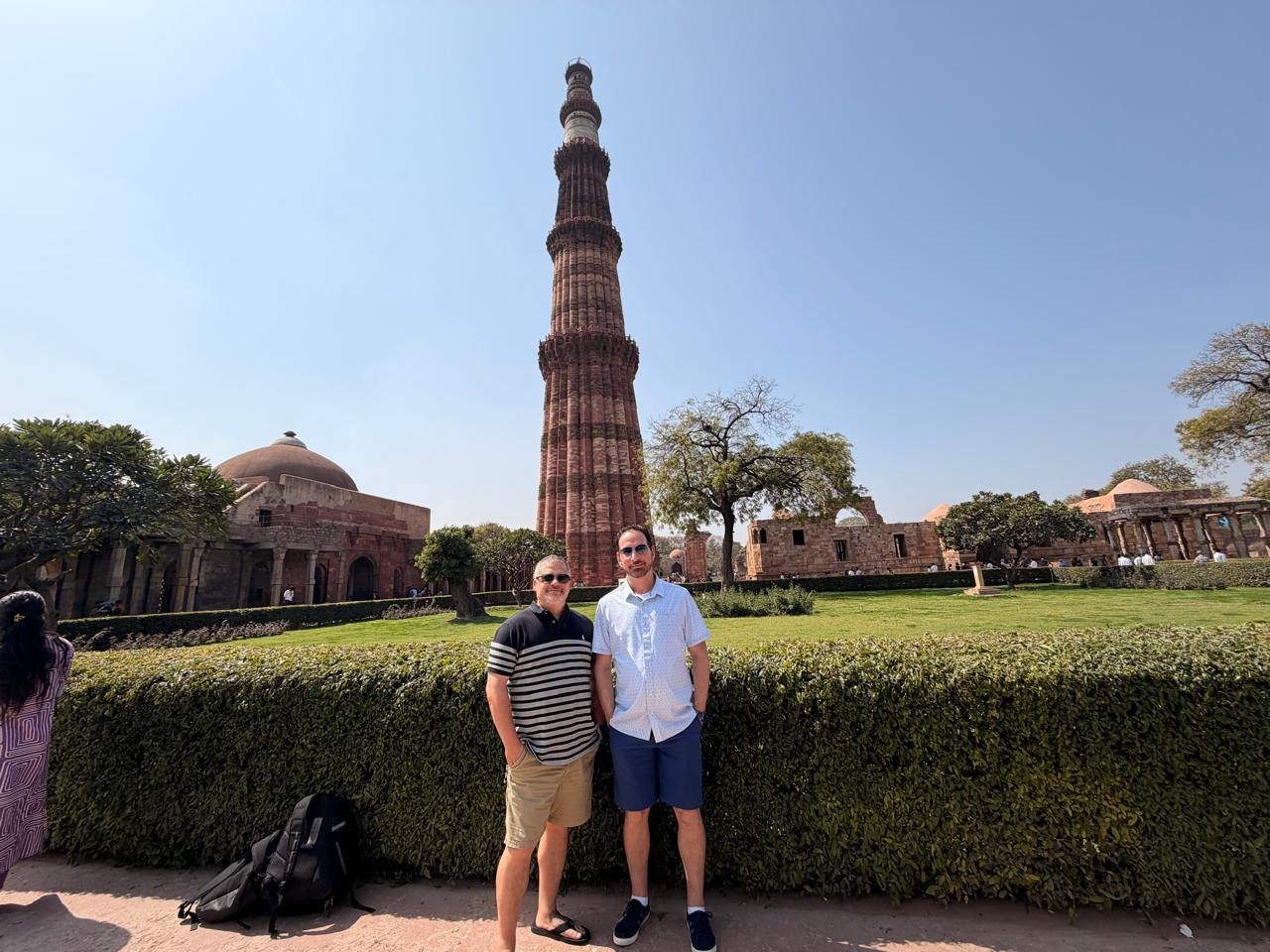
One of the most famous historical places at Delhi, the magnificent Qutub Minar dominates the skyline with its incredible height and intricate architecture.

The Qutub Minar Complex is among India’s most visited UNESCO World Heritage Sites and represents the beginning of Islamic architecture in northern India. Standing at an astonishing height of 72.5 meters, it remains the tallest brick minaret in the world.
Construction began in 1192 AD under Sultan Qutb-ud-din Aibak and was later completed by Iltutmish. Additional restorations were carried out over the centuries following earthquakes.
Built primarily using red sandstone and marble, the five-storey tower showcases exquisite Arabic inscriptions, floral motifs, geometric carvings, and Indo-Islamic craftsmanship that continue to impress architects and historians worldwide.
Highlights of Qutub Complex
- UNESCO World Heritage Site
- World’s tallest brick minaret
- Intricate Islamic calligraphy
- Red sandstone architecture
- Beautiful landscaped gardens
- Excellent photography location
Explore More Than Just Qutub Minar
The Qutub Complex isn’t only about the famous tower.
Inside the vast archaeological site, you’ll discover several remarkable monuments:
Iron Pillar
Perhaps one of India’s greatest engineering mysteries, the Iron Pillar dates back nearly 1,600 years and astonishingly shows almost no signs of corrosion.
Scientists around the world continue studying its unique metallurgy, making it one of the most fascinating ancient structures ever created.
Quwwat-ul-Islam Mosque
Built in 1193, this is among the earliest surviving mosques in India and beautifully combines Hindu and Islamic architectural influences.
Alai Darwaza
An excellent example of Indo-Islamic architecture featuring intricate lattice work and elegant domes.
Alai Minar
Although unfinished, this gigantic tower offers fascinating insight into Sultan Alauddin Khilji’s ambitious expansion plans.
Visitor Information
Best Time: October to March
Recommended Visit Duration: 2–3 hours
Photography: Excellent during sunrise and golden hour
Ideal For:
- History lovers
- Architecture enthusiasts
- Families
- Photographers
- International tourists
2. Red Fort – The Pride of Mughal India

No list of historic sites in Delhi is complete without the magnificent Red Fort.
Officially known as Lal Qila, this architectural masterpiece served as the residence of Mughal emperors for nearly two centuries and remains one of India’s most recognizable monuments.
Commissioned by Shah Jahan in 1638 after shifting his capital from Agra to Delhi, the Red Fort represents the pinnacle of Mughal architecture.
Constructed using massive blocks of red sandstone, the fort spreads across more than 250 acres and is enclosed by towering defensive walls reaching nearly 33 meters high.
Today, it proudly stands as a UNESCO World Heritage Site and hosts India’s Independence Day celebrations every year, where the Prime Minister hoists the national flag.
Must-See Attractions Inside Red Fort
Lahori Gate
The grand entrance welcomes visitors into one of India’s most important historical monuments.
Chatta Chowk
A centuries-old covered bazaar where royal families once shopped for silk, jewelry, carpets, and handicrafts.
Diwan-i-Aam
The Hall of Public Audience where emperors listened to petitions from ordinary citizens.
Diwan-i-Khas
Perhaps the most luxurious section of the palace, where the famous Peacock Throne once stood.
Rang Mahal
Known for its colorful interiors and elegant water channels.
Khas Mahal
The emperor’s private residence featuring marble pavilions and beautiful carvings.
Why Visit Red Fort?
Besides its extraordinary architecture, the Red Fort symbolizes India’s struggle for independence and national identity.
Visiting this landmark allows travelers to appreciate the artistic brilliance, political significance, and cultural richness of the Mughal Empire.
3. India Gate – A Monument of Courage and National Pride

Standing proudly in the heart of New Delhi, India Gate is among the most visited historical places in Delhi India.
Unlike ancient forts and palaces, this magnificent war memorial commemorates the bravery and sacrifice of Indian soldiers who lost their lives during World War I and the Third Anglo-Afghan War.
Designed by Edwin Lutyens and completed in 1931, the 42-meter-high sandstone arch resembles the famous Arc de Triomphe in Paris while maintaining its own distinct identity.
More than 13,000 soldiers’ names are engraved on the monument, preserving their legacy for future generations.
What Makes India Gate Special?
- Beautiful colonial architecture
- Iconic evening illumination
- Landscaped gardens
- Family-friendly atmosphere
- Popular photography destination
- National memorial
As the sun sets, the monument glows beautifully against the Delhi skyline, creating one of the city’s most memorable sightseeing experiences.
The surrounding lawns are equally popular among locals and tourists for evening walks, picnics, and enjoying Delhi’s famous street food.
4. Lotus Temple – Where Spirituality Meets Modern Architecture
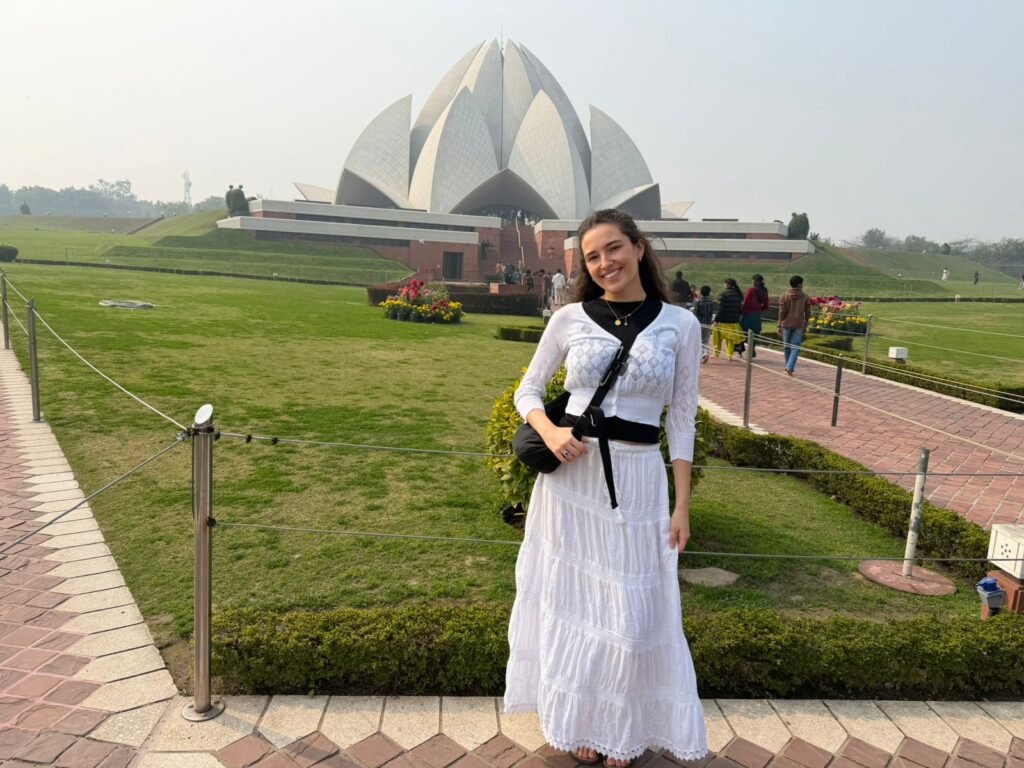
Although relatively modern compared to Delhi’s medieval monuments, the Lotus Temple has become one of the city’s most iconic landmarks and an essential stop while exploring Delhi historical sites.
Completed in 1986 and designed by Iranian-Canadian architect Fariborz Sahba, the temple belongs to the Baháʼí Faith and welcomes visitors from every religion, nationality, and background.
Inspired by the graceful shape of a blooming lotus flower, the temple consists of 27 white marble petals arranged in clusters, creating one of the world’s most remarkable architectural masterpieces.
Unlike traditional temples, no idols, rituals, sermons, or religious ceremonies take place inside.
Visitors simply sit in silence, meditate, or pray according to their own beliefs, making the experience peaceful and deeply personal.
Highlights of Lotus Temple
- Stunning white marble architecture
- Nine peaceful reflection pools
- Beautiful landscaped gardens
- Universal place of worship
- Calm meditation atmosphere
- Award-winning modern design
Whether you’re interested in architecture, spirituality, or photography, the Lotus Temple offers an unforgettable experience that beautifully complements Delhi’s ancient heritage.
If you’re interested in exploring more sacred landmarks, our Delhi Temples and Spiritual Sites Tour is an excellent way to discover Delhi’s spiritual heritage.
5. Jantar Mantar – Delhi’s Extraordinary Astronomical Observatory

Among the most fascinating historical places in Delhi, Jantar Mantar combines science, astronomy, mathematics, and architecture into one remarkable destination. Unlike forts and palaces built for kings, this monument was created to understand the movements of celestial bodies with incredible precision.
Constructed in 1724 by Maharaja Sawai Jai Singh II, the observatory reflects India’s advanced scientific knowledge during the 18th century. Jai Singh II was a passionate astronomer who built five Jantar Mantar observatories across India, with the Delhi observatory being the oldest.
Before modern telescopes and satellites existed, astronomers relied on massive stone instruments to observe the sun, moon, planets, and stars. The precision achieved using these structures continues to amaze scientists today.
Major Instruments Inside Jantar Mantar
Samrat Yantra
The most famous structure inside the complex is the gigantic Samrat Yantra, often referred to as the world’s largest sundial.
Standing nearly 27 meters high, it can calculate local time with an accuracy of just a few seconds.
Jai Prakash Yantra
This unique hemispherical instrument was used to locate celestial objects and understand astronomical coordinates.
Rama Yantra
Consisting of cylindrical structures, the Rama Yantra accurately measures the altitude and direction of stars and planets.
Misra Yantra
An instrument specifically designed to determine the shortest and longest days of the year while calculating noon in various cities.
Why You Should Visit
If you’re interested in astronomy, ancient science, engineering, or architecture, Jantar Mantar is one of the most educational historic sites in Delhi.
Even today, students, researchers, historians, and travelers visit this observatory to appreciate India’s scientific achievements centuries before the modern age.
Visitor Tips
- Best visited during early morning.
- Hire a guide to understand how each instrument functions.
- Ideal for families with children interested in science.
- Photography is allowed throughout the complex.
6. Agrasen Ki Baoli – Delhi’s Mysterious Hidden Gem
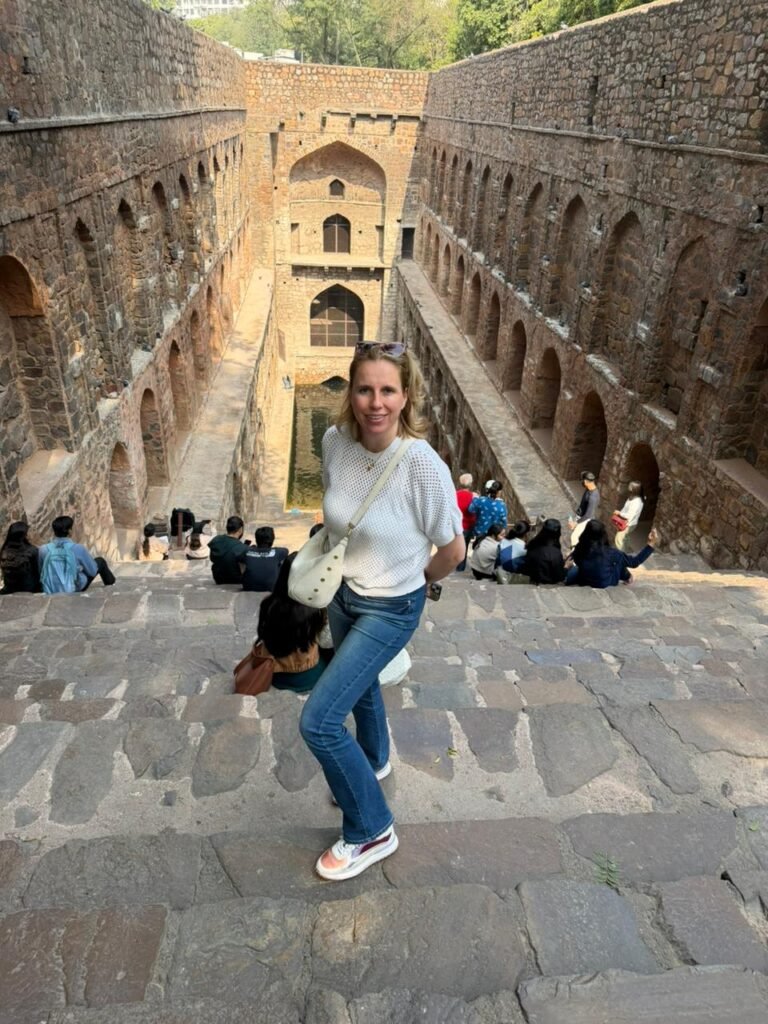
Hidden amidst Delhi’s modern skyscrapers lies one of the city’s most intriguing historical sites in Delhi—Agrasen Ki Baoli.
This ancient stepwell is an architectural marvel that transports visitors back hundreds of years. While Delhi bustles above ground, descending its 108 stone steps feels like entering another era altogether.
Although historians disagree on its exact origin, local legends attribute the construction to the legendary king Maharaja Agrasen. The existing structure is believed to have been rebuilt during the 14th century by the Agrawal community.
Stretching approximately 60 meters in length and 15 meters in width, the baoli consists of three levels lined with beautifully symmetrical arches and chambers.
Architectural Highlights
- 108 ancient stone steps
- Three-storey design
- Elegant arched corridors
- Historic water reservoir
- Excellent symmetry for photography
The simplicity of the structure is what makes it so captivating. The repetitive arches create stunning perspectives that have made the baoli one of Delhi’s most photographed heritage locations.
Legends and Mystery
Agrasen Ki Baoli is surrounded by countless urban legends.
For decades, locals have shared stories about mysterious sounds, unexplained experiences, and paranormal sightings. Although there is no scientific evidence supporting these claims, the stories certainly add an air of mystery to the monument.
Because of its unique atmosphere, the stepwell has appeared in several Bollywood films, including PK and Sultan.
Best Time to Visit
Morning hours offer softer lighting and fewer crowds, making it ideal for photography enthusiasts.
7. Rashtrapati Bhavan – India’s Grand Presidential Residence

One of the most magnificent landmarks among the historical places at Delhi, Rashtrapati Bhavan perfectly blends imperial architecture with modern Indian democracy.
Serving as the official residence of the President of India, this enormous estate reflects India’s transition from colonial rule to an independent republic.
Originally known as the Viceroy’s House, the building was designed by renowned British architects Edwin Lutyens and Herbert Baker during the construction of New Delhi.
Completed in 1929, the estate spreads across approximately 330 acres, making it one of the largest presidential residences in the world.
Architectural Excellence
The building beautifully combines:
- Classical European architecture
- Mughal-inspired gardens
- Buddhist motifs
- Indian sandstone craftsmanship
- Massive central dome
The fusion of Indian and Western architectural styles makes Rashtrapati Bhavan unlike any other government building in the world.
Mughal Gardens
One of the estate’s biggest attractions is the famous Mughal Gardens, now officially known as Amrit Udyan.
During the annual opening season, visitors can admire:
- Hundreds of flower varieties
- Rose gardens
- Herbal gardens
- Water fountains
- Geometric landscaping
Rashtrapati Bhavan Museum
History lovers shouldn’t miss the museum complex, which showcases:
- Presidential gifts
- Historical documents
- Royal carriages
- Interactive exhibits
- Artefacts from India’s political journey
Visitor Experience
Guided tours offer fascinating insights into India’s governance, architecture, and political history.
Booking tickets online in advance is highly recommended.
8. Mehrauli Archaeological Park – Delhi’s Open-Air Museum

If you truly want to understand the history of Delhi, few places compare to Mehrauli Archaeological Park.
Often overlooked by casual tourists, this 200-acre heritage zone is one of the richest collections of medieval monuments in India.
Located adjacent to the Qutub Minar Complex, the park contains more than 100 historical structures spanning nearly a thousand years of Delhi’s history.
Unlike conventional monuments, Mehrauli Archaeological Park allows visitors to walk freely through centuries of architecture surrounded by lush greenery.
Must-Visit Attractions Inside the Park
Tomb of Balban
The tomb of Ghiyas ud din Balban is historically significant because it introduced the true Islamic arch into Indian architecture.
Jamali Kamali Mosque and Tomb
One of Delhi’s finest examples of early Mughal architecture, this complex features intricate calligraphy, elegant domes, and peaceful surroundings.
Rajon Ki Baoli
Another beautifully preserved medieval stepwell that once supplied water to nearby communities.
Metcalfe’s Folly
A fascinating colonial structure blending British and Mughal architectural influences.
Why Visit Mehrauli Archaeological Park?
Unlike crowded tourist attractions, this heritage park offers a peaceful experience where visitors can truly immerse themselves in history.
You’ll discover:
- Ancient tombs
- Hidden gardens
- Medieval mosques
- Stepwells
- Forgotten ruins
- Scenic walking trails
Photography enthusiasts especially appreciate the dramatic contrast between centuries-old monuments and lush natural landscapes.
Travel Tips
- Wear comfortable walking shoes.
- Carry water during warmer months.
- Allocate at least three hours for exploration.
- Visit alongside Qutub Minar for a complete heritage experience.
9. Jama Masjid – India’s Largest and Most Magnificent Mosque
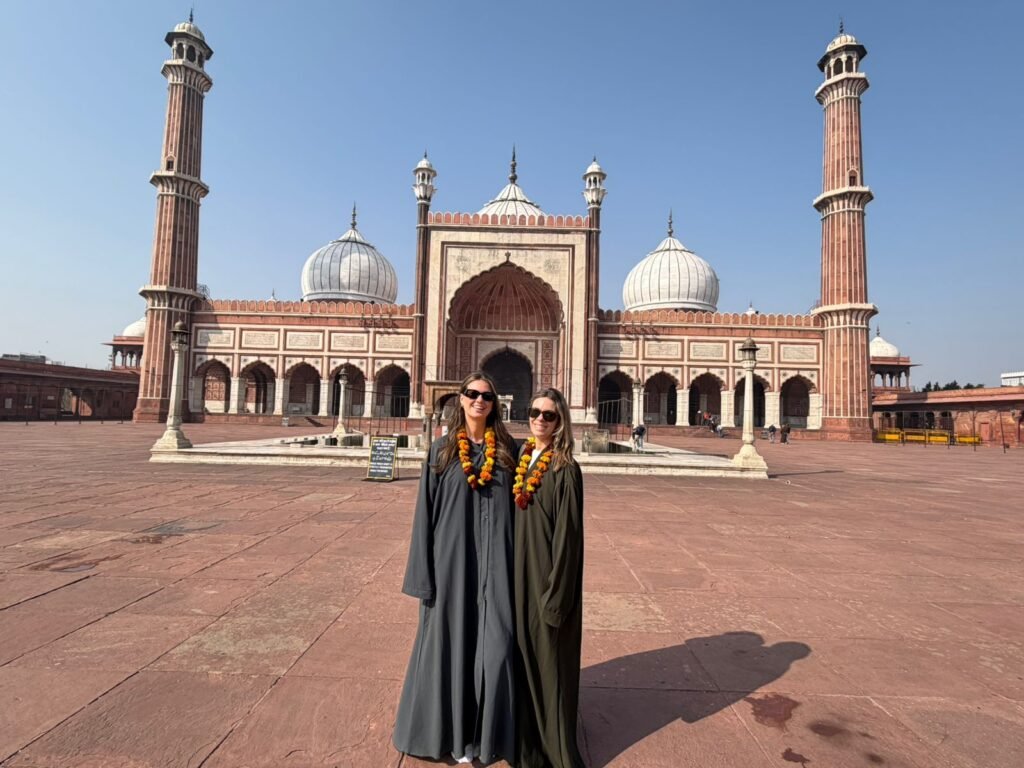
Standing proudly in the heart of Old Delhi, Jama Masjid is one of the finest historical places in Delhi India and a masterpiece of Mughal architecture. Built by the Mughal emperor Shah Jahan between 1650 and 1656, this magnificent mosque represents the artistic brilliance and spiritual heritage of the Mughal Empire.
Known officially as Masjid-i-Jehan-Numa, meaning “Mosque Commanding the View of the World,” Jama Masjid was designed to be the principal mosque of Shahjahanabad (Old Delhi), the Mughal capital.
Constructed using striking red sandstone and pristine white marble, the mosque took nearly 5,000 skilled craftsmen over six years to complete. Even today, it remains one of India’s largest functioning mosques and an active place of worship.
Architectural Highlights
Jama Masjid showcases the finest elements of Mughal architecture, featuring:
- Three massive marble domes
- Two towering 40-meter-high minarets
- Three grand entrance gates
- Intricate Persian calligraphy
- Beautiful marble flooring
- Elegant arches and prayer halls
The vast courtyard can accommodate approximately 25,000 worshippers during important Islamic festivals, making it one of the most significant religious landmarks in India.
Climb the Southern Minaret
One of the best experiences at Jama Masjid is climbing the southern minaret.
After ascending a narrow spiral staircase, visitors are rewarded with breathtaking panoramic views of:
- Chandni Chowk
- Red Fort
- Old Delhi rooftops
- Modern New Delhi skyline
It’s one of the most spectacular viewpoints in the city and a paradise for photographers.
Experience Old Delhi’s Culture
A visit to Jama Masjid is incomplete without exploring the vibrant streets surrounding it.
Nearby attractions include:
- Chandni Chowk
- Spice Market (Khari Baoli)
- Street food stalls
- Traditional sweet shops
- Mughlai restaurants
- Rickshaw rides through Old Delhi
Many travelers combine Jama Masjid with an Old Delhi heritage walk to experience Delhi’s living history.
After visiting the mosque, continue your adventure with our Old Delhi Food Tour to experience authentic Mughlai cuisine and the bustling lanes of Chandni Chowk.
Visitor Tips
- Dress modestly.
- Shoes must be removed before entering.
- Early mornings are less crowded.
- Sunset offers stunning photography opportunities.
10. Humayun’s Tomb – The Monument That Inspired the Taj Mahal
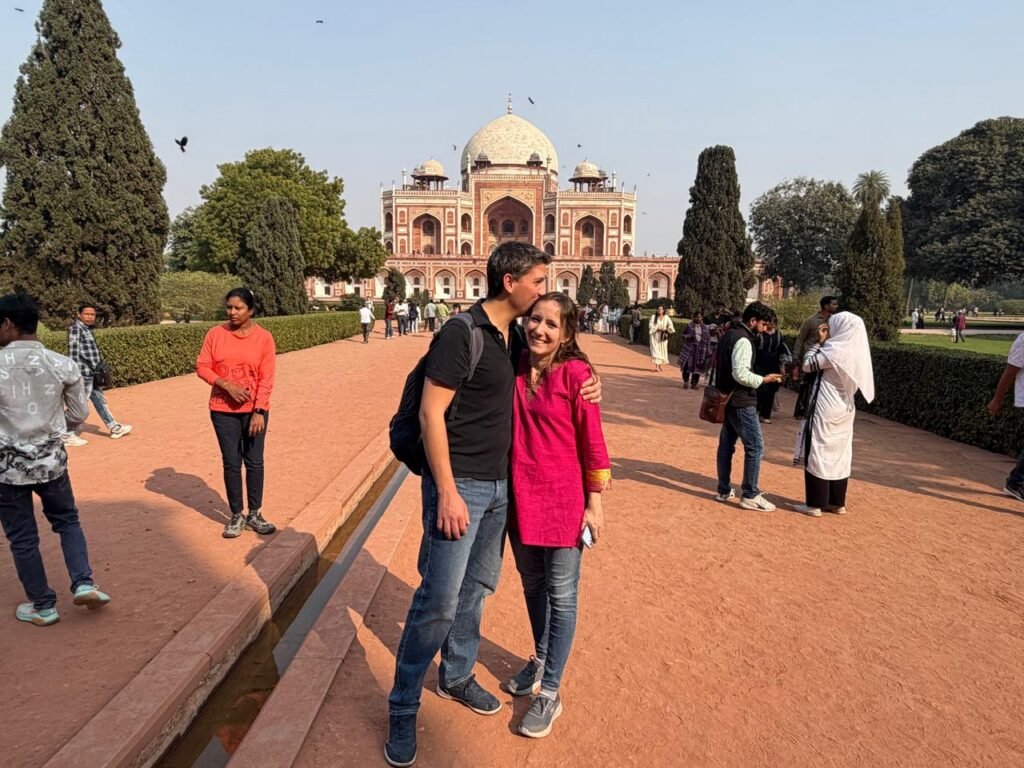
Among all the historic sites in Delhi, Humayun’s Tomb stands out as one of the most elegant and historically significant monuments in India.
Built in 1570 by Hamida Banu Begum in memory of her husband, Humayun, the monument became the first grand garden tomb of the Mughal Empire.
More importantly, its revolutionary architectural design later inspired one of the Seven Wonders of the World—the Taj Mahal.
Recognized as a UNESCO World Heritage Site, Humayun’s Tomb beautifully combines Persian architectural principles with traditional Indian craftsmanship.
Why Humayun’s Tomb Is Special
Unlike earlier mausoleums, this monument introduced several architectural innovations:
- Grand Persian Charbagh gardens
- Symmetrical layout
- Elevated sandstone platform
- Double-domed structure
- Marble detailing
- Water channels representing paradise
Its perfect proportions and harmonious design influenced later Mughal monuments across India.
Explore the Entire Complex
The UNESCO complex contains several historical structures worth exploring.
Isa Khan’s Tomb
Built nearly twenty years before Humayun’s Tomb, this octagonal mausoleum represents Afghan architecture at its finest.
Barber’s Tomb
A smaller but beautifully preserved tomb located inside the gardens.
Arab Serai
Originally constructed to house Persian craftsmen who helped build the monument.
Nila Gumbad
A distinctive blue-domed monument showcasing beautiful tile work.
Together, these monuments make Humayun’s Tomb one of the richest heritage complexes in Delhi.
Best Time to Visit
The monument looks particularly beautiful during:
- Sunrise
- Late afternoon
- Winter months (October–March)
- Spring flower season
The beautifully maintained Mughal gardens also provide excellent opportunities for photography and peaceful walks.
Other Historical Places Worth Visiting in Delhi
While the above monuments are among the most famous historical places in Delhi, the city offers countless other heritage attractions that deserve your attention.
Some additional Delhi historical sites include:
- Purana Qila
- Safdarjung Tomb
- Lodhi Garden
- Hauz Khas Fort
- Tughlaqabad Fort
- Hazrat Nizamuddin Dargah
- Feroz Shah Kotla
- National Museum
Exploring these attractions will give you an even deeper understanding of Delhi’s remarkable past.
Best Time to Visit Historical Places in Delhi
Delhi can be visited throughout the year, but the most pleasant weather is between October and March.
Winter (October–March)
✔ Pleasant weather
✔ Ideal for sightseeing
✔ Comfortable walking tours
✔ Best photography conditions
Summer (April–June)
- Hot afternoons
- Visit early mornings
- Carry water and sunscreen
Monsoon (July–September)
- Beautiful greenery
- Fewer crowds
- Occasional rain showers
Tips for Exploring Delhi’s Historical Sites
To make the most of your journey through Delhi’s rich heritage, keep these travel tips in mind:
- Start sightseeing early to avoid crowds and heat.
- Wear comfortable walking shoes, as many monuments require extensive walking.
- Carry a reusable water bottle and stay hydrated.
- Respect dress codes at religious sites like Jama Masjid and Lotus Temple.
- Hire a knowledgeable guide or book a private heritage tour to better understand the history behind each monument.
- Keep your camera ready—Delhi’s architecture is a paradise for photographers.
- Purchase entry tickets online when possible to save time.
Why Explore Delhi with Taj Explorer?
Delhi’s monuments are much more than tourist attractions—they are chapters of India’s incredible story. With Taj Explorer, you can experience these historical places in Delhi in comfort, style, and at your own pace.
Our Old & New Delhi Private Guided City Tour combines Delhi’s iconic monuments with hidden gems for a complete heritage experience.
Our private heritage tours include:
- Luxury air-conditioned vehicles
- Professional English-speaking guides
- Fully customizable itineraries
- Hotel pickup and drop-off
- Skip-the-hassle travel planning
- Local insights and authentic cultural experiences
Whether you’re visiting Delhi for a day or beginning a Golden Triangle adventure, our experienced team ensures every journey is seamless and memorable.
Frequently Asked Questions
Which are the most famous historical places in Delhi?
The most famous include Qutub Minar, Red Fort, India Gate, Humayun’s Tomb, Jama Masjid, Lotus Temple, Agrasen Ki Baoli, Jantar Mantar, Rashtrapati Bhavan, and Mehrauli Archaeological Park.
How many UNESCO World Heritage Sites are there in Delhi?
Delhi is home to three UNESCO World Heritage Sites:
Qutub Minar Complex
Red Fort
Humayun’s Tomb
Which historical place in Delhi is best for photography?
Humayun’s Tomb, Qutub Minar, Agrasen Ki Baoli, Red Fort, and India Gate are among the best photography spots.
Can all these monuments be covered in one day?
No. Most travelers require two to three days to comfortably explore the major historical places at Delhi.
Which heritage site is best for families?
India Gate, Red Fort, Lotus Temple, and Qutub Minar are excellent family-friendly destinations.
Final Thoughts
Delhi is one of the world’s few cities where nearly every century has left behind an architectural masterpiece. From towering minarets and majestic Mughal forts to peaceful gardens, ancient observatories, and iconic memorials, the city’s remarkable collection of historical places in Delhi India tells the story of India’s evolution through time.
Whether you’re wandering through the grand halls of the Red Fort, admiring the intricate carvings of Qutub Minar, finding peace inside the Lotus Temple, or watching the sunset over Jama Masjid, every monument offers a unique glimpse into Delhi’s vibrant heritage.
If you’re planning to explore these unforgettable historical sites in Delhi, let Taj Explorer transform your journey into a premium travel experience. Our carefully crafted private tours combine comfort, local expertise, and personalized service, allowing you to discover the very best of Delhi’s history without the stress of planning.
Planning a longer holiday? Combine Delhi with Agra and Jaipur through our Golden Triangle Tour Packages for an unforgettable journey across India’s most iconic destinations.