Visiting Agra: Taj Mahal Highlights
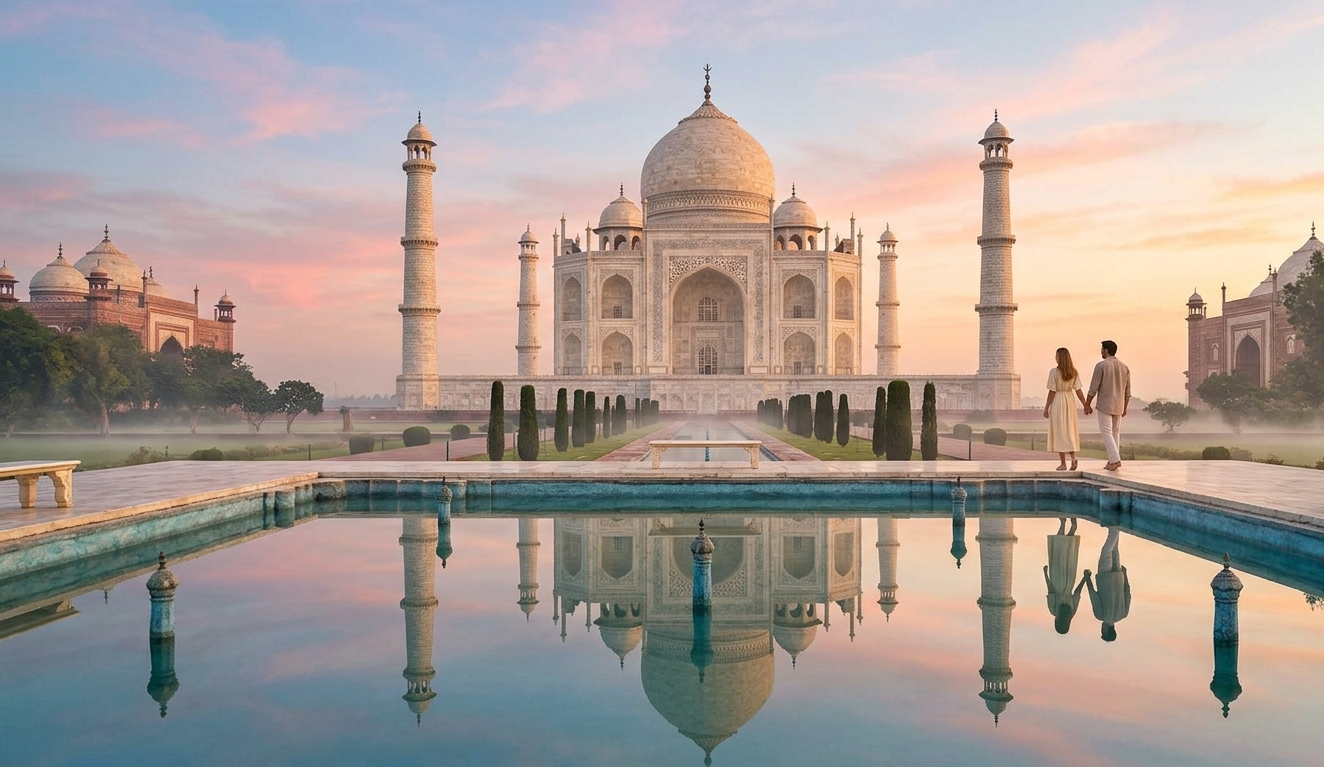
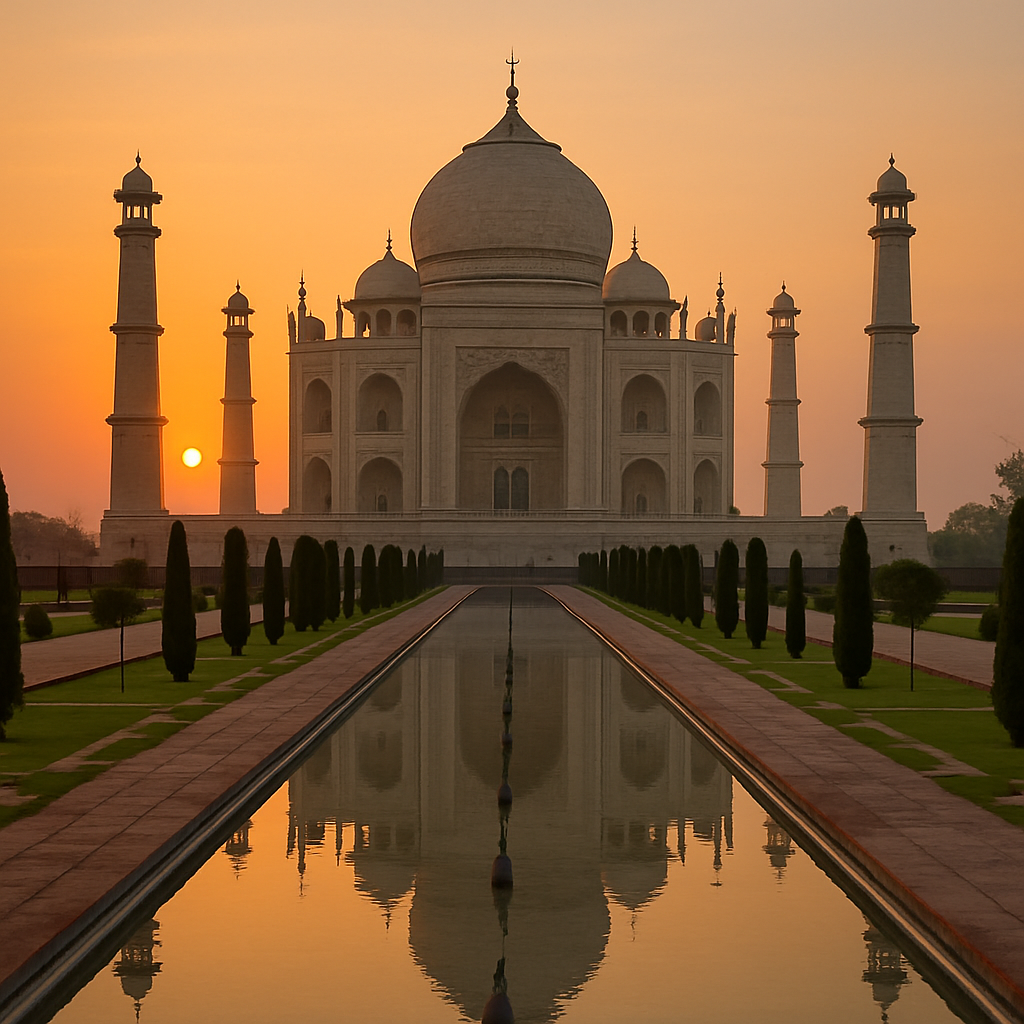
There is a moment of profound silence that washes over every traveler when they walk through the Great Gate (Darwaza-i-Rauza) and lay eyes on the Taj Mahal for the very first time. Suspended between the sky and the earth, the monument appears almost ethereal, its pristine white marble reflecting the changing moods of the day. A jewel of Islamic art in India and one of the universally admired masterpieces of the world’s heritage, the Taj Mahal is far more than just a beautiful building. It is a testament to eternal love, an architectural marvel of the highest order, and the undisputed crown of India’s tourism landscape.
Whether you are an architecture enthusiast, a history buff, or a traveler looking to check off a major bucket-list destination, a trip to see the Agra Taj Mahal requires thoughtful preparation. From navigating the bustling streets of Uttar Pradesh to understanding the intricacies of 17th-century Mughal design, this comprehensive Agra travel guide will walk you through every step of your journey. Let us dive into the history, the design, and the practicalities of planning a flawless visit to this timeless wonder.
The Epic Romance: Taj Mahal History
To truly appreciate the monument, one must first understand the profound grief and devotion that birthed it. The Taj Mahal history is inextricably linked to the personal lives of the Mughal elite, specifically the deep bond between an emperor and his beloved wife.
The Shah Jahan and Mumtaz Mahal History
In 1607, a 15-year-old Prince Khurram (who would later take the title Shah Jahan, meaning “King of the World”) fell in love with Arjumand Banu Begum in the royal Meena Bazaar. They were married five years later, and she was bestowed the title Mumtaz Mahal, meaning “Chosen One of the Palace.” She was not his only wife, but she was indisputably his favorite, serving as his closest confidante, political advisor, and constant companion even on military campaigns.
Tragedy struck in 1631 during a campaign in Burhanpur. Mumtaz Mahal passed away due to complications from delivering their 14th child. According to historical accounts, a devastated Shah Jahan promised his dying wife that he would build her the most magnificent tomb the world had ever seen. The emperor went into mourning for a year, emerging with hair turned completely white, his face etched with sorrow.
He immediately commissioned the construction of the Taj Mahal in Agra. The project required the labor of over 20,000 artisans, architects, stonecutters, and laborers brought in from across the empire, Central Asia, and Iran. Taking a staggering 22 years to complete (from 1632 to 1653), the mausoleum drained the royal treasury, costing an estimated 32 million rupees at the time—a figure that would equate to over a billion dollars today. Ultimately, Shah Jahan was overthrown by his own son, Aurangzeb, and spent his final years imprisoned in the Agra Fort, gazing across the Yamuna River at his wife’s resting place until he was eventually buried beside her.
Decoding the Masterpiece: Taj Mahal Architecture
The Taj Mahal is widely considered the zenith of Mughal architecture, a style that seamlessly synthesizes elements from various cultures into a distinct, monumental aesthetic.
Mughal Architectural Style Characteristics
The Mughal architectural style characteristics are on full display here, defined by an absolute devotion to symmetry and geometric perfection. The entire complex is organized around a central axis. Key elements include the massive, bulbous onion dome (amrud), flanked by smaller chhatris (domed pavilions), and the four towering minarets standing exactly 40 meters tall at the corners of the main plinth. Interestingly, these minarets were deliberately constructed to tilt slightly outward; in the event of a massive earthquake, they would fall away from the central tomb rather than crashing into it.
Persian and Islamic Design Influences
The monument heavily relies on Persian and Islamic design influences. This is evident in the grand iwan (vaulted archways) that frame the entrances, creating striking shadows that change throughout the day. Islamic traditions strictly prohibit the use of anthropomorphic (human or animal) forms in decorative art. Therefore, the architects relied heavily on masterful calligraphy, featuring verses from the Quran inlaid in black marble, alongside complex geometric patterns and breathtaking floral motifs. The optical illusion of the calligraphy—where the text appears uniform in size from the ground to the top of the arches—was achieved by gradually increasing the size of the letters as they ascend.
Pietra Dura Inlay Work Details
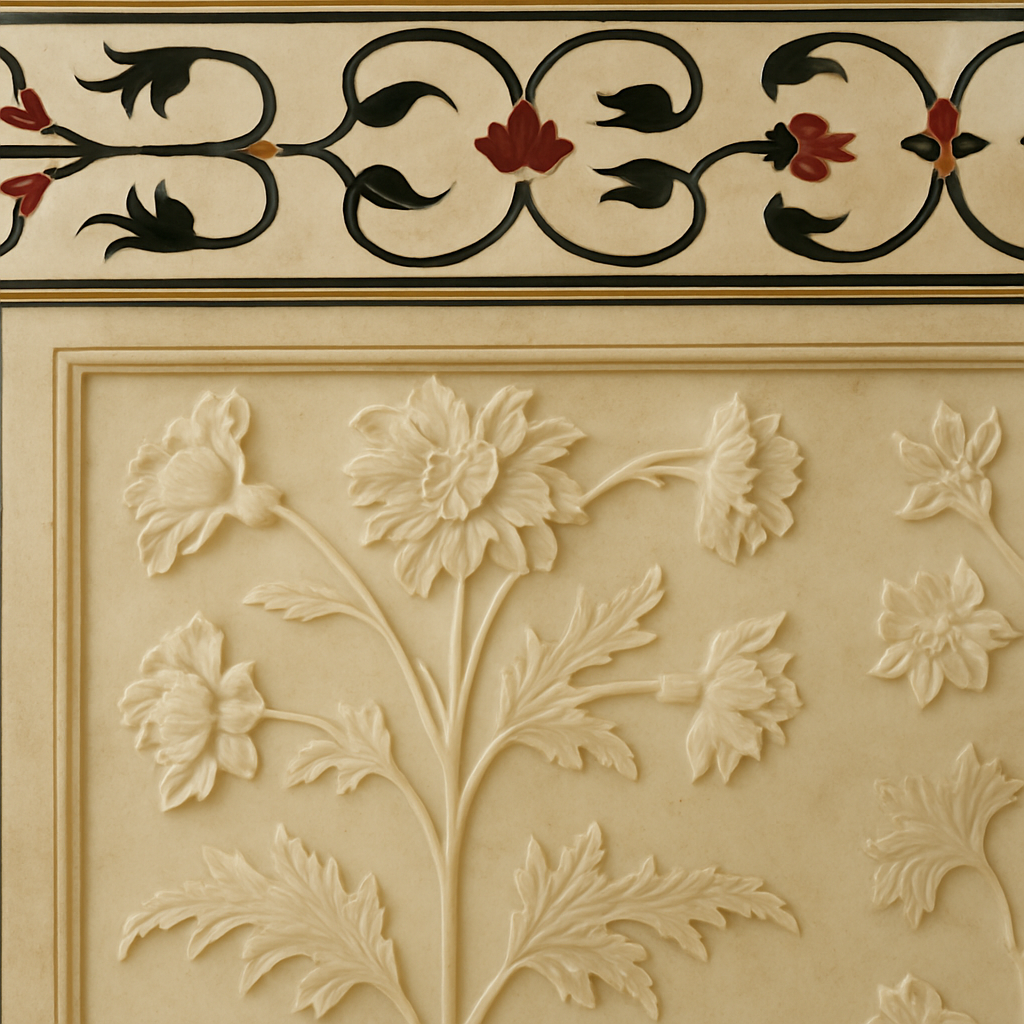
One of the most awe-inspiring aspects of the Taj Mahal architecture is the parchin kari, or pietra dura inlay work details. Master craftsmen hollowed out the white Makrana marble and painstakingly fit semi-precious stones into the cavities to form vibrant flowers, vines, and fruits.
Over 40 different types of gems were sourced from across the globe for this delicate work. Jade and crystal came from China, turquoise from Tibet, lapis lazuli from Afghanistan, sapphire from Sri Lanka, and carnelian from Arabia. When you get close to the cenotaphs inside the main chamber, a flashlight shone against the marble will reveal the translucent glow of the inlaid stones, bringing the floral bouquets to life in a way that photographs can hardly capture.
White Marble Conservation Efforts
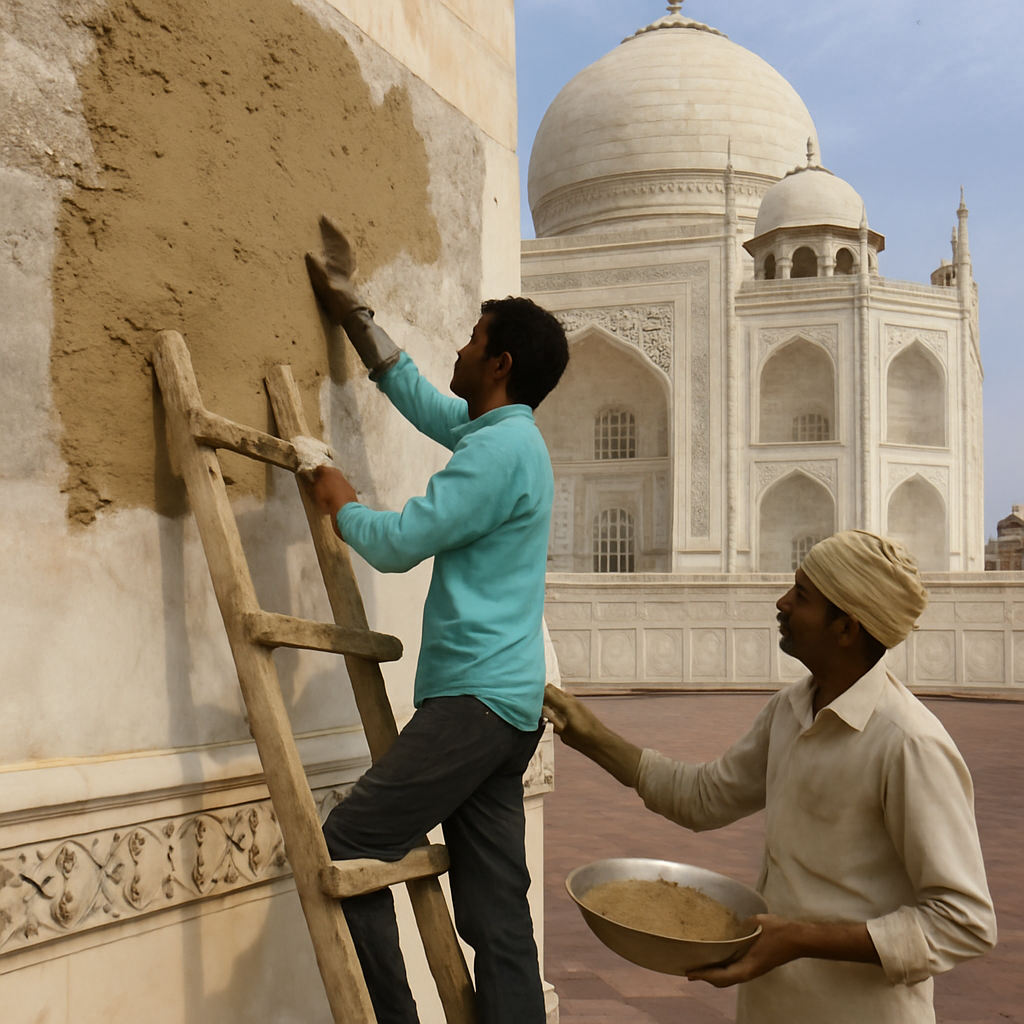
Today, the monument faces modern threats that Shah Jahan could never have foreseen. Air pollution from nearby factories, vehicular emissions, and a specific insect species (Goeldi chironomus) breeding in the polluted Yamuna River have historically caused the brilliant white Makrana marble to turn a dull, yellowish-green.
To combat this, the Archaeological Survey of India (ASI) has implemented rigorous white marble conservation efforts. The most famous of these is the “mud-pack therapy.” Based on traditional beauty treatments for women, a clay called Multani mitti (Fuller’s earth) is applied in thick layers to the marble surface. As it dries, it draws out impurities, dirt, and greases. Once washed off with distilled water, the marble regains its original, dazzling luster. Furthermore, an eco-sensitive zone (the Taj Trapezium Zone) has been established to ban emissions-producing factories within a 10,400-square-kilometer radius of the monument.
Planning Your Visit: Logistics and Transport
To execute a flawless trip, understanding the logistics of navigating Agra is crucial. Whether you are flying in internationally or planning a day trip from Delhi, a well-thought-out itinerary is your best friend.
Planning a Day Trip from Delhi
Because Agra is located just 230 kilometers (about 143 miles) southeast of the Indian capital, planning a day trip from Delhi is highly popular among tourists short on time.
- By Train: The fastest and most comfortable way is the Gatimaan Express, a semi-high-speed train that departs from Hazrat Nizamuddin Railway Station in Delhi at 8:10 AM and arrives at Agra Cantt by 9:50 AM.
- By Car: If you prefer driving, the six-lane Yamuna Expressway makes for a smooth, scenic drive of about 3 to 4 hours. Renting a private taxi or booking organized Taj Mahal tours allows you the flexibility to travel at your own pace.
Avoiding Crowds at the Mausoleum
With up to 70,000 visitors a day during peak season, knowing the secrets to avoiding crowds at the mausoleum will vastly improve your experience.
- Arrive Early: The gates open 30 minutes before sunrise. Arriving at the ticketing gate by 5:30 AM ensures you are among the first to enter, providing a rare window to photograph the monument without throngs of tourists in the background.
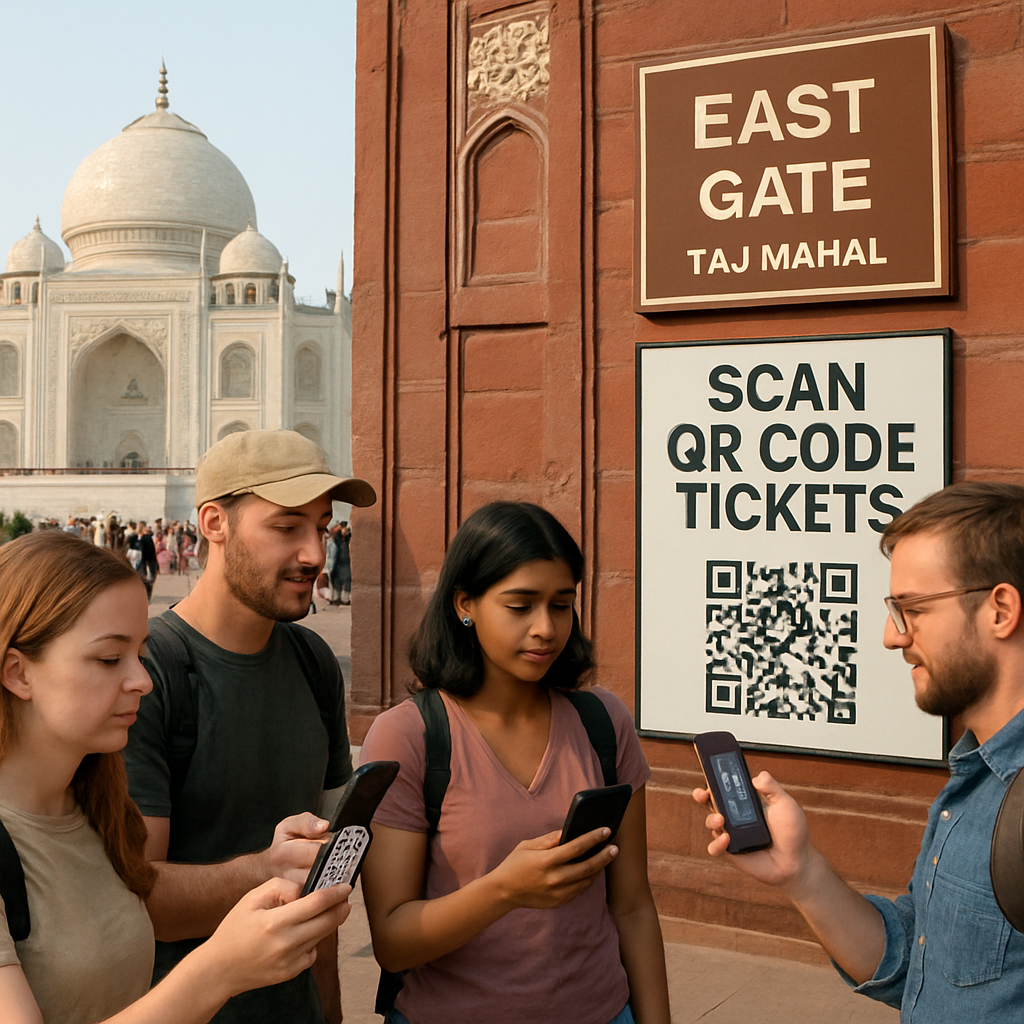
- Choose the Right Gate: The West Gate is usually the most crowded as it is favored by large tour groups. The East Gate is typically quieter and closer to many high-end hotels, making it the preferred choice for independent travelers. (The South Gate is currently closed for entry, used only for exit).
Ticketing and Security: A Practical Guide
Navigating the entry process requires knowing what to expect at the gates, as security around the monument is incredibly strict.
How to Buy Entry Tickets Online
To minimize wait times, skip the physical ticket counters entirely. Learning how to buy entry tickets online will save you at least an hour during peak times. You can purchase them directly through the official Archaeological Survey of India (ASI) website.
- Ensure you select both the base entry ticket and the additional mausoleum entry ticket if you want to go inside the main dome to see the cenotaphs.
- Keep your digital ticket on your phone and a printed copy just in case. Note that foreigners pay a higher fee (currently around ₹1100 + ₹200 for the mausoleum) compared to domestic tourists, but this fee also grants you a bottle of water, shoe covers, and access to a fast-track security queue.
What Items are Prohibited Inside the Complex
Security checks are rigorous, and carrying forbidden items will force you out of line to rent a locker. It is crucial to know exactly what items are prohibited inside the complex.
- Allowed: Your wallet, passport, mobile phone, a basic camera, and a water bottle.
- Prohibited: Drones, tripods, extra batteries, power banks, laptops, large backpacks, food items, chewing gum, smoking items, matches, and any sharp objects. Keep your load as light as possible to breeze through security.
Experiencing the Magic: Views and Tours
Seeing the Taj is not a one-size-fits-all experience. Depending on the time of day and your vantage point, the monument reveals completely different personalities.
Best Sunrise Viewing Spots in Agra
Sunrise is unequivocally the most magical time to view the monument. The cool morning air, the mist rolling off the river, and the soft pink light hitting the dome create an unforgettable atmosphere. The best sunrise viewing spots in Agra include:
- The Main Pathway: As soon as you walk through the Great Gate, stand centrally on the pathway for the classic reflection shot in the lotus pools.
- The Diana Bench: Located on a raised platform halfway down the gardens, this bench offers a perfectly framed, unobstructed view of the main tomb.
- The Mosque: On the western side of the complex sits a red sandstone mosque. The arches of this mosque provide a spectacular, moody frame for the white marble dome as the sun begins to peek over the horizon.
Mehtab Bagh vs Main Monument View
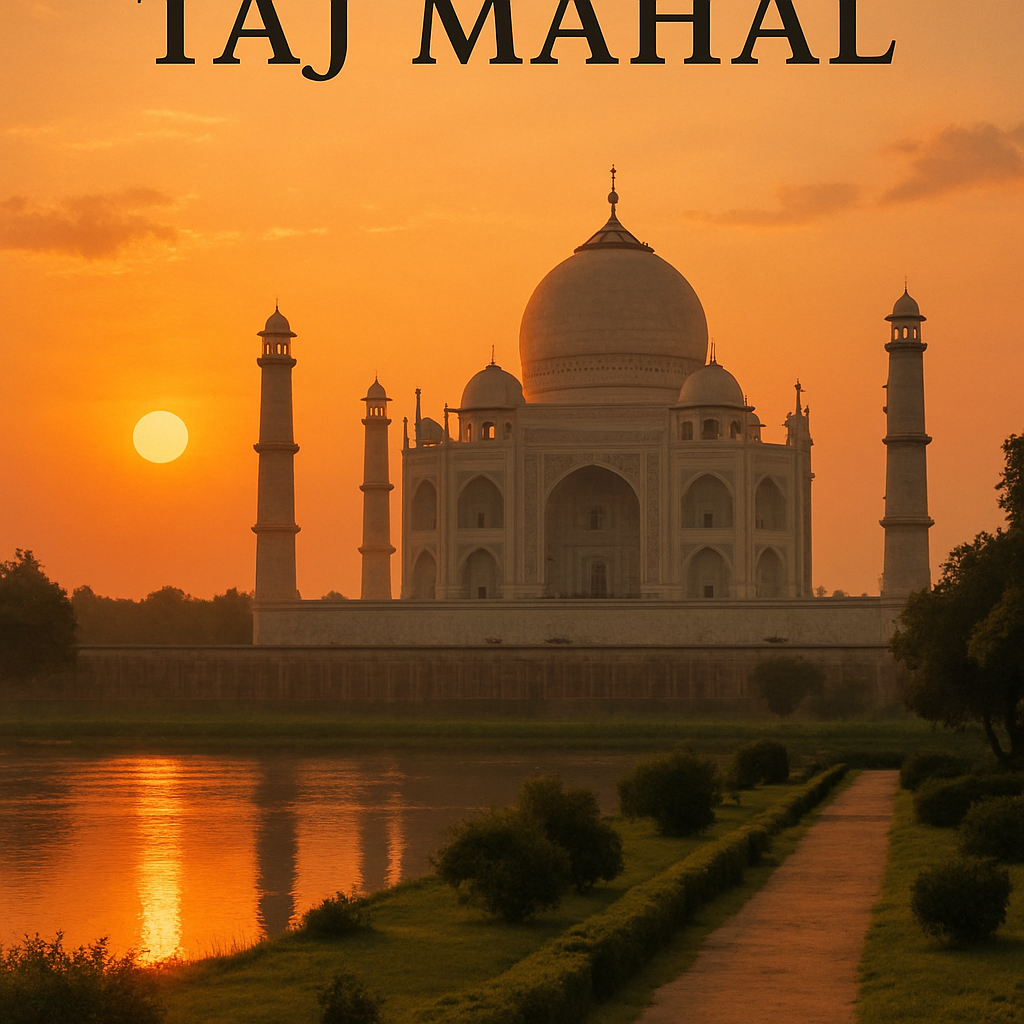
While the view from the main gardens is iconic, many photographers argue that the best perspective is actually from across the river. To understand the Mehtab Bagh vs main monument view, you must cross the Yamuna. Mehtab Bagh (the Moonlight Garden) is aligned perfectly with the Taj Mahal complex. While the main monument is bustling with tourists, Mehtab Bagh is serene, quiet, and uncrowded. It allows you to appreciate the sheer scale of the mausoleum from the rear, with the river winding in the foreground. It is highly recommended for sunset photography.
Moonlight Viewing Tour Experience
For those looking for a truly rare encounter, the moonlight viewing tour experience is unparalleled. The ASI allows night viewing of the monument for only five nights a month: the night of the full moon, plus the two days before and after.
- Tickets are incredibly limited, restricted to batches of 50 people for just 30 minutes.
- These tickets cannot be bought online and must be purchased in person at the ASI office in Agra 24 hours in advance.
- While you cannot go inside the mausoleum at night, standing in the complex under the silver glow of a full moon, seeing the marble shimmer against the dark sky, is a transcendental experience.
When visiting Agra, booking specialized Taj Mahal tours through reputable operators can also enhance your visit. Expert guides can point out the acoustic wonders of the central dome, where a single note sung aloud echoes for nearly 30 seconds, and show you hidden semi-precious stones you might otherwise walk right past.
Where to Stay: Accommodation Guide
Where you choose to sleep can significantly impact your experience. Fortunately, Agra offers excellent hospitality options. Booking hotels in Agra close to Taj Mahal not only cuts down on travel time but often provides an immersive cultural experience.
Luxury: Best Hotels in Agra with Taj Mahal View
If you are celebrating a special occasion or simply want to indulge, booking one of the best hotels in Agra with Taj Mahal view is a must.
- The Oberoi Amarvilas: This is arguably the most famous luxury property in the city. Located just 600 meters from the monument, every single room and suite in this spectacular hotel offers an unobstructed view of the Taj. You can sip your morning coffee on a private balcony while watching the sun rise over the dome. They even provide private golf buggies to whisk you directly to the East Gate.
- Taj Hotel & Convention Centre: Another excellent high-end option offering splendid amenities. While not every room has a view, their rooftop infinity pool provides a magnificent vantage point of the monument, making it one of the premier hotels in Agra with Taj Mahal view.
- ITC Mughal: Though it does not offer direct views of the monument from all rooms, this sprawling resort pays homage to Mughal architecture with its lush gardens and water channels, providing a regal atmosphere perfect for relaxation after a long day of sightseeing.
Mid-Range and Boutique: Good Hotels in Agra Near Taj Mahal
For those looking for comfort without a premium luxury price tag, there are plenty of good hotels in Agra near Taj Mahal that provide fantastic value.
- Radisson Hotel Agra: Offering contemporary comfort, great dining options, and a rooftop pool with distant views of the dome, this property provides excellent service.
- Crystal Sarovar Premiere: A favorite among frequent travelers, offering spacious rooms and a wonderful rooftop restaurant where you can dine while looking out over the city skyline toward the monument.
When you specifically search for a hotel in Agra near Taj Mahal, pay attention to the neighborhood. The Taj Ganj area is incredibly close, though it can be noisy and crowded. Staying slightly further out on Fatehabad Road provides a perfect balance of tranquility while still being only a 10-minute auto-rickshaw ride away. Whether you are looking for opulence or practicality, prioritizing hotels in Agra near Taj Mahal will undoubtedly make your early morning excursions far less stressful.
Myths, Legends, and Preservation
While the mausoleum is the star attraction, a full Agra sightseeing tour reveals a city rich with other historical treasures.
The Myth of the Black Taj Mahal in Agra
One of the most enduring legends is the story of the Black Taj Mahal in Agra. The myth suggests that Shah Jahan intended to build an exact replica of the white Taj, but constructed entirely of black marble, on the opposite side of the river at Mehtab Bagh, to serve as his own tomb. The two mausoleums were supposedly to be connected by a silver bridge. This tale was largely popularized by the writings of Jean-Baptiste Tavernier, a European traveler who visited Agra in 1665. However, extensive modern excavations by archaeologists at Mehtab Bagh have debunked this myth. The “black marble” ruins found at the site were actually discolored white stones from an old garden pavilion. Shah Jahan’s own grave was eventually placed inside the white Taj Mahal alongside his wife, making the cenotaph chamber the only part of the monument that breaks perfect bilateral symmetry.
UNESCO World Heritage Site Preservation Status
The monument was designated a UNESCO World Heritage site in 1983, cited as “the jewel of Muslim art in India and one of the universally admired masterpieces of the world’s heritage.” This prestigious UNESCO World Heritage Site preservation status dictates strict international guidelines for its maintenance. Aside from the mud-pack treatments for the marble, preservationists meticulously monitor the structural integrity of the wooden foundations. The massive mahogany ebony logs that support the entire structure depend on the moisture of the Yamuna River to stay swollen and strong; if they dry out, they could become brittle and risk the collapse of the monument.
Yamuna Riverfront Development Project
To protect the environmental ecosystem supporting the foundation, the government has launched the Yamuna riverfront development project. This initiative aims to clean the heavily polluted river, restore the aquatic life, and develop green corridors along the riverbanks. Not only does this project aim to supply much-needed moisture to the wooden foundations of the Taj, but it is also revitalizing the historic Mughal gardens along the water, returning the riverfront to the pristine aesthetic it enjoyed during Shah Jahan’s reign.
Beyond the Monument: Agra Sightseeing and Culture
While the mausoleum is the star attraction, deciding to explore Agra fully reveals a city rich with other historical treasures and vibrant cultural festivals.
Agra Sightseeing Highlights
No trip is complete without extending your Agra sightseeing beyond the white marble dome.
- Agra Fort: Just 2.5 kilometers away, this massive red sandstone fortress was the main residence of the Mughal emperors until 1638. It is a stunning complex of palaces, mosques, and courtyards. Standing in the Musamman Burj, the octagonal tower where Shah Jahan was imprisoned, gives you a poignant, distant view of the Taj Mahal.
- Itimad-ud-Daulah (Baby Taj): Predating the main monument, this exquisite tomb was the first Mughal structure built entirely of marble and is highly regarded for its intricate pietra dura work. It is a peaceful, less-crowded alternative that provides a fascinating look into the architectural transition of the era.
- Fatehpur Sikri: Located an hour’s drive from the city, this magnificent abandoned red sandstone city was briefly the capital of the Mughal Empire under Emperor Akbar. Its towering Buland Darwaza and remarkably preserved palaces make it a must-visit.
When is the Taj Mahotsav Festival Held?
If you want to experience the vibrant local culture, you might wonder, when is the Taj Mahotsav festival held? This spectacular 10-day carnival takes place annually from February 18th to 27th at Shilpgram, near the East Gate of the Taj. The festival is a massive celebration of Indian arts, crafts, classical music, folk dance, and mouth-watering Mughal cuisine. More than 400 artisans from different parts of India showcase their work, making it the perfect time to visit if you want to soak in the festive spirit of the country.
Top Taj Mahal Tips & Facts
To round out your itinerary, here is a quick summary of practical advice and fascinating trivia to keep in mind.
Essential Taj Mahal Tips:
- Dress Appropriately: While there is no strict dress code enforced at the gate, this is a deeply respected mausoleum. Dressing modestly (covering shoulders and knees) is recommended out of respect for local culture. Bright colors (like red or saffron) contrast beautifully against the white marble for photos.
- Hire an Official Guide: Beware of unauthorized hawkers. If you want a guided tour, hire an ASI-approved guide wearing an official ID badge. Better yet, pre-book your guide through your hotel.
- Wear Comfortable Shoes: You will be doing a significant amount of walking. Furthermore, you will be required to wear provided shoe covers (or take your shoes off entirely) before stepping onto the main white marble plinth.
- Avoid Fridays: Plan your schedule carefully, as the monument is completely closed to general tourists every Friday for Friday prayers at the mosque.
Intriguing Taj Mahal Facts:
- Color-Changing Marble: Depending on the time of day and the sunlight, the white Makrana marble appears to change color—from a soft pinkish glow in the morning to a dazzling, blinding white at noon, to a golden hue at sunset, and an ethereal silver under moonlight.
- Optical Illusions: As you approach the main dome through the entrance archway, the monument appears to grow larger. However, as you walk closer, an optical illusion makes the monument seem to shrink.
- Perfect Symmetry (Almost): Everything in the complex is perfectly symmetrical, mirroring exactly on either side of the central axis. The only exception is the tomb of Shah Jahan himself, which was added later by his son next to Mumtaz Mahal’s perfectly centered cenotaph, throwing off the geometric balance of the inner chamber.
Conclusion
To visit the Taj Mahal is to step into a bygone era of unparalleled artistic achievement. It is a dynamic masterpiece that interacts with the sun, the sky, and the river. By understanding the history and strategically choosing hotels in Agra near Taj Mahal for early access, your trip can transform into a profound personal journey. Agra is calling. Whether you gaze upon its white marble dome through the dawn mist or under the silver light of a full moon, the memories will stay with you for a lifetime.
By understanding the deep history, respecting the architectural genius, strategically choosing hotels in Agra close to Taj Mahal for early access, and knowing the nuances of ticketing and crowd avoidance, your trip can transform from a standard tourist stop into a profound personal journey. Agra is calling. Whether you gaze upon its white marble dome through the dawn mist or under the silver light of a full moon, the memories forged at this eternal monument of love will undoubtedly stay with you for a lifetime.