Exploring the Charm of Jaipur: The Pink City
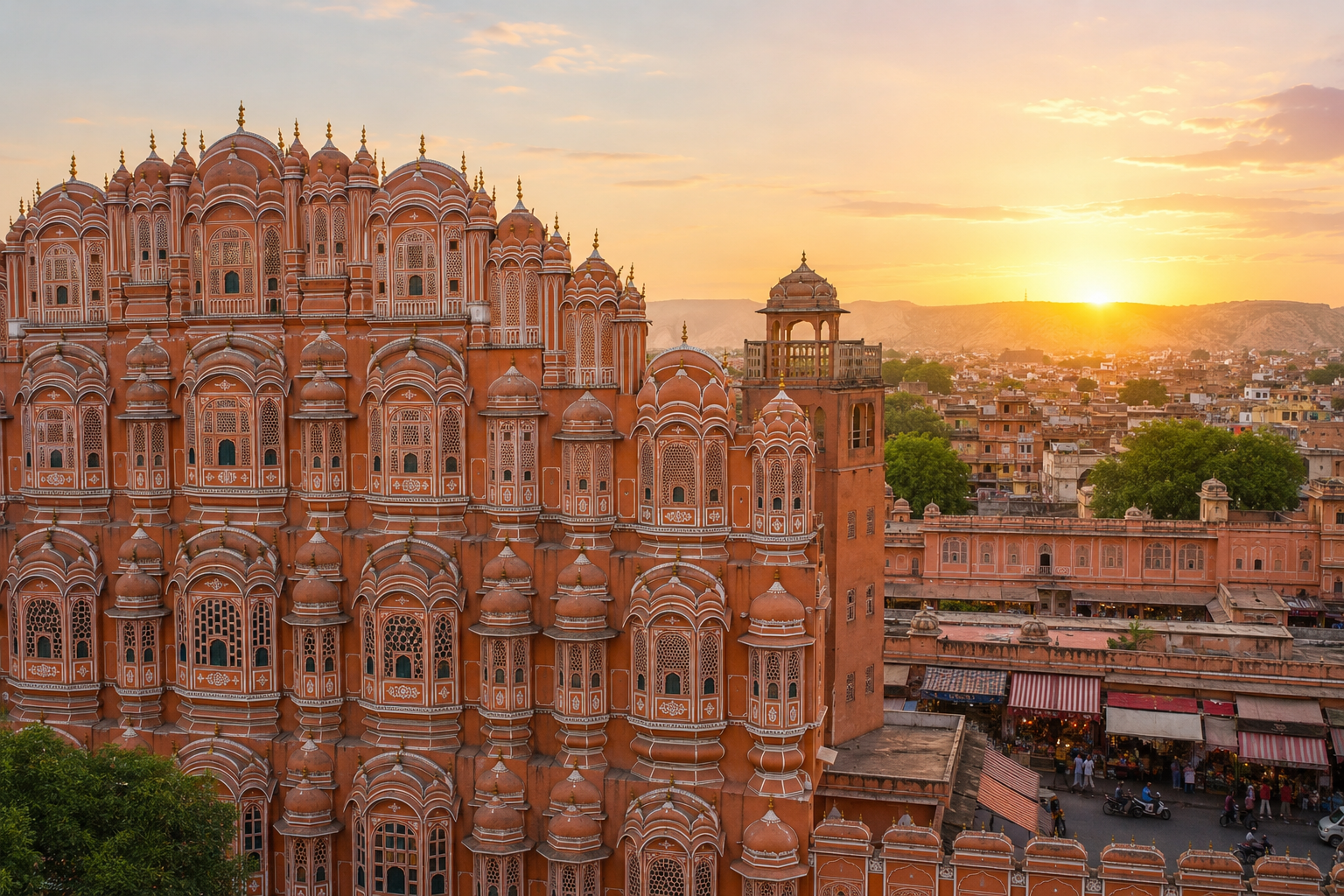
Stepping into the vibrant streets of Rajasthan’s capital feels like opening a living pop-up book of royal history. Affectionately known as the pink city, Jaipur is a mesmerizing blend of ancient Rajputana grandeur, bustling modern markets, and architectural masterpieces. As a cornerstone of rajasthan tourism, this destination offers an unparalleled glimpse into India’s opulent past, making it a dream for history buffs, photographers, and culture seekers alike.
Whether you are marveling at hilltop forts, sampling spicy delicacies in centuries-old bazaars, Whether you are marveling at hilltop forts, sampling spicy delicacies in centuries-old bazaars, or planning a broader Golden Triangle adventure to include nearby Agra and Delhi, understanding the rich tapestry of the pink city of jaipur is essential.
In this comprehensive guide, we will explore everything you need to know about this majestic city. From unlocking the secrets of its rosy hues to navigating its sprawling palaces, and even detailing how to seamlessly connect your trip to the Mughal marvels of Agra and Fatehpur Sikri, prepare to embark on an unforgettable journey.
The Origins: Why is Jaipur the “Pink City”?
To truly appreciate Jaipur, one must look back to its founding in 1727. Unlike many cities in India that grew organically over centuries, Jaipur was a meticulously planned endeavor. The city is a lasting testament to Maharaja Sawai Jai Singh II urban planning. Aided by a brilliant Bengali architect, Vidyadhar Bhattacharya, the Maharaja designed the city based on the principles of Vastu Shastra (traditional Hindu architecture) and Shilpa Shastra. The city was laid out in a nine-grid pattern, representing the nine planets of the ancient astrological zodiac, complete with wide, intersecting streets that were incredibly advanced for the 18th century.
But why pink? The color was not part of the original blueprint. The historical significance of terracotta buildings in Jaipur dates back to 1876. To welcome Queen Victoria’s son, Albert Edward, Prince of Wales, the city underwent a massive beautification project. The legacy of Maharaja Sawai Ram Singh hospitality dictated that the entire city be painted in a terracotta pink hue—a color traditionally associated with warmth and welcoming in Rajput culture. The Prince was so enchanted that he dubbed it the “Pink City.”
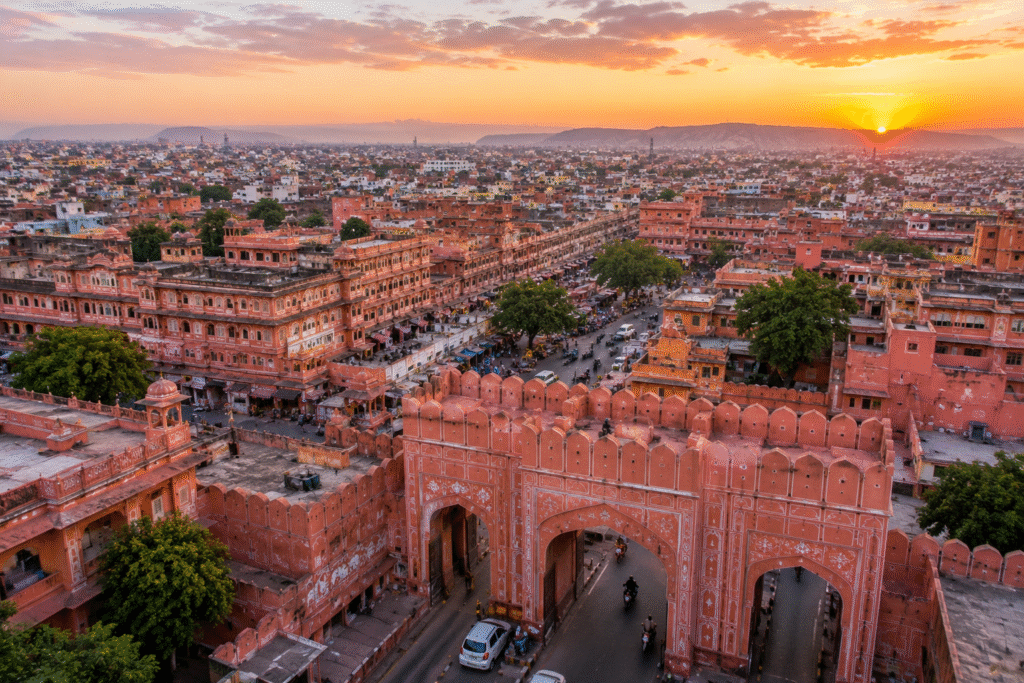
To this day, a local law mandates that all buildings within the old walled city maintain this iconic color, preserving a unified, historic aesthetic that continues to enchant millions of visitors every year.
Top Architectural Marvels & Attractions
When you begin compiling a list of jaipur attractions, the sheer volume of historical sites can be overwhelming. To help you prioritize, here are the must-see attractions in Jaipur Rajasthan that should be at the top of your itinerary.
1. Hawa Mahal (The Palace of Winds)
Perhaps the most recognizable structure in the city, the Hawa Mahal is a five-story extension of the City Palace. Built in 1799 from red and pink sandstone, the Hawa Mahal architectural features are nothing short of engineering genius. It boasts 953 small windows, or jharokhas, decorated with intricate latticework.
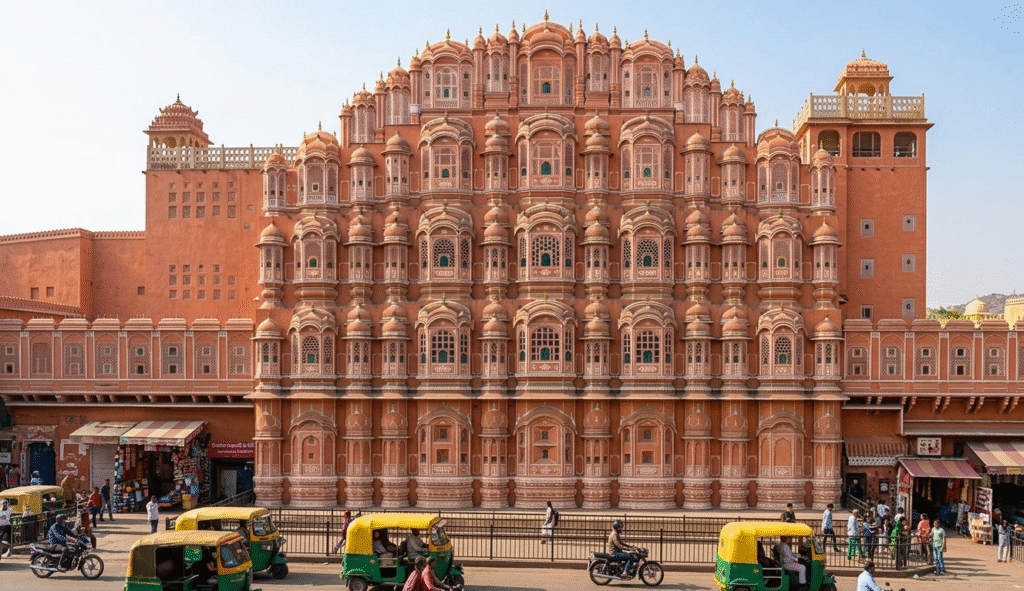
This design served two purposes. First, it allowed royal ladies, who observed strict purdah (seclusion), to observe street festivals and daily life without being seen by the public. Second, the architectural design created a Venturi effect, allowing cool breezes to pass through and naturally air-condition the palace during the scorching Rajasthani summers.
2. The Jantar Mantar Observatory
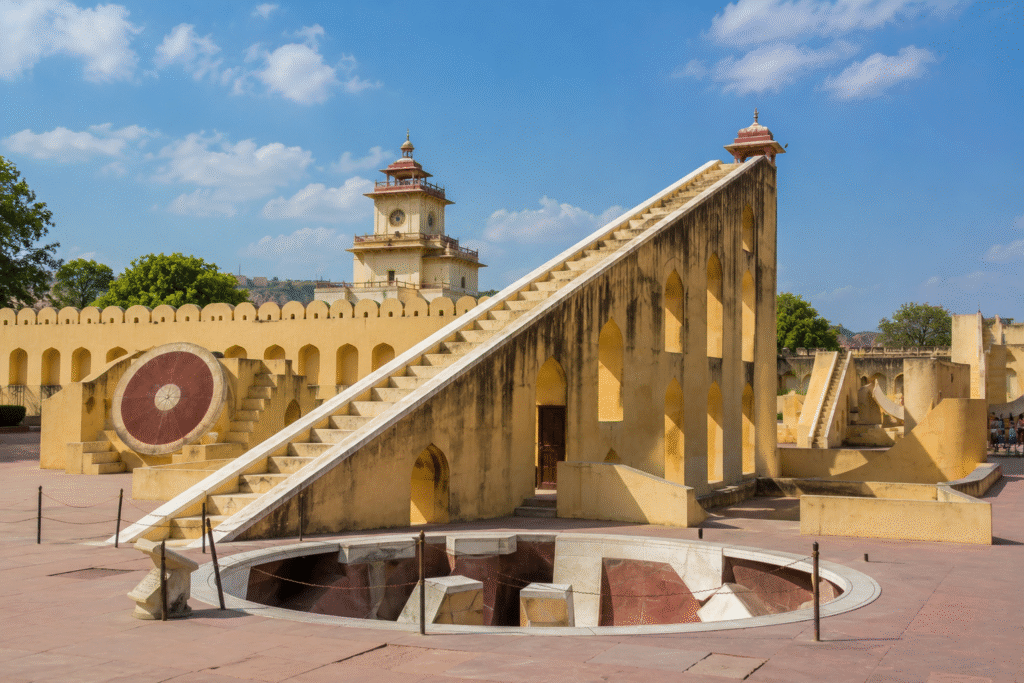
Just a stone’s throw from the City Palace lies a fascinating playground of ancient astronomy. The Jantar Mantar UNESCO World Heritage site is a collection of 19 architectural astronomical instruments built by Sawai Jai Singh II in 1734. The highlight is the Vrihat Samrat Yantra, the world’s largest stone sundial, which is accurate to within two seconds of local time. Walking among these massive, geometric structures offers a profound appreciation for the scientific prowess of 18th-century India.
3. Fortresses of the Aravalli Hills
No visit to Jaipur is complete without exploring its formidable forts. When planning a 3 day rajasthan itinerary centered around Jaipur, a structured approach works best:
- Amer Fort (Amber Fort): Located about 11 kilometers from the city center, Amer Fort is a massive, sprawling complex of pale yellow and pink sandstone. It is famous for its grandiose Hindu style elements, cobbled paths, and large ramparts. The crowning jewel of Amer is the Sheesh Mahal (Mirror Palace), designed so that a single candle can illuminate the entire room via thousands of tiny mirrored tiles. It is best visited in the morning.
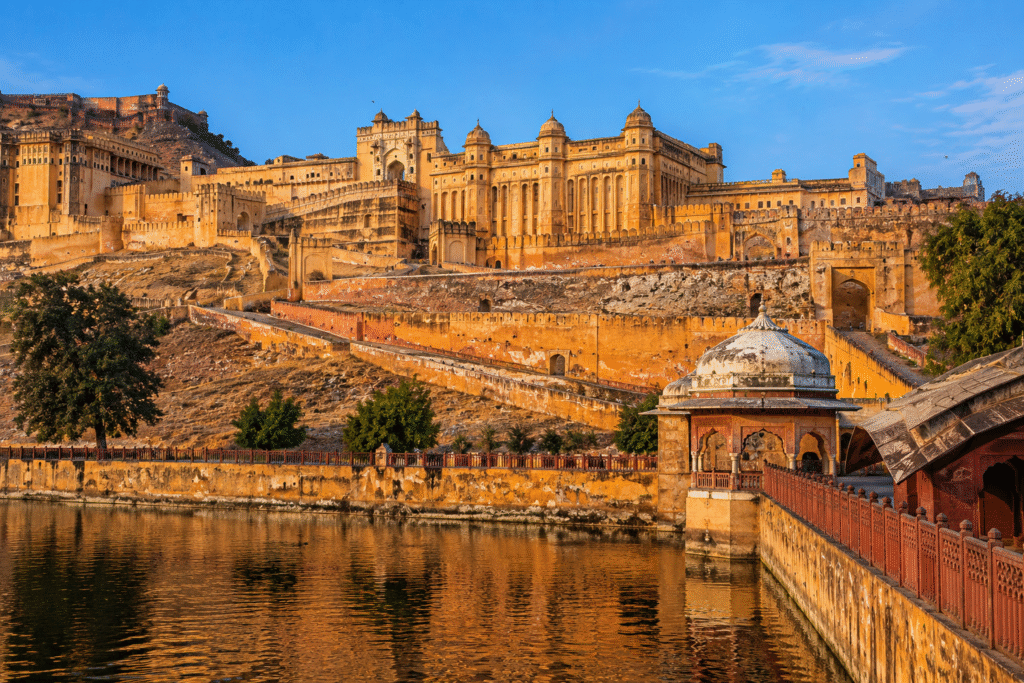
- Nahargarh Fort: Perched high on the rugged ridge of the Aravalli Hills, Nahargarh (meaning “Abode of Tigers”) offers the most breathtaking panoramic views of Jaipur. While its interiors are less ornate than Amer, its vantage point makes it the ultimate destination for sunset viewing. Grabbing a drink at the fort’s terrace café as the city lights up below is a magical experience.
Immersive Experiences: Culture, Shopping, and Food
Beyond its monuments, Jaipur’s true soul lies in its bustling streets, vibrant festivals, and artisanal heritage.
A Shopper’s Paradise
Rajasthan is globally renowned for its artisanship, and Jaipur is the epicenter of traditional rajasthani handicrafts and jewelry. For an unforgettable retail experience, you must dive into the city’s ancient bazaars.
A quintessential Johari Bazaar shopping guide for tourists suggests starting at the southern end of the market, where you will find the city’s legendary jewelry makers. Jaipur is famous for Kundan (gemstone setting with gold foil) and Meenakari (enameling) jewelry. Even if you aren’t looking to buy expensive gems, Johari Bazaar is fantastic for picking up colorful tie-dye textiles (Bandhani and Leheriya), mojari shoes (traditional leather footwear), and block-printed cottons. Be prepared to bargain gently and enjoy the lively interactions with local merchants.
Culinary Delights in the Walled City
Exploring authentic street food in old city markets is a must for any food lover. The cuisine here is deeply influenced by the arid climate and royal hunting traditions of the past.
- Pyaaz Kachori: Start your morning at Rawat Mishtan Bhandar for a crisp, deep-fried pastry stuffed with a spicy onion filling.
- Ghevar: A disc-shaped sweet made from flour and soaked in sugar syrup, traditionally associated with Rajasthani festivals but available year-round in the old city.
- Laal Maas: For a sit-down meal, seek out this fiery, iconic Rajasthani mutton curry, cooked with a generous amount of red Mathania chilies.
The Magic of Holi
If you time your visit for spring, you are in for a treat. Celebrating holi festival in Jaipur is an explosion of joy, music, and color. Unlike anywhere else, Jaipur infuses royal elegance into the festival of colors. Historically, the royal family would host grand elephant parades. Today, the city bursts into life with locals smearing organic gulal (colored powder) on one another, singing traditional folk songs, and sharing festive sweets like Gujiya. Attending a designated Holi event at a heritage hotel or cultural center is the safest and most immersive way for tourists to participate.
Practical Planning: Itineraries & Logistics
To make the most of your trip, strategic planning is key.
Crafting Your Itinerary
When planning a 3 day rajasthan itinerary centered around Jaipur, a structured approach works best:
- Day 1: The Walled City. Start with Hawa Mahal in the morning light, followed by the City Palace and Jantar Mantar. Spend the late afternoon shopping in Johari and Bapu Bazaars, finishing with street food sampling.
- Day 2: Forts and History. Head to Amer Fort early to beat the crowds and the heat. On your way back, stop for a photo at Jal Mahal (the Water Palace). In the late afternoon, drive up to Nahargarh Fort to catch the sunset.
- Day 3: Culture and Relaxation. Visit the Albert Hall Museum to dive deeper into Rajasthani history. Spend your afternoon relaxing at your heritage hotel, perhaps booking a traditional Ayurvedic spa treatment, or taking a hands-on block-printing workshop in the nearby village of Sanganer.
When to Go and How to Get Around
The best time to visit Jaipur for pleasant weather is during the winter months, from October to March. During this window, the days are sunny and comfortable (around 20-25°C or 68-77°F), while the evenings are brisk and cool, perfect for sightseeing and dining al fresco.
Getting around by local transport is part of the adventure. For short distances within the walled city, e-rickshaws and auto-rickshaws (tuk-tuks) are your best bet—just be sure to agree on a fare before getting in. Jaipur also boasts a clean and efficient Metro system, though its current reach is somewhat limited for tourist sites. For full days of sightseeing like visiting the forts, hiring a private air-conditioned cab for the day is highly recommended and incredibly affordable.
Where to Stay: Living Like Royalty
To complete the royal experience, staying in one of the best luxury heritage hotels in Rajasthan is a must. Jaipur is home to magnificent palaces converted into world-class hotels. The Rambagh Palace, once the residence of the Maharaja, offers an unparalleled luxury experience with its manicured gardens and roaming peacocks. For a slightly more intimate yet equally historic vibe, Samode Haveli inside the old city walls offers gorgeously frescoed rooms and an oasis-like courtyard pool.
Connecting Jaipur to the Golden Triangle
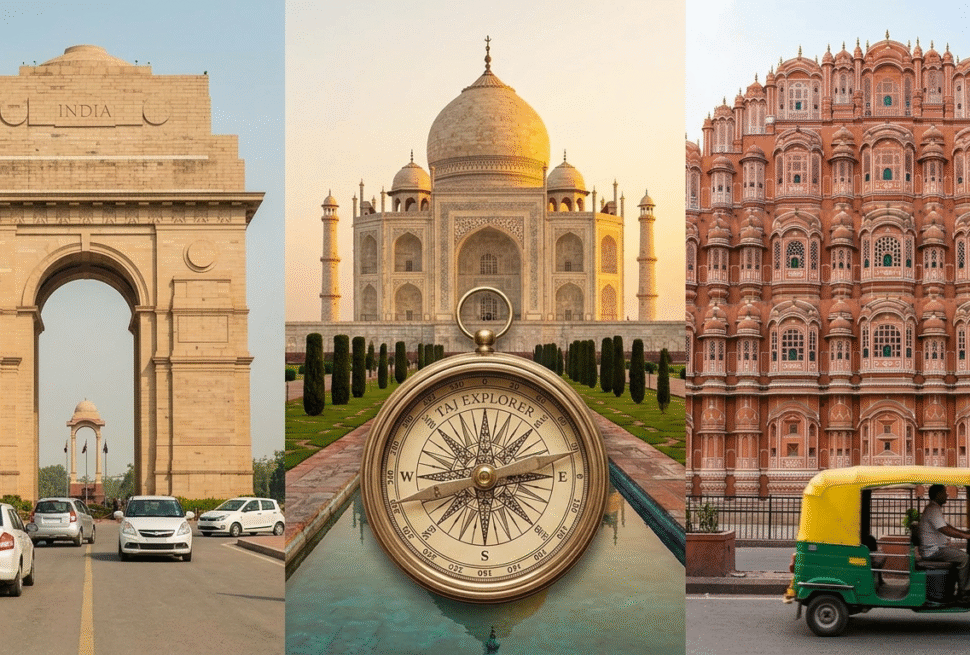
Jaipur rarely stands alone on an Indian itinerary. It forms one-third of India’s famed “Golden Triangle,” alongside Delhi and Agra. Travelers frequently ask: Why is the Delhi Agra Jaipur tour the best Indian tour?
The answer lies in the incredible diversity and historical density of this route. In just a few days, you transition from the bustling, cosmopolitan metropolis and Sultanate ruins of Delhi, to the romantic Mughal grandeur of Agra, and finally to the vibrant, Rajputana desert culture of the pink city. The circuit is geographically convenient, heavily equipped for tourism, and offers an unmatched crash-course in Indian history.
Deciding on Your Route
A common dilemma for travelers short on time is: What should I choose, a Jaipur Darshan tour or an Agra tour?
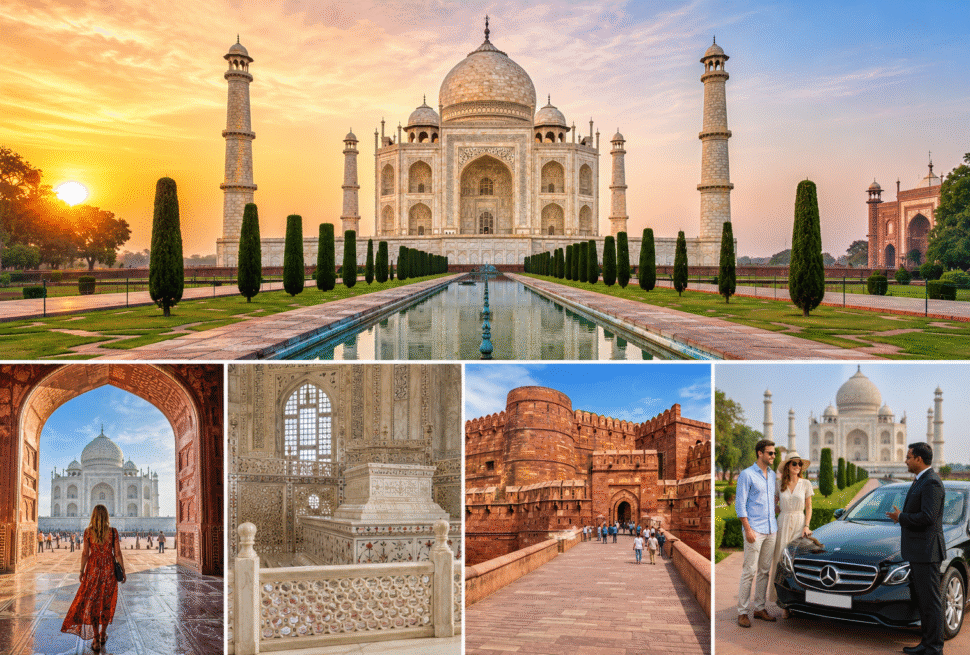
- Choose an Agra tour if your absolute priority is seeing the Taj Mahal and you are fascinated by Mughal history, marble inlay work, and symmetrical Persian-style gardens.
- Choose a Jaipur Darshan (sightseeing) tour if you prefer vibrant street life, sprawling hilltop forts, bustling textile markets, and immersive cultural experiences.
However, you don’t necessarily have to choose. Even with limited time, you can experience the best of both worlds. So, What is the best itinerary for a Delhi Agra Jaipur 5 day tour?
- Day 1: Delhi. Arrive and explore Old Delhi (Jama Masjid, Chandni Chowk) and New Delhi (India Gate, Humayun’s Tomb).
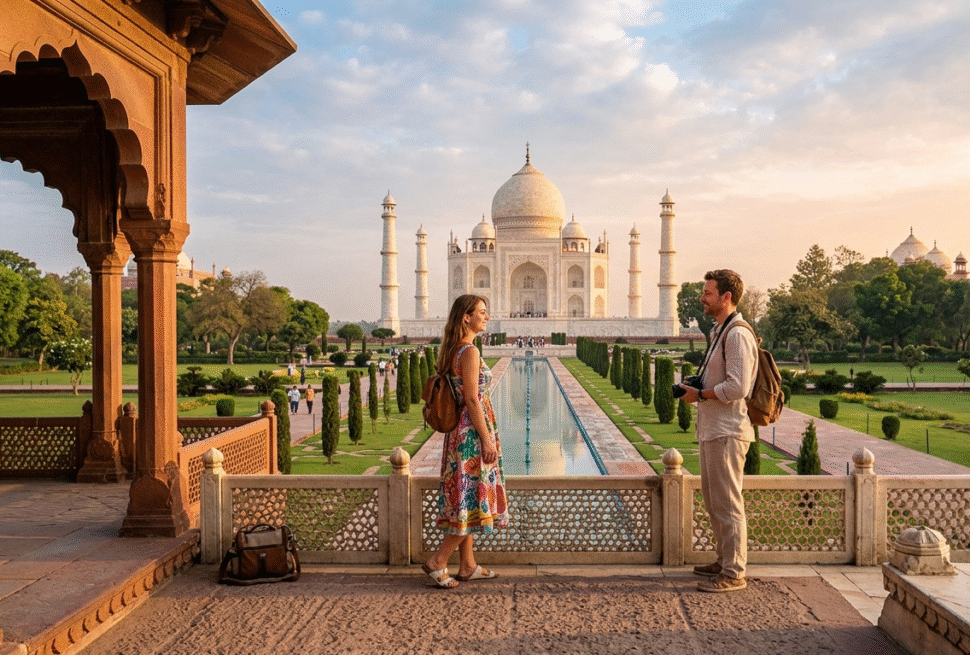
- Day 2: Delhi to Agra. Drive to Agra in the morning. Visit the Agra Fort in the afternoon and view the Taj Mahal at sunset from Mehtab Bagh across the river.
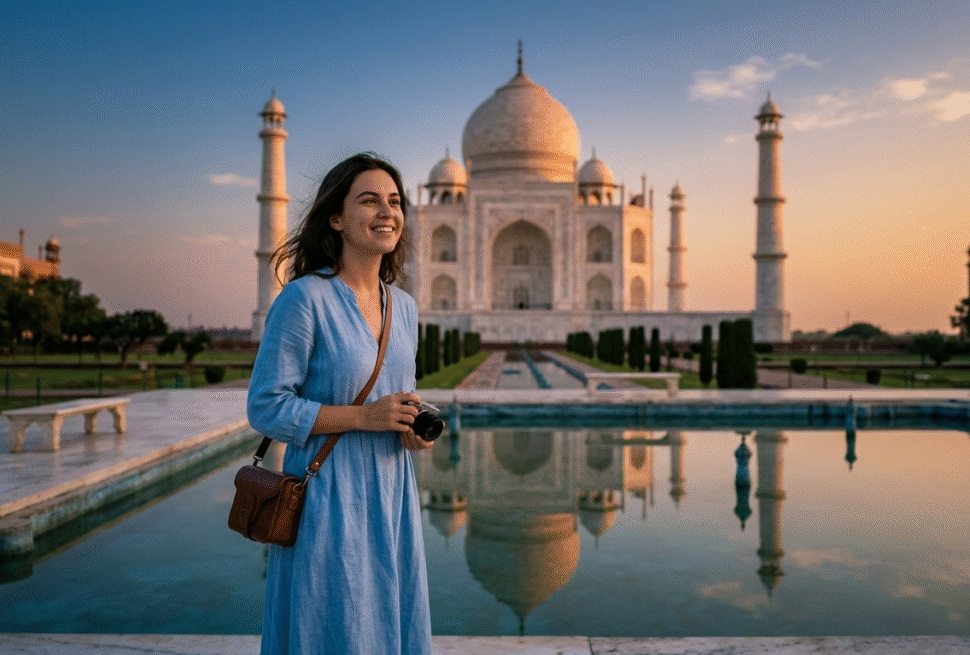
- Day 3: Agra to Jaipur via Fatehpur Sikri. Experience the Taj Mahal at sunrise. After breakfast, drive toward Jaipur, stopping halfway to explore the incredible ghost city of Fatehpur Sikri. Arrive in Jaipur by evening.
- Day 4: Jaipur. The complete Jaipur Darshan: Amer Fort, Hawa Mahal, Jantar Mantar, and shopping.
- Day 5: Jaipur to Delhi. Final morning exploring the City Palace or Albert Hall Museum before driving or taking a quick flight back to Delhi for your departure.
Exploring Agra and the Magic of Fatehpur Sikri
If you are basing yourself in Delhi and looking at the Agra leg of the triangle, logistics are crucial.
Mastering the Agra Trip
How to plan my one day trip to Agra? If you only have one day, time is of the essence.Is it wise to go for a Delhi Agra Same Day Tour? Yes, it is highly feasible thanks to modern infrastructure. You can take the Gatimaan Express, a semi-high-speed train that gets you from Delhi to Agra in just 100 minutes. Alternatively, hiring a private cab via the Yamuna Expressway takes about 3 to 4 hours. A same-day tour typically allows you enough time to witness the Taj Mahal, explore the Agra Fort, and grab a traditional Mughlai lunch before heading back.
However, if you can spare an overnight stay, How do I plan a trip from Delhi to Agra in 2 days? A two-day trip allows you to witness the Taj Mahal at sunrise—the absolute best time for photography and avoiding crowds. It also gives you the flexibility to visit the “Baby Taj” (Tomb of I’timad-ud-Daulah) and, most importantly, allows time for a dedicated excursion to the outskirts of Agra.
This brings us to a highly recommended addition to your itinerary: a One Day Agra & Fatehpur Sikri Sightseeing Trip by Cab.
Unveiling Fatehpur Sikri
Just about 35 kilometers (22 miles) west of Agra lies one of India’s most hauntingly beautiful historical monuments. The fatehpur sikri location makes it the perfect pitstop on the drive between Agra and Jaipur, or an easy half-day trip from Agra itself.
Founded in 1569 by the great Mughal Emperor Akbar, Fatehpur Sikri was intended to be the grand capital of the Mughal Empire. Constructed entirely of brilliant red sandstone, the city blends Islamic, Hindu, and Jain architectural elements, reflecting Akbar’s secular vision and his marriage to a Rajput princess. However, just 14 years after its completion, the city was entirely abandoned due to a severe water shortage. Today, this perfectly preserved ghost town stands as a pristine time capsule of 16th-century Mughal life.
When exploring the fatehpur sikri fort and palace complex, there are several standout structures:
- Buland Darwaza (Gate of Magnificence): Towering 54 meters high, this majestic gateway is the highest in the world, built to commemorate Akbar’s victory over Gujarat.
- Tomb of Salim Chishti: A stark contrast to the red sandstone, this gleaming white marble tomb belongs to the Sufi saint who prophesied the birth of Akbar’s heir. Even today, visitors tie threads to the carved marble screens to make a wish.
- Panch Mahal: A five-story, open-air pavilion supported by 176 intricately carved columns, primarily used by the royal women for recreation.
The historical significance of fatehpur sikri agra cannot be overstated. As a UNESCO World Heritage site, fatehpur sikri india remains a crucial chapter in the story of the Mughal dynasty.
Booking the Best Fatehpur Sikri Experiences
To truly appreciate the complex history of the site, exploring with a knowledgeable guide is paramount. When searching for Fatehpur Sikri Tours & Tickets, it pays to book in advance. Many travelers opt to pre-book online to skip the ticketing lines, especially during peak season.
As tourism bounces back and evolves, tour operators are stepping up their game. If you are planning future travel, looking into resources like THE 10 BEST Fatehpur Sikri Tours for 2026 (from ₹ 577) or searching for The BEST Fatehpur Sikri Tours and Excursions in 2026 will help you find highly-rated guides who can bring the empty courtyards to life with tales of Emperor Akbar and his legendary “Nine Jewels” (his court of extraordinary scholars and artists).
Whether you do a private guided walk or join a small group, experiencing The magic of Fatehpur Sikri in one unforgettable day will undoubtedly be a highlight of your Golden Triangle journey. The quiet echo of history within its red walls provides a stunning contrast to the bustling, living history you experience in Jaipur.
Conclusion
From the intricate honeycomb façade of the Hawa Mahal to the sun-drenched courtyards of the abandoned Mughal capital, a journey through Rajasthan and Uttar Pradesh is a feast for the senses.
Jaipur, the radiant pink city, captures the imagination with its seamless blend of heritage and vitality. By understanding the city’s architectural genius, savoring its spicy street foods, and diving into its vibrant markets, you create memories that will last a lifetime. When you link this Rajputana charm with the awe-inspiring monuments of Agra and the quiet majesty of Fatehpur Sikri, you complete a travel narrative that represents the very best of India.
Whether you have three days or three weeks, the vibrant colors, welcoming hospitality, and enduring history of this incredible region are waiting to be explored. Pack your bags, book your tours, and get ready to be mesmerized by the magic of India’s Golden Triangle.