Exploring the Majestic Agra Fort’s History
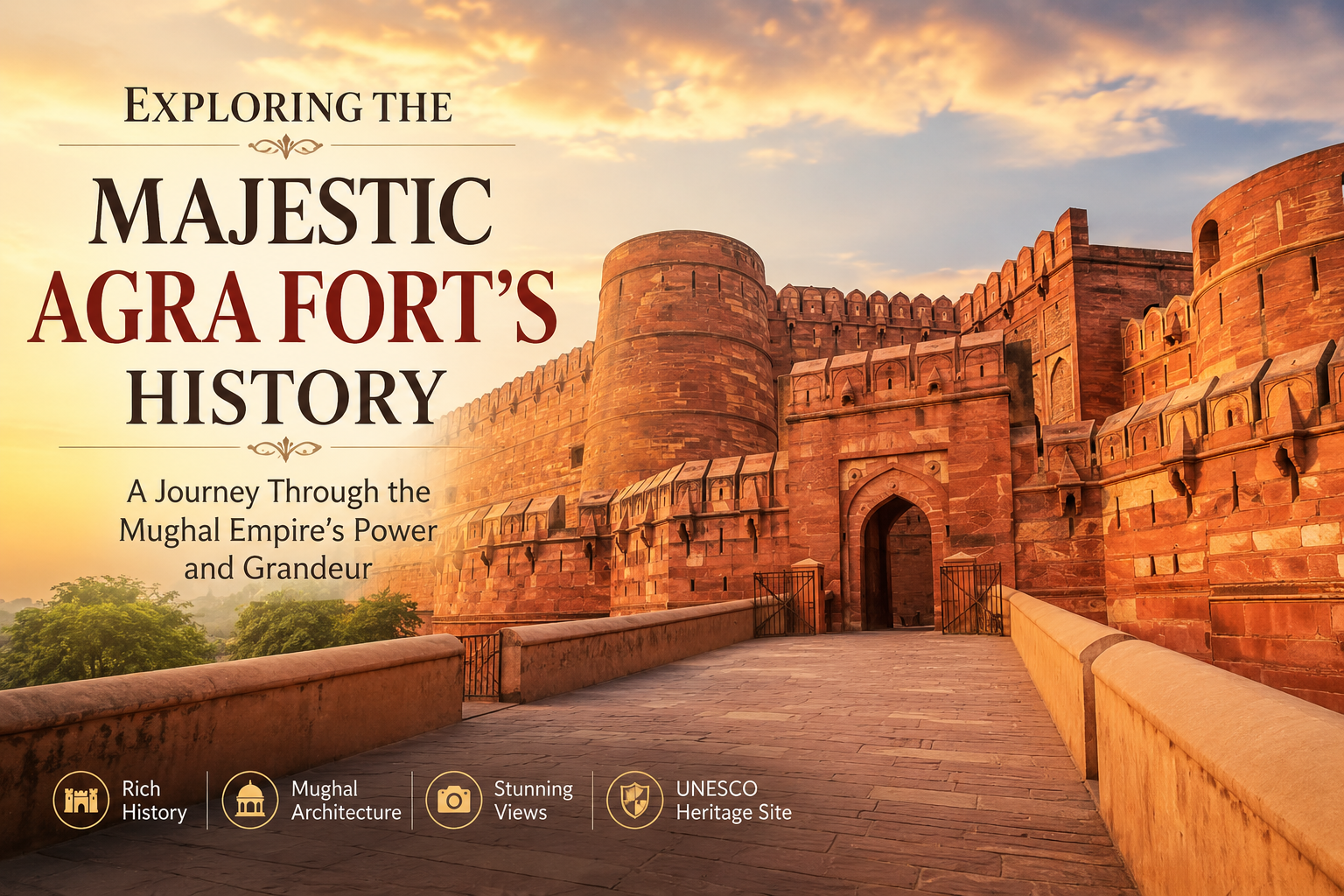
When you step into the vast, red-walled courtyards of the historic Agra Fort, you are not just walking into a monument; you are stepping into the epicenter of the mighty Mughal Empire. Often overshadowed by the gleaming white marble of the neighboring Taj Mahal, this massive fortification is a breathtaking destination in its own right.
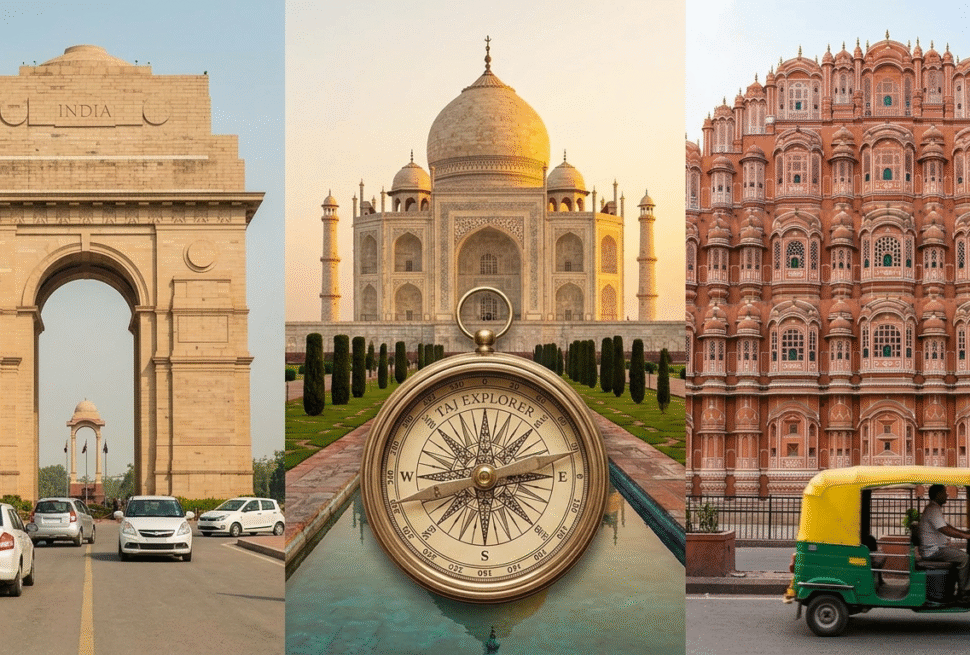
Whether you are planning a comprehensive agra fort tour or looking for the most efficient Day Trips from New Delhi to Agra through Taj Explorer, understanding the rich heritage of this citadel is essential.. In this comprehensive guide, we will explore the captivating history, awe-inspiring architecture, and practical travel strategies to help you experience this majestic stronghold.
The Historical Canvas of Agra Fort
To truly appreciate the fort, one must delve deep into its dramatic past. The story of this site long predates the famous Mughal emperors, serving as a focal point for power struggles across centuries.
Pre-Mughal Roots and the Lodi Era
Long before it became the glittering capital of the Mughals, a brick fort known as Badalgarh stood on this site, held by the Rajput kings. However, the true transformation of Agra began in the early 16th century. A study of the history of the Lodi dynasty and Mughal expansion reveals that Sikandar Lodi was the first Sultan of Delhi to shift his capital to Agra. His son, Ibrahim Lodi, held the fort until his defeat at the First Battle of Panipat in 1526 by Babur, the founder of the Mughal Empire.
When Babur arrived, he captured the fort and seized a vast treasure, which included the legendary Koh-i-Noor diamond. By the time Babur’s son, Humayun, was crowned here, the fort was already a vital center of power, setting the stage for centuries of imperial dominance.
Akbar’s Grand Vision
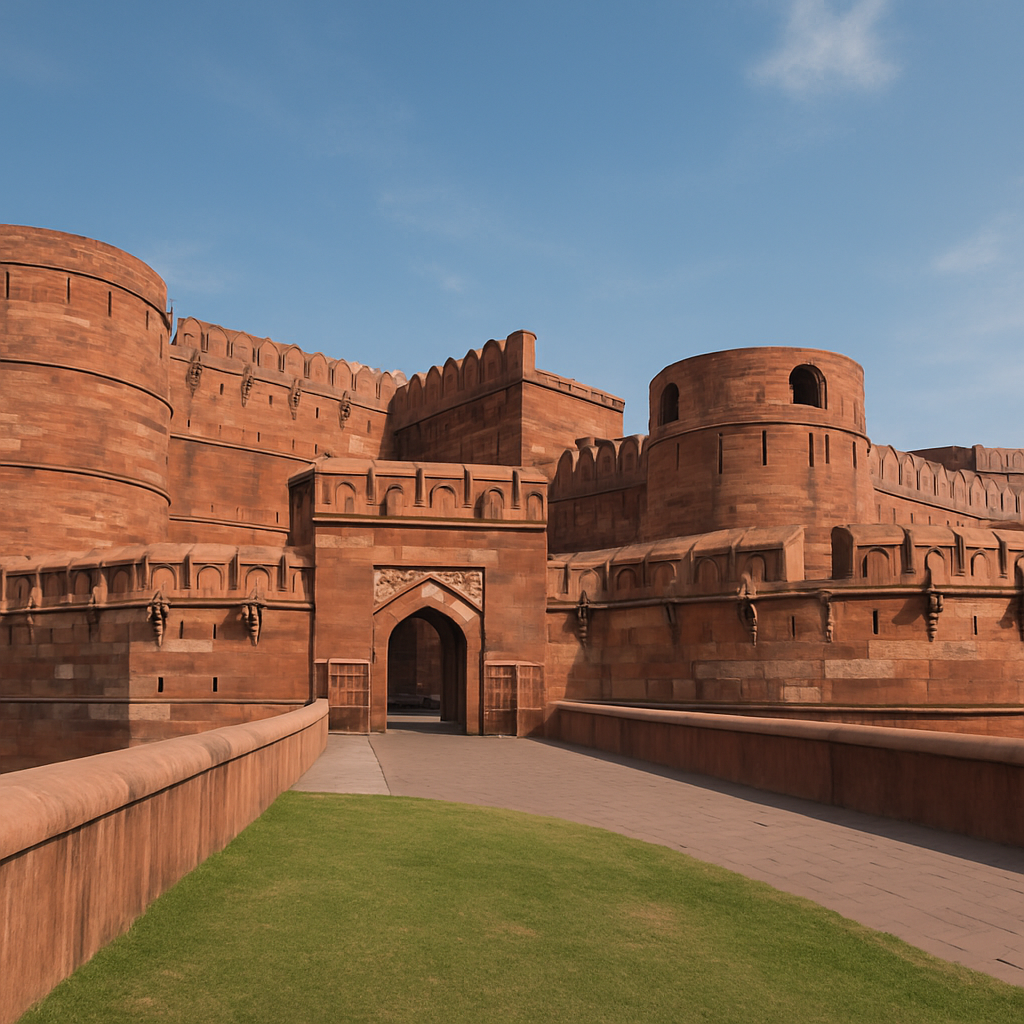
The fort as we know it today was fundamentally shaped by the third Mughal Emperor, Akbar. Recognizing the strategic importance of Agra, Akbar ordered a massive renovation of the crumbling mud-brick structure. The evolution of Indian military fortifications under Akbar was unprecedented. He brought in over 4,000 builders who worked daily for eight years, completing the colossal walls using locally sourced red sandstone from the Barauli area of Rajasthan. By 1573, the fort stood as an impenetrable military marvel.
Shah Jahan’s Transformation and a Tragic End
While Akbar built the fort for military strength, his grandson, Shah Jahan, transformed it into a luxurious palace. Shah Jahan had a deep affinity for pristine white marble inlaid with semi-precious stones. He tore down some of the earlier red sandstone structures to build his own elegant palaces.
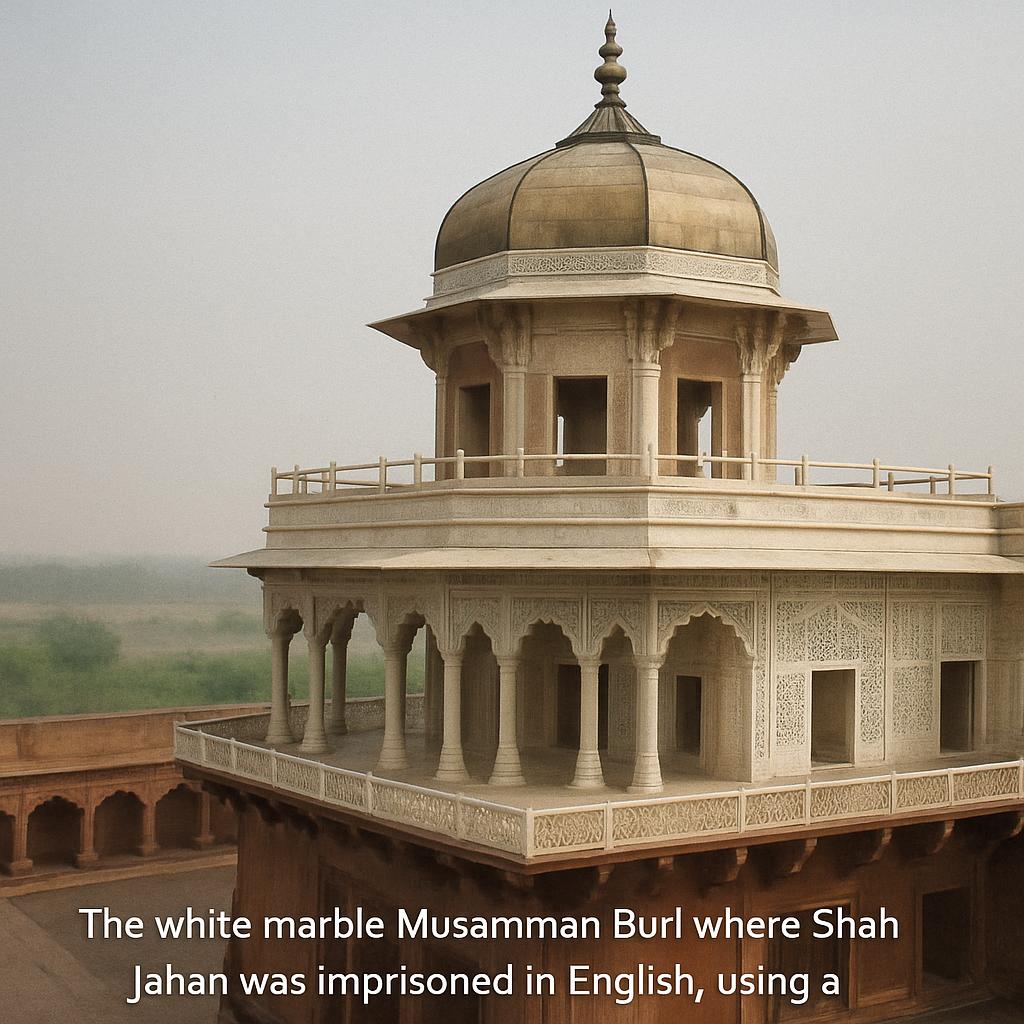
Ironically, the very fort Shah Jahan beautified became his gilded cage. A common question among history enthusiasts is where was Shah Jahan imprisoned by Aurangzeb? Following a bitter war of succession, Aurangzeb overthrew his father and confined him to the Muasamman Burj, a stunning octagonal tower within the fort. For the last eight years of his life, Shah Jahan gazed out from these marble balconies at the Taj Mahal, the mausoleum he built for his beloved wife.
Architectural Marvels Inside the Citadel
The Mughal architecture of the Red Citadel in Agra is a fascinating timeline of changing imperial tastes. Walking through the complex reveals a seamless blend of robust military design and delicate palatial artistry.
Sandstone and Marble: A Tale of Two Styles
The fort is a prime example of Indo-Islamic design elements in sandstone structures. The intricate carvings, overhanging balconies (jharokhas), and decorative arches showcase a blend of Hindu and Islamic architectural traditions.
One of the most striking comparisons within the fort is the Jahangir Mahal vs Khas Mahal design.
- Jahangir Mahal: Built by Akbar as a women’s quarter, this massive red sandstone palace is characterized by heavy brackets, intricately carved stone piers, and cross-beams that heavily echo traditional Hindu temple architecture.
- Khas Mahal: Built later by Shah Jahan, this structure is a vision in white marble. It features elegant Persian-style floral patterns, delicate pietra dura work, and graceful arches, representing the pinnacle of classical Mughal refinement.
The Great Audience Halls
No Mughal palace is complete without spaces for governance and public address. The Diwan-i-Aam and Diwan-i-Khas architectural features highlight the dual nature of an emperor’s duties.
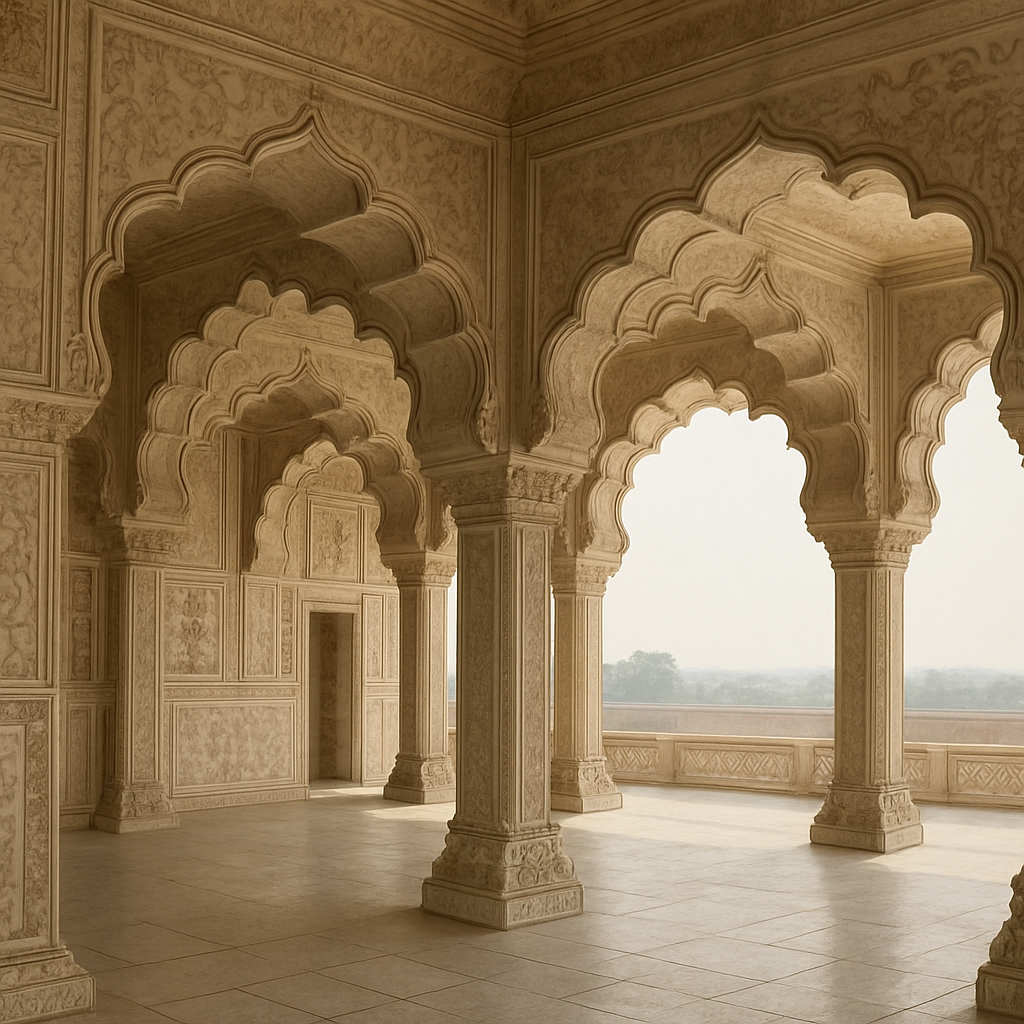
- Diwan-i-Aam (Hall of Public Audience): This pillared hall, where the emperor listened to the grievances of the general public, features rows of perfectly proportioned arches that create a mesmerizing sense of infinite depth.
- Diwan-i-Khas (Hall of Private Audience): Reserved for important dignitaries and foreign ambassadors, this opulent marble pavilion originally housed the legendary Peacock Throne before it was moved to Delhi.
From these regal vantage points, visitors can still enjoy spectacular views of the Yamuna River from the royal balconies, visualizing the era when imperial barges sailed the waters below.
Comparing Two Mughal Titans
Travelers often ask about the differences between Delhi Red Fort and the Agra stronghold. While both are magnificent red sandstone structures, Agra Fort is much older and exhibits a wider variety of architectural styles, transitioning from Akbar’s robust sandstone to Shah Jahan’s delicate marble. The Delhi Red Fort, built entirely under Shah Jahan, is more uniform in its architectural vision but lacks the layered, generational history visible in the walls of Agra.
Planning Your Visit: Tickets, Timings, and Tours
Agra Fort is one of the most prominent UNESCO World Heritage Sites in Uttar Pradesh, making it a must-visit destination for global travelers.
- Tickets and Timings: Understanding entry tickets and visiting hours for Indian monuments is vital for a smooth trip. The fort opens at sunrise and closes at sunset. You can purchase your agra fort ticket online via the Archaeological Survey of India (ASI) portal to avoid long queues, or buy them at the Amar Singh Gate.
- Best Time to Visit: The best time to visit monuments in North India is during the cooler months from October to March. The harsh summer heat (April to June) makes exploring the vast outdoor courtyards exhausting.
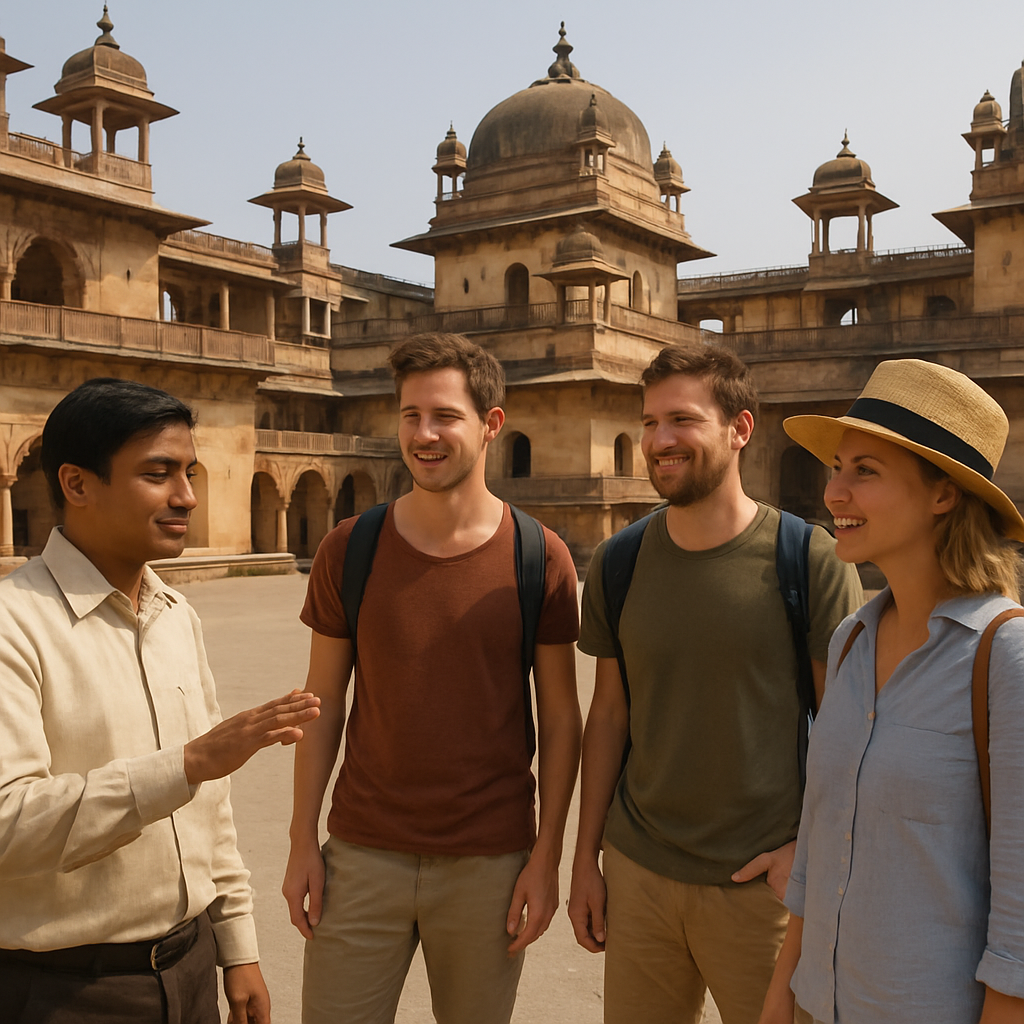
- Tours: To fully grasp the historical nuances, consider joining guided walking tours of Mughal heritage sites such as the Agra Sightseeing Tour. A knowledgeable guide can point out hidden acoustic tricks in the architecture and share fascinating anecdotes about the imperial harem.
- Photography: For those looking to capture stunning agra fort india pictures or looking for the best spots for agra fort pics, the early morning light hitting the red sandstone is unparalleled.
The Ultimate Guide: Traveling from Delhi to Agra
Knowing how to reach the historic walled city of Agra is the most crucial part of planning your trip. Agra is located about 230 kilometers (143 miles) south of the Indian capital. Let’s break down What are the ways to travel from Delhi to Agra?
If you are wondering How to Travel from Delhi to Agra by Train Bus and Car, you have plenty of excellent options.
Traveling by Car and Road
The road network between the two cities is phenomenal, largely thanks to the Yamuna Expressway.
- Which is the best route of Delhi from Agra? TThe six-lane Yamuna Expressway is undoubtedly the best, safest, and fastest route.
- delhi to agra distance: The distance via the expressway is approximately 233 km.
- How long does it take to go on a Delhi to Agra tour by car? Generally, a drive takes about 3.5 to 4 hours, depending on Delhi traffic.
- Future Outlook: When looking at Delhi to Agra Distance Time & Best Travel Options (2026), the upcoming infrastructure projects and electric vehicle highway corridors are expected to make this drive even more seamless and eco-friendly.
Traveling by Train
For many, the railway is the most comfortable and culturally immersive way to travel. What is the best way to get from New Delhi to Agra Fort? For speed and convenience, it is often the train.
When searching for a delhi to agra train, you will find several high-speed options.
- delhi to agra best for foreigners: The Gatimaan Express is widely considered the best option for international tourists. It departs from Nizamuddin Railway Station in Delhi, offers clean carriages, onboard meals, and takes just 100 minutes to reach Agra Cantt.
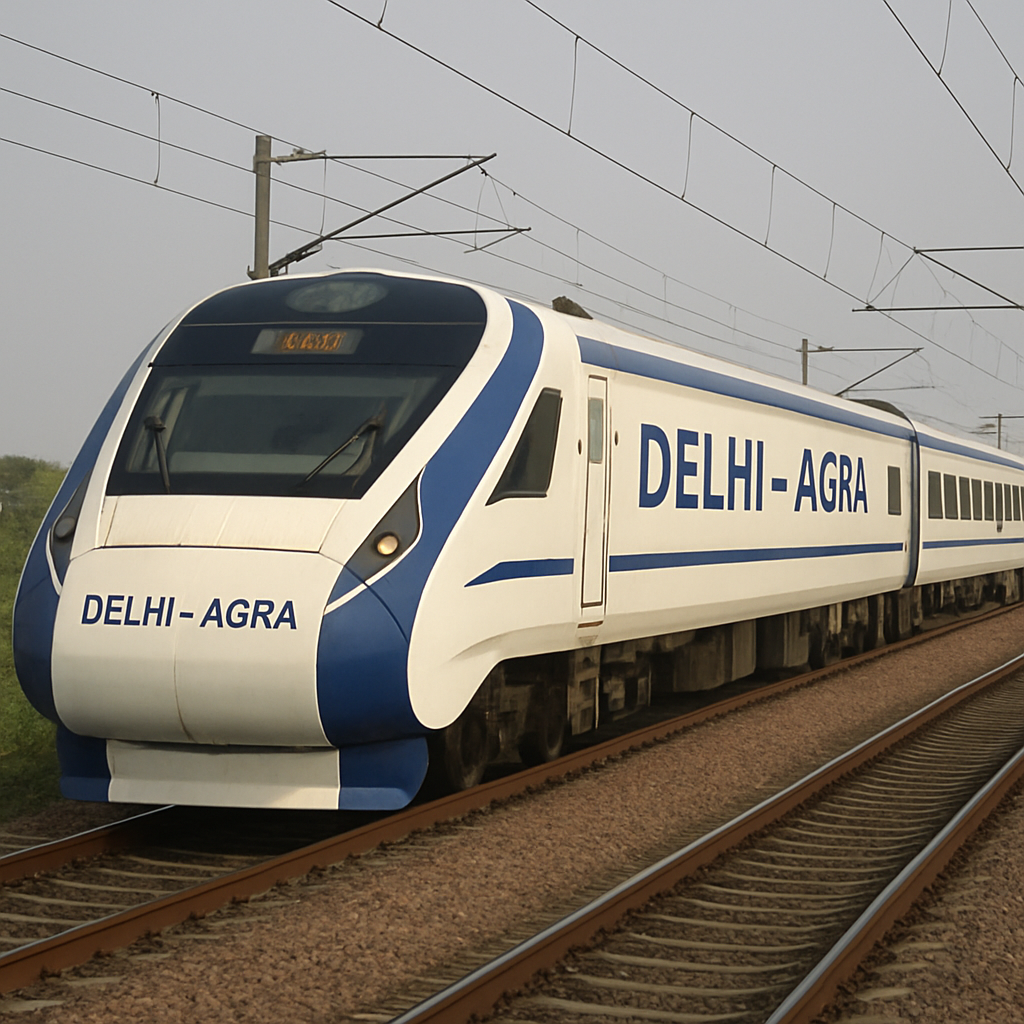
- Delhi To Agra Trains: Other popular options include the Bhopal Shatabdi Express and the Vande Bharat Express.
- New Delhi to Agra Fort Trains: While most fast trains stop at Agra Cantt (AGC), there are specific local and passenger trains that connect directly. If you are specifically looking for NEW DELHI (NDLS) to AGRA FORT (AF) Trains, the Intercity Express and Taj Express are viable options. Taking a train from delhi to agra dropping you right at the Agra Fort (AF) station puts you mere footsteps from the monument’s gates.
- Remember, booking a ticket from new delhi to agra or from delhi to agra should be done well in advance via the IRCTC website, as seats fill up quickly. Conversely, returning from agra to delhi follows the same easy process.
Traveling by Air
Is there a delhi to agra flight? While Agra does possess the Pandit Deen Dayal Upadhyay Airport (a military airbase with a civil enclave), direct commercial flights from Delhi are rare and generally impractical. The time spent checking into the airport, flying, and transferring to the city usually exceeds the time it takes to simply drive or take the high-speed train.
Curating Your Day Trip: Delhi to Agra Itineraries
Because of the excellent connectivity, doing a new delhi to taj mahal and Agra Fort trip in a single day through the Same Day Agra Tour by Car is incredibly popular.
Is it wise to go for a Delhi Agra Same Day Tour?
Absolutely. If you are short on time, a same-day tour is highly efficient. While spending a night allows for a more relaxed pace, thousands of travelers successfully manage this trip daily without feeling overly rushed, provided they start early.
How can I go on a one-day Agra tour from Delhi?
If you are asking, “How do I go on a Delhi to Agra trip for one day?“, here is a highly recommended, practical itinerary for a Delhi to Agra Taj Mahal Tour:
- 06:00 AM – Departure: Take the early morning Shatabdi Express from New Delhi, or start your drive down the Yamuna Expressway.
- 08:30 AM – Arrival & Taj Mahal: Arrive in Agra. Head directly to the Taj Mahal to beat the worst of the mid-day crowds and the heat. When planning How to reach from Delhi to Agra Taj Mahal?, know that taxis and auto-rickshaws are readily available at the Agra Cantt station.
- 11:30 AM – The Short Transit: Wondering about the distance between Taj Mahal and the nearby fortress? It is merely 2.5 kilometers. You can easily take an auto-rickshaw or even a horse-drawn carriage between the two.
- 12:00 PM – Agra Fort: Embark on your agra fort tour. Spend at least two hours marveling at the palaces and taking in the history.
- 02:30 PM – Lunch: Enjoy traditional Mughlai cuisine (like rich curries and kebabs) at a highly-rated local restaurant.
- 04:00 PM – Mehtab Bagh (Optional): If time permits, cross the river to Mehtab Bagh for a stunning sunset view of the Taj Mahal.
- 05:50 PM – Return Journey: Catch the Gatimaan Express or begin your drive back, completing your New Delhi to Agra Fort adventure by dinner time.
Maximizing Your Agra Experience
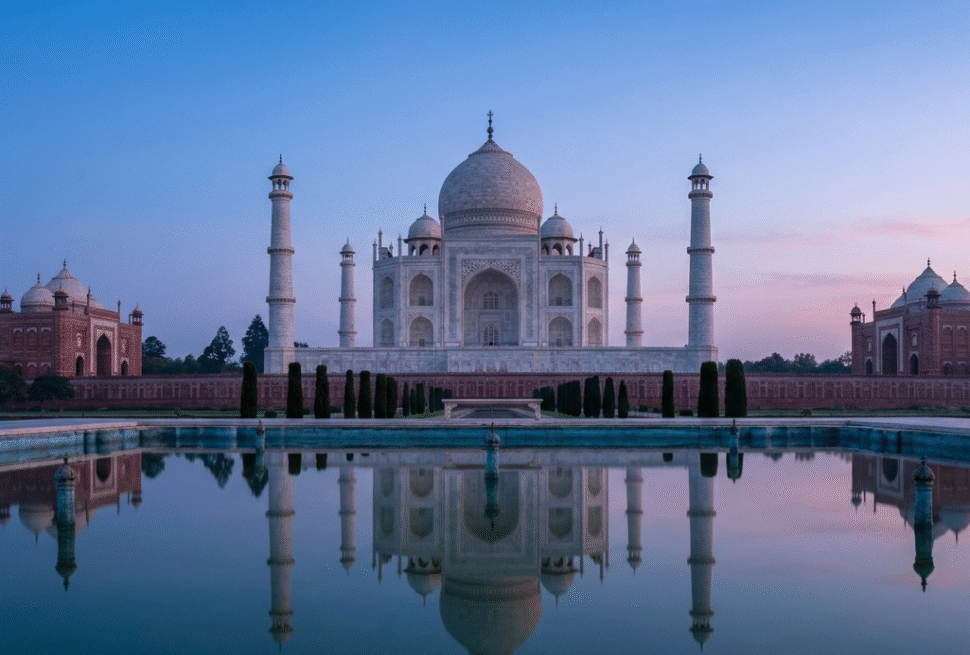
While the journey from delhi to taj mahal is usually the primary motivation for travelers, realizing that the Taj is just one chapter in Agra’s story is a revelation. The walled city of Agra Fort offers context. It tells you who built the Taj Mahal, why they built it, and where they ruled from.
When you plan your transit, whether looking up a fast train from delhi to agra or calculating the exact delhi to agra distance, remember that you are traveling a route that Mughal emperors once traversed on horseback and elephant-back.
Quick Tips for an Unforgettable Visit:
- Hire Government-Approved Guides: To avoid being misled, only hire guides who possess an official Ministry of Tourism ID card.
- Stay Hydrated: Exploring the vast expanse of the fort requires walking several kilometers. Carry water, especially if you aren’t visiting during winter.
- Combine Tickets: Sometimes, purchasing a composite ticket for multiple monuments can save you money and time at the ticketing counters.
Conclusion
Exploring the magnificent Agra Fort is a journey through the triumphs, tragedies, and unparalleled artistic achievements of the Mughal Empire. From the heavy, protective red sandstone walls erected by Akbar to the delicate, poetic marble pavilions designed by Shah Jahan, the fort is a masterclass in architectural evolution.
Getting there has never been easier. With comprehensive options for traveling from new delhi to agra, including world-class expressways and lightning-fast trains, the historic capital is highly accessible. Whether you are piecing together a comprehensive delhi to agra taj mahal tour or simply want to capture the perfect agra fort pics at sunset, this majestic citadel promises an experience that will echo in your memory long after you have returned home.
Pack your bags, book your agra fort ticket, and get ready to step back in time into the heart of India’s royal past with Taj Explorer Luxury India Tours.