Table of Contents
Introduction
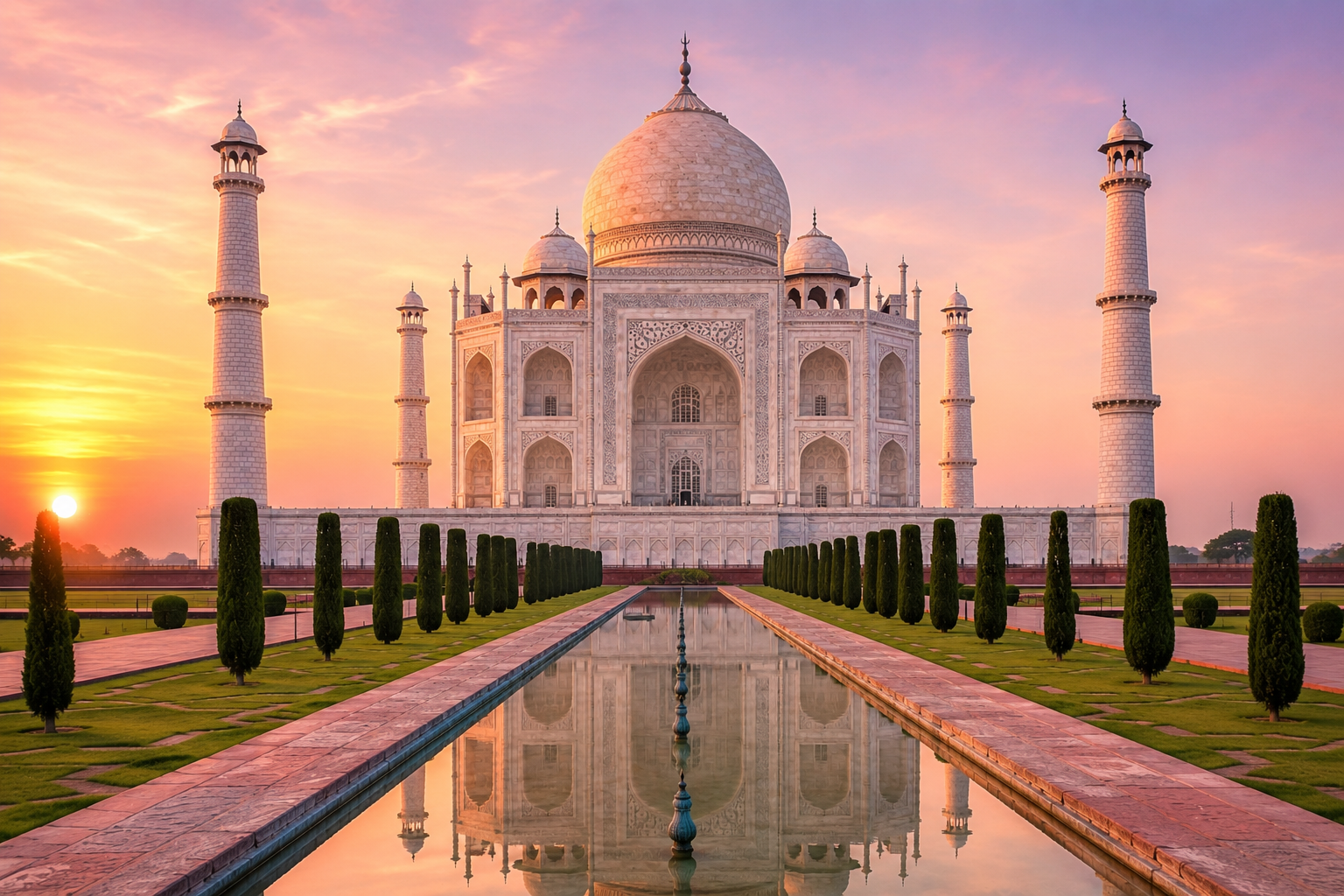
The Taj Mahal color changing effect is one of the most fascinating architectural phenomena in the world. Located in Agra, the Taj Mahal appears pink at sunrise, bright white during the day, golden at sunset, and bluish under moonlight. This incredible transformation is caused by the interaction of sunlight, Makrana marble, atmospheric conditions, and human perception, making the monument one of India’s most mesmerizing wonders.
This extraordinary visual phenomenon is not magic or illusion alone — it is a beautiful combination of science, architecture, atmospheric conditions, and human perception. Travelers choosing a Taj Mahal Tour Package or a Taj Mahal Sunrise Tour often consider this changing appearance one of the most unforgettable experiences in India.
According to UNESCO World Heritage Centre, the Taj Mahal is regarded as one of the finest examples of Mughal architecture in the world. Beyond its romantic history, the monument is also an architectural and scientific masterpiece.
Understanding the Core Material: Makrana Marble
The secret behind the Taj Mahal’s changing appearance begins with its famous Makrana marble, sourced from Rajasthan. Unlike ordinary marble, this stone possesses unique optical qualities that allow it to interact dynamically with light.
Why Makrana Marble is Unique
- High calcium carbonate purity
- Semi-translucent surface quality
- Excellent light reflection properties
- Strong resistance to impurities
The marble does not merely reflect light; it absorbs, diffuses, and refracts it. This interaction creates subtle visual transformations throughout the day.
Travelers exploring Rajasthan through the Golden Triangle Tour Packages often discover how closely connected Mughal architecture and Rajasthan’s craftsmanship truly are.
The Role of Light: A Scientific Perspective
The Taj Mahal does not physically change color. Instead, our eyes perceive different shades depending on how sunlight interacts with the marble.
Key Scientific Principles Involved
Reflection
Light bounces off the polished marble surface.
Refraction
Light bends slightly when entering the translucent stone.
Scattering
Atmospheric particles scatter different wavelengths of light.
Together, these processes create the Taj Mahal’s famous color-changing effect.
You can learn more about light scattering through National Geographic Science.
Morning Glow: Why the Taj Mahal Appears Pink at Sunrise
Sunrise is one of the best times to experience the Taj Mahal. Visitors arriving through the Agra Taj Mahal Tour From Delhi often witness the marble glowing with soft pink shades.
Scientific Explanation
- The sun remains low on the horizon
- Light passes through a thicker atmosphere
- Blue wavelengths scatter away
- Red and pink wavelengths dominate
This warm-toned light reflects beautifully on the marble, producing the iconic pink appearance.
Photographers and luxury travelers especially prefer sunrise because the softer light enhances both beauty and comfort.
Midday Brilliance: The Pure White Appearance
Around noon, the Taj Mahal appears closest to its true natural color — brilliant white.
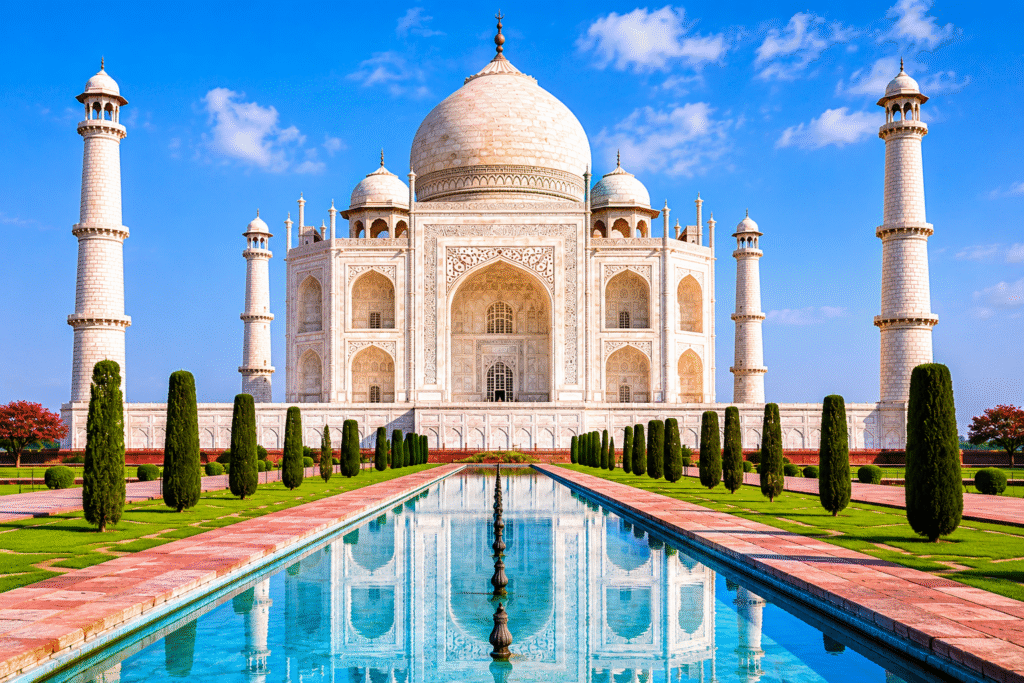
Why This Happens
- Sunlight becomes direct and intense
- Minimal atmospheric interference
- Full light spectrum reaches the marble
- Marble reflects nearly all wavelengths equally
This creates the monument’s radiant white appearance that many travelers instantly recognize.
Guests traveling on the Same Day Agra Tour by Car frequently visit during daylight hours when the monument shines most brightly against the blue sky.
Evening Transformation: Golden Sunset Magic
As evening approaches, the Taj Mahal transforms once again. Warm golden and orange hues begin covering the marble surface.
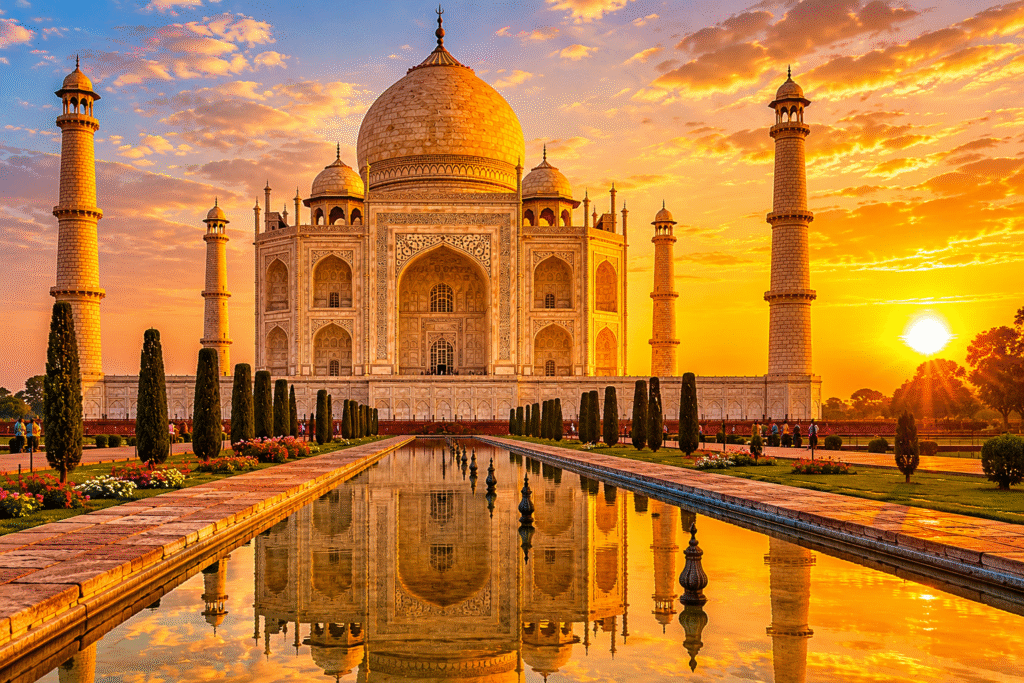
Scientific Reasons Behind Sunset Colors
- Sunlight travels through more atmosphere
- Dust particles increase light scattering
- Warm wavelengths dominate
- Orange and golden tones become stronger
This creates one of the most romantic views of the monument.
Travelers often combine sunset experiences with the Taj Mahal Sunset Tour to witness this magical transition.
Moonlight Mystery: The Bluish-Silver Glow
Under moonlight, the Taj Mahal appears almost dreamlike.
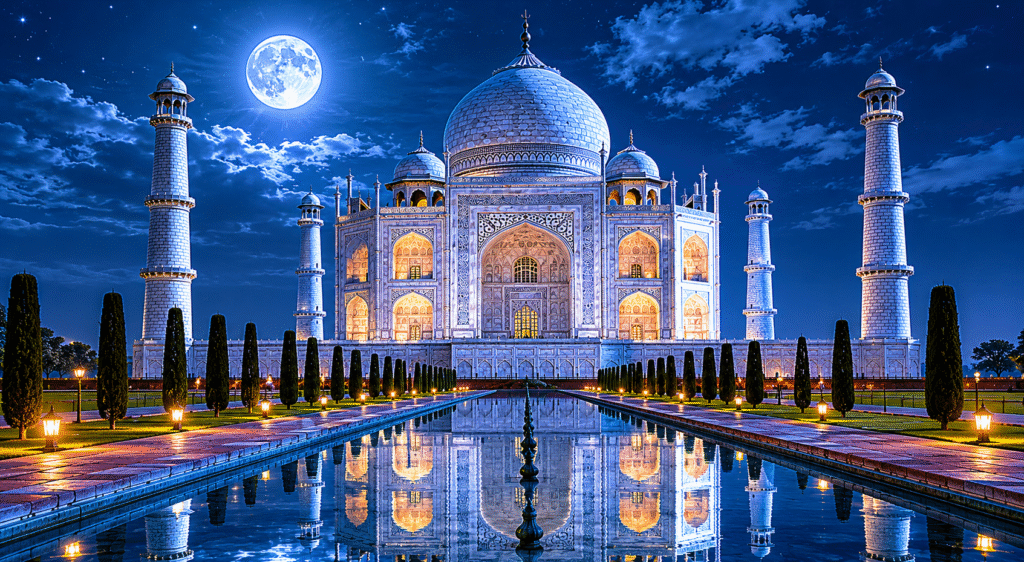
Why the Taj Mahal Looks Blue at Night
- Moonlight is reflected sunlight
- Light intensity becomes much lower
- Human eyes perceive cool tones more strongly in darkness
- Marble softly reflects bluish wavelengths
The result is a calm, mystical glow unlike any daytime appearance.
The Government of India occasionally permits night viewing sessions. Details can be checked through Archaeological Survey of India.
Atmospheric Conditions: The Invisible Artist
The atmosphere surrounding the Taj Mahal constantly affects how the monument looks.
Major Environmental Factors
- Dust
- Humidity
- Fog
- Air pollution
- Seasonal weather changes
For example:
- Winter fog softens the monument’s appearance
- Summer dust enhances golden tones
- Monsoon clouds create dramatic contrasts
This means no two visits to the Taj Mahal are ever exactly the same.
Travelers exploring India through customized journeys from Taj Explorer Destinations often appreciate these constantly changing experiences.
Human Perception and Optical Illusions
The Taj Mahal’s changing appearance is also influenced by the human brain.
How Our Eyes Affect Perception
Our eyes automatically adjust to:
- Brightness levels
- Contrast
- Background colors
- Atmospheric lighting
Examples include:
- A blue sky making the marble appear whiter
- Sunset skies intensifying golden tones
- Cloudy weather making the monument appear softer
This psychological component adds another layer of fascination.
Architectural Design That Enhances the Effect
The monument’s architectural design itself amplifies the changing colors.
Key Design Features
- Perfect symmetry
- Smooth marble finishing
- Large central dome
- Reflective water pools
The long reflecting pools in the gardens mirror the monument and sky together, doubling the visual impact.
Visitors exploring India’s architectural heritage through the 7 Day Luxury Golden Triangle Tour India often compare how different monuments interact with light in unique ways.
Pietra Dura Inlay Work and Visual Depth
The Taj Mahal is decorated with intricate pietra dura inlay work using semi-precious stones.
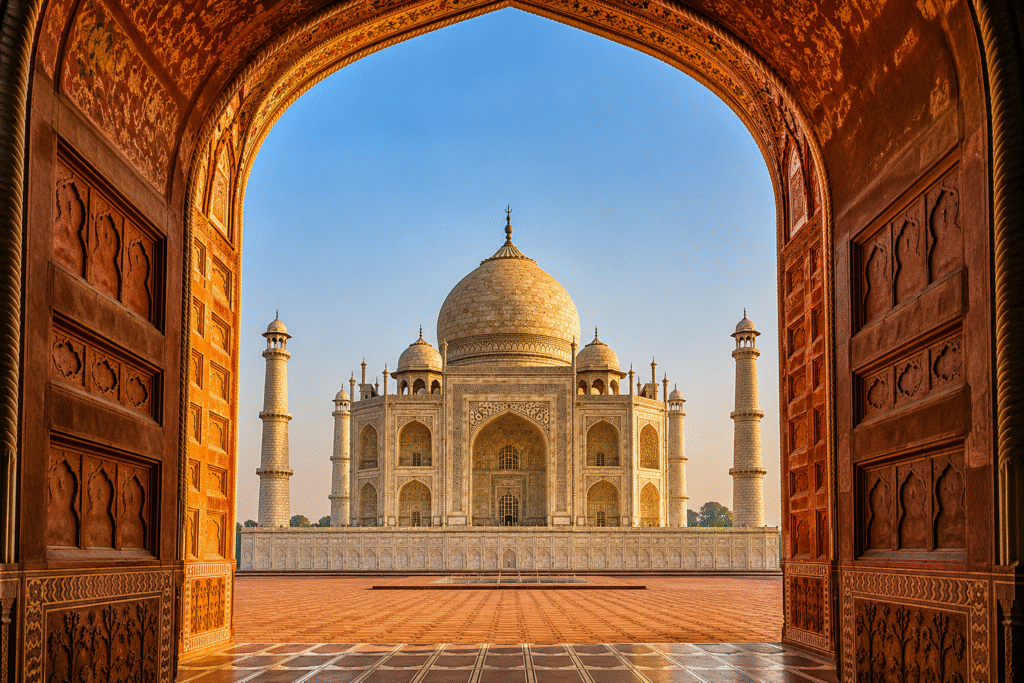
How It Contributes to the Effect
- Stones reflect light differently than marble
- Creates additional visual texture
- Enhances depth and brightness
- Changes visibility under different lighting conditions
At sunrise and sunset, these details become particularly dramatic.
More information about Mughal decorative arts can be found at Britannica – Taj Mahal.
Seasonal Variations in the Taj Mahal’s Appearance
The monument changes not only by time of day but also by season.
Winter
Soft fog creates a dreamy and pale appearance.
Summer
Bright sunlight intensifies the marble’s whiteness.
Monsoon
Dark clouds create strong visual contrast and dramatic reflections.
Luxury travelers choosing customized India journeys through Tour Packages by Taj Explorer often select travel dates based on the visual atmosphere they prefer.
Environmental Concerns Affecting the Taj Mahal
Modern pollution threatens the Taj Mahal’s original brilliance.
Major Environmental Challenges
- Industrial pollution
- Acid rain
- Dust accumulation
- Yellowing of marble surfaces
Conservation authorities continuously work to protect the monument.
According to UNESCO Conservation Reports, preservation efforts remain crucial for maintaining the Taj Mahal’s beauty for future generations.
Why Travelers Should Experience the Taj Mahal at Different Times
Understanding the science behind the monument’s changing colors makes the visit more meaningful.
Best Times to Visit
Sunrise
Soft pink hues and fewer crowds.
Midday
Bright white brilliance and clear architectural details.
Sunset
Golden romantic atmosphere perfect for photography.
Full Moon
Rare bluish glow and mystical ambiance.
Travelers can experience these unique views through personalized itineraries like the Same Day Agra Tour by Gatiman Train or private luxury journeys across India.
Key Takeaways
- The Taj Mahal does not physically change color
- Light interaction with Makrana marble creates the effect
- Atmospheric conditions influence visual appearance
- Human perception plays an important role
- Different times and seasons offer unique experiences
Conclusion
The Taj Mahal is far more than a monument of love. It is a living masterpiece where science, architecture, art, and nature work together in perfect harmony.
Its changing colors remind travelers that beauty is never static. The monument continuously interacts with sunlight, atmosphere, weather, and human emotion, creating a new experience every single day.
For travelers seeking heritage, luxury, and authentic cultural experiences, witnessing the Taj Mahal at different times is truly unforgettable. Whether you choose a sunrise visit, a sunset tour, or a personalized luxury journey through Taj Explorer, the monument’s ever-changing beauty leaves a lasting impression that words alone can never fully capture.
Frequently Asked Questions
1. Why does the Taj Mahal change color throughout the day?
The Taj Mahal appears to change color because sunlight interacts differently with its Makrana marble at various times of the day.
2. What makes Makrana marble special?
Makrana marble has semi-translucent properties that allow light to penetrate and scatter, creating subtle color variations.
3. Which time is best to see the Taj Mahal’s changing colors?
Sunrise and sunset are considered the best times because the lighting creates the most dramatic visual effects.
4. Does pollution affect the Taj Mahal’s appearance?
Yes, pollution can cause yellowing and dullness on the marble surface, which is why conservation efforts are important.
5. Why does the Taj Mahal appear blue at night?
Under moonlight, human eyes perceive cooler tones more strongly, giving the marble a bluish or silvery glow.
6. Do weather conditions impact the color effect?
Yes, fog, dust, humidity, and clouds all influence how light scatters around the monument.
7. Is the color-changing effect scientifically proven?
Yes, it is based on reflection, refraction, scattering of light, and human visual perception.
8. Can travelers experience the Taj Mahal under moonlight?
Yes, limited night viewing sessions are occasionally available through official authorities.
Suggested Image Placements & SEO ALT Text
Featured Image
ALT Text: “Taj Mahal changing colors at sunrise during luxury India tour”
Sunrise Section Image
ALT Text: “Pink Taj Mahal at sunrise with heritage travel experience”
Midday Section Image
ALT Text: “Bright white Taj Mahal during customized cultural journey”
Sunset Section Image
ALT Text: “Golden Taj Mahal sunset view on private India tour”
Moonlight Section Image
ALT Text: “Moonlight view of Taj Mahal with luxury heritage travel”
Architecture Detail Image
ALT Text: “Pietra dura artwork inside Taj Mahal heritage monument”