


So you’ve booked your Taj Mahal visit and now you’re staring at your suitcase wondering what actually works.
Fair question. We get it from almost every guest before they land in Agra.
Here’s the short answer: cover your shoulders and knees, skip anything sheer or skin-tight, and bring shoes you can slip off fast. There’s no printed dress code at the gate, but the Taj Mahal is Shah Jahan and Mumtaz Mahal’s tomb, not a resort, and security staff do turn people away for overly revealing clothing.
Everything below is what we tell our own guests before pickup, broken down by season, gender, and what actually photographs well against white marble.
Is there an official Taj Mahal dress code?
No official dress code is posted at the entrance. But modest clothing is expected, and enforced.
What works:
- Shoulders covered
- Hemlines below the knee
- Non-transparent fabric
- Nothing beach-ready
You don’t need to cover your head. Some women carry a scarf for the inner chamber anyway, partly out of respect, partly because it doubles as sun protection.
If you’d hesitate to wear it at a temple back home, leave it at the hotel.
Best Clothes to Wear at the Taj Mahal by Season
Agra swings hard between seasons, and that changes what you should pack more than any style guide will.
Summer (April to June)
This is brutal heat. We’re talking 40°C plus, and the white marble bounces that heat straight back at you.
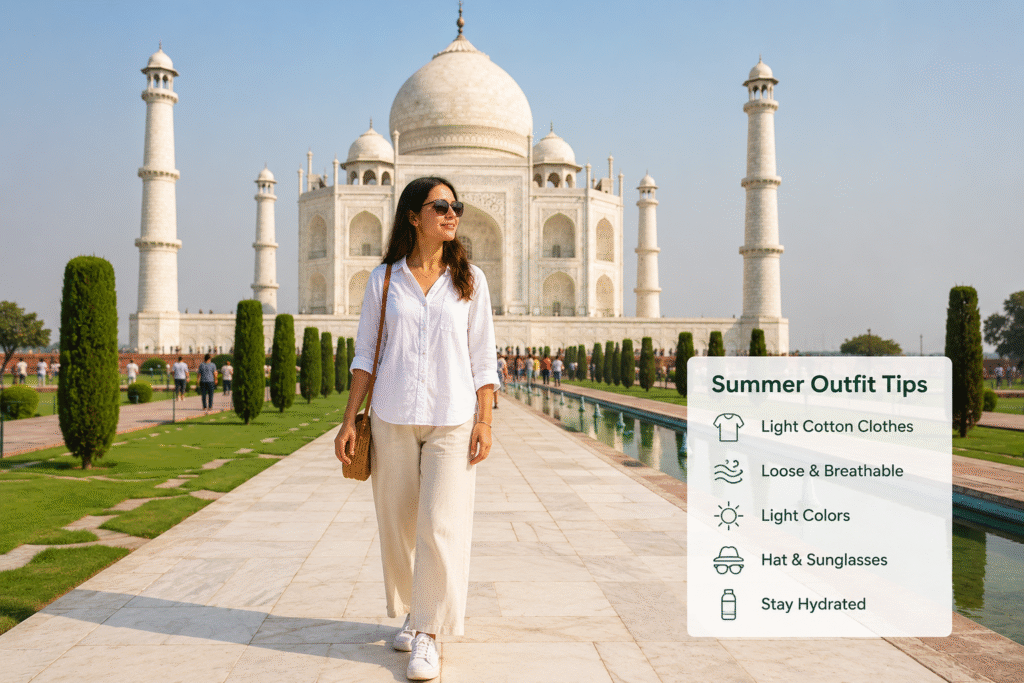
Go with loose cotton or linen: shirts, trousers, long skirts, full-sleeve tops in light colors. Skip thick denim and anything synthetic and tight, it’ll cling and trap heat.
Most guests booking our Taj Mahal Sunrise Tour choose the early slot specifically to dodge this heat. Smart move if summer is your only window.
Winter (November to February)
Winter mornings in Agra can dip under 10°C, especially at sunrise, then warm up fast by afternoon. Layers are your friend here.
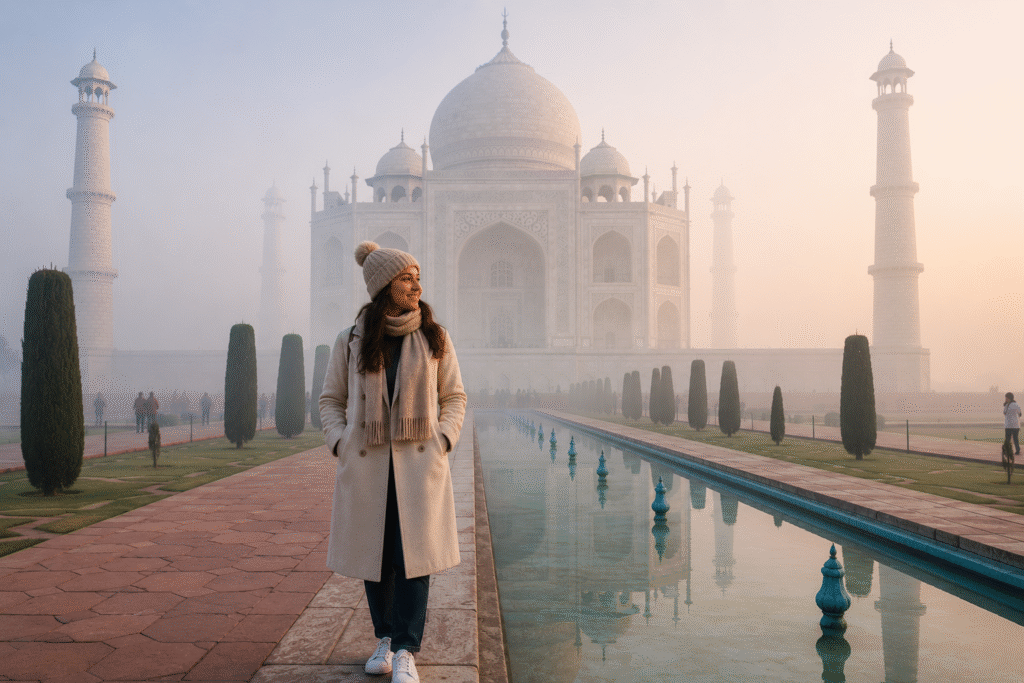
A light sweater, a shawl or scarf, closed shoes. You can always shed a layer once the sun’s up.
This also happens to be the season with the best light for photos, so dress for both the cold and the camera.
Monsoon (July to September)
Fewer crowds, greener grounds, and rain that shows up without much warning.
Quick-dry fabric, a light rain jacket or poncho, and rubber-soled shoes matter more here than anywhere else. Wet marble gets slippery fast.
One thing we always mention: skip white during monsoon. It goes see-through the moment it’s wet.
Best Footwear for the Taj Mahal
Choosing the right shoes matters more than most travelers expect.
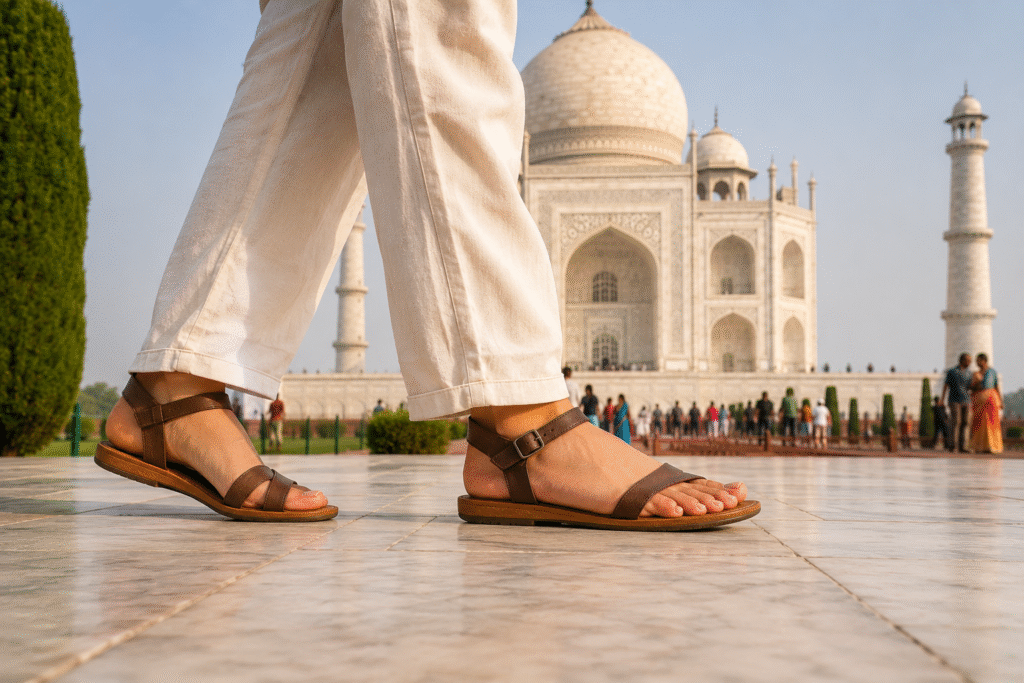
The walk from the entrance gate to the mausoleum is long, and visitors must remove their shoes before entering the main marble platform.
Recommended Footwear
- Slip-on sandals
- Lightweight sneakers
- Comfortable loafers
- Rubber-soled walking shoes
![]Comfortable shoes for Taj Mahal visit and mausoleum entry](https://tajexplorer.com/wp-content/uploads/2026/05/Shoes-at-the-Taj-Mahal-1024x683.png "What to Wear at the Taj Mahal: Dress Code & Packing Guide for Visitors 5")
Avoid
- High heels
- Heavy boots
- Hard leather soles
- Brand-new shoes
Comfort is essential, especially during long walking tours such as the Same Day Agra Tour by Car.
What Women Should Wear at the Taj Mahal
A salwar kameez, a maxi dress with sleeves, a long skirt with a modest top, or a linen co-ord set all work well here, and honestly, they photograph better than most Western outfits against the marble.
A scarf or dupatta earns its space in your bag. Sun protection, modesty for the inner chamber, and it’s a nice styling piece for photos.
What to leave behind: crop tops, sleeveless pieces, anything short or sheer.
What Men Should Wear at the Taj Mahal
Cotton trousers, a linen or full-sleeve cotton shirt, or a light kurta. Kurtas in particular hold up well in the heat and look sharp in photos.
Pair with sneakers or loafers you can slide off easily.
Skip shorts above the knee, sleeveless gym wear, and jeans if you’re visiting in summer, they’re heavier than they look once the temperature climbs.
Guests customizing a trip through our Taj Explorer tour packages often lean toward light ethnic wear. It’s comfortable, it’s respectful, and it just looks right in this setting.
Best outfit colors for Taj Mahal photos
The marble is white, so pure white, cream, and pale beige clothing tends to vanish into the background in photos.
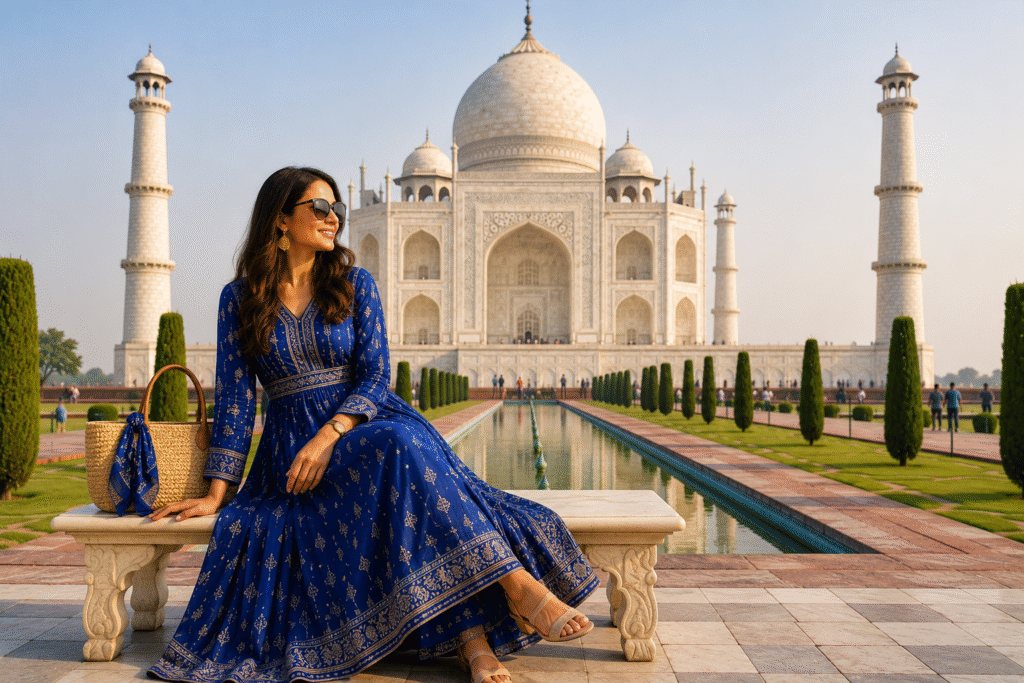
What stands out: royal blue, emerald green, burgundy, mustard yellow, deep red. Soft pastel pink works well specifically at sunrise.
If you’re shooting at sunset, burgundy, mustard, and deep blue catch the golden light best.
Essential Packing List for the Taj Mahal
Packing smart keeps your visit stress-free and comfortable.
Clothing:
- A lightweight full-sleeve shirt
- Comfortable trousers or a long skirt
- A scarf or dupatta
- Shoes that slip off easily
- A spare pair of socks
Everything else worth carrying:
- Sunglasses
- Sunscreen
- A water bottle
- A portable charger
- Small cash for entry and tips
- Hand sanitizer
- Your camera or phone, charged
In summer especially, water matters more than people expect. The courtyard reflects heat back up at you, and it adds up fast.
Sunrise vs sunset: does your outfit need to change?
It genuinely does, and not just for temperature.
Sunrise is cooler and quieter, and pastel colors, soft pinks, and light blues work beautifully in that early light. If you’re visiting in winter, layer up, because that early hour is colder than most first-time visitors expect. This is also why our guests on the Agra Taj Mahal Tour from Delhi tend to request sunrise entry: fewer crowds, softer light.
Sunset brings warm golden tones across the marble. Burgundy, mustard, emerald, and deep blue photograph especially well during that hour.
Common mistakes we see visitors make
Heavy denim. Jeans turn miserable fast in Agra’s summer heat.
Shoes with laces or buckles. You’ll be taking them off and putting them back on more than once.
Dressing head to toe in white. It blends into the marble and disappears in most photos.
No scarf. It handles sun, dust, modesty, and doubles as a styling piece, all in one item.
Oversized bags. Security checks slow down, and you’ll be carrying it the whole visit.
Dressing for a private or luxury Taj Mahal tour
Private tours usually mean more walking, more photo stops, and more time across Agra’s other heritage sites.
Guests booking something like our 7 Day Luxury Golden Triangle Tour of India tend to go for breathable fabric in solid, elegant colors rather than busy prints. Simple works better than fussy, both for comfort and for photos.
FAQs
Is there a strict dress code at the Taj Mahal?
No official one is posted, but modest clothing (shoulders and knees covered) is strongly expected and enforced by security.
Can I wear shorts at the Taj Mahal?
Shorts above the knee aren’t recommended and can draw attention from security staff.
What shoes are best for visiting the Taj Mahal?
Slip-on sandals, lightweight sneakers, or loafers with good grip. You’ll remove them before the main platform, so easy on-off matters more than style.
What should I wear during summer?
Lightweight cotton or linen in light colors. Skip denim and anything synthetic.
What colors look best in Taj Mahal photos?
Royal blue, emerald green, burgundy, and mustard yellow all stand out clearly against the white marble.
Do I need a scarf or dupatta?
It’s not required, but it’s genuinely useful: sun protection, respectful coverage for the inner chamber, and a nice touch for photos.
Getting dressed right makes the visit better
What to wear at the Taj Mahal comes down to three things: modest, breathable, and easy to slip off at the entrance.
Get that right and you stop thinking about your clothes the second you walk in. Which is really the point. Sunrise fog, summer heat, winter layers, whatever season brings you here, the right outfit means you’re focused on the marble in front of you, not the sweat on your back.