

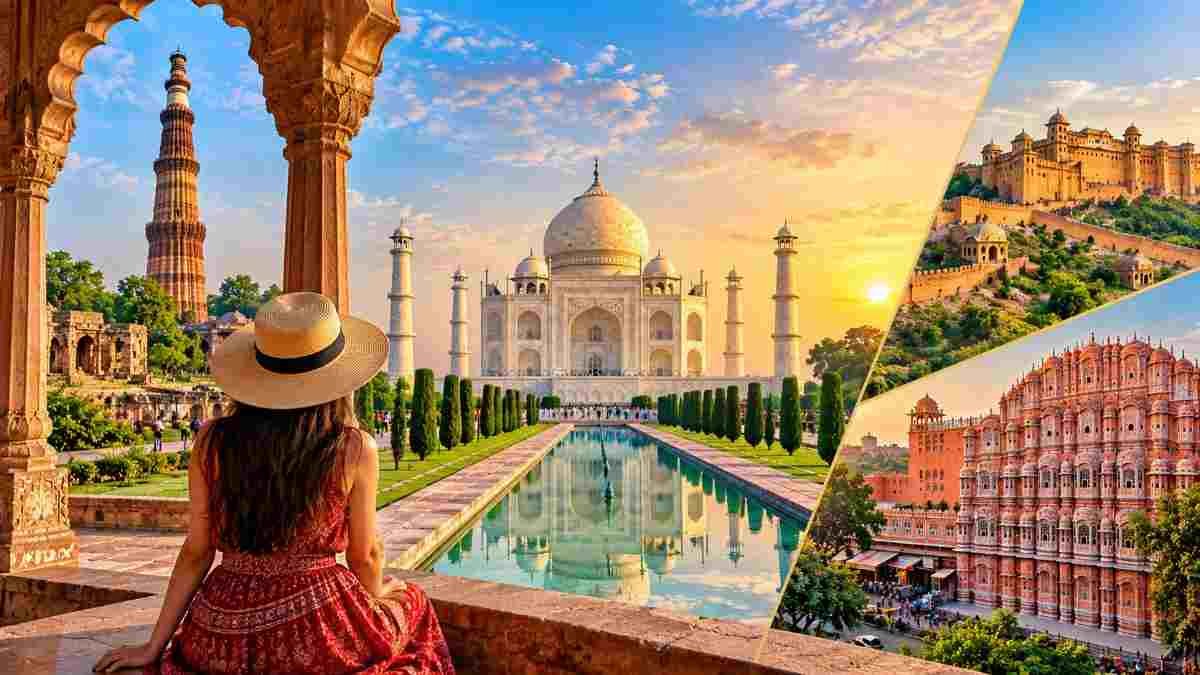
Planning a trip to India and want to explore its most famous historical destinations in just five days? This 5 Day Golden Triangle Tour Itinerary takes you through Delhi, Agra and Jaipur, combining historic monuments, Mughal architecture, royal palaces and authentic Indian culture.
The Golden Triangle is one of India’s most popular travel routes, connecting three distinctive cities. Delhi offers a fascinating blend of historic landmarks and modern life, Agra is home to the magnificent Taj Mahal, and Jaipur showcases Rajasthan’s royal heritage through its forts, palaces and colourful markets.
Five days gives you enough time to experience the major highlights of these destinations with careful planning. You can explore Delhi’s historic monuments, admire the Taj Mahal, discover Agra Fort and experience Jaipur’s architectural treasures without extending your holiday unnecessarily.
If you prefer an organised journey instead of arranging every transfer and sightseeing stop independently, explore Taj Explorer’s Golden Triangle Tour 5 Days. This tour provides a practical starting point for planning a journey through Delhi, Agra and Jaipur.
In this guide, you will discover the best five-day itinerary, suggested overnight stays, transportation options, estimated travel times, sightseeing tips and ways to make your Golden Triangle trip more comfortable.
5 Day Golden Triangle Tour: Quick Overview
- Duration: 5 days and 4 nights
- Destinations: Delhi, Agra and Jaipur
- Route: Delhi → Agra → Jaipur → Delhi
- Best for: First-time visitors, couples, families and history enthusiasts
- Main attractions: Qutub Minar, Humayun’s Tomb, Taj Mahal, Agra Fort, Amber Fort, Hawa Mahal and City Palace
- Recommended transportation: Private air-conditioned car with a driver
- Accommodation: Four nights, depending on arrival and departure arrangements
The suggested route allows you to experience the highlights of all three cities while keeping travel between destinations manageable. Actual timings depend on your arrival schedule, monument opening hours, traffic and personal preferences.
Day 1: Explore Delhi’s Historic Landmarks
Begin your Golden Triangle journey in Delhi, India’s capital and a city with centuries of history. From medieval monuments to impressive Mughal architecture and lively traditional markets, Delhi offers an introduction to India’s diverse heritage.
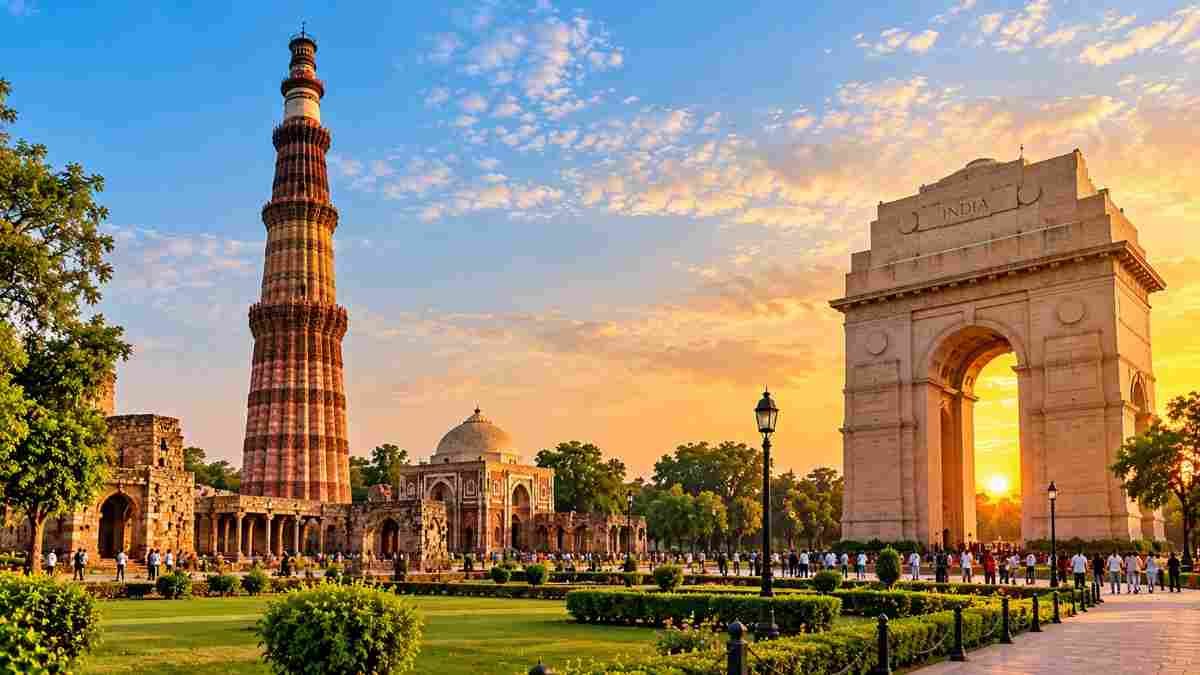
If you arrive early, dedicate the first day to exploring some of the city’s most important historical attractions.
Morning: Visit Qutub Minar
Start your sightseeing at Qutub Minar, one of Delhi’s most recognisable historical monuments. This towering minaret stands within an archaeological complex featuring historic structures and intricate stonework.
Take time to explore the surrounding complex, learn about the Delhi Sultanate and appreciate the architectural details.
Late Morning: Discover Humayun’s Tomb
Continue to Humayun’s Tomb, a magnificent Mughal-era monument surrounded by landscaped gardens.
Its symmetrical layout, red sandstone exterior and white marble details make it an important destination for architecture enthusiasts. The monument also provides useful context for understanding the Mughal architectural traditions associated with the Taj Mahal.
Afternoon: India Gate and Central Delhi
Head towards India Gate and the surrounding ceremonial district. Depending on your available time, you can explore additional landmarks in central Delhi.
Allow time for lunch and account for traffic between attractions. Delhi is a large city, so it is better to enjoy a few important sites properly than rush through an unrealistic sightseeing schedule.
Evening: Experience Old Delhi
If time permits, visit Old Delhi to discover its historic streets, traditional markets and food culture.
Chandni Chowk is particularly well known for its busy bazaars, traditional shops and local food. You can explore independently or arrange a guided experience for a more structured visit.
Overnight: Delhi.
Travel tip: If your flight arrives late or you experience jet lag, reduce the number of attractions on the first day and keep the itinerary flexible.
Day 2: Travel from Delhi to Agra and Visit the Taj Mahal
On Day 2, travel from Delhi to Agra, the city famous for the Taj Mahal and its Mughal heritage.
Once you arrive, leave your luggage at your hotel or complete check-in before beginning sightseeing, if your schedule permits.
Visit the Taj Mahal
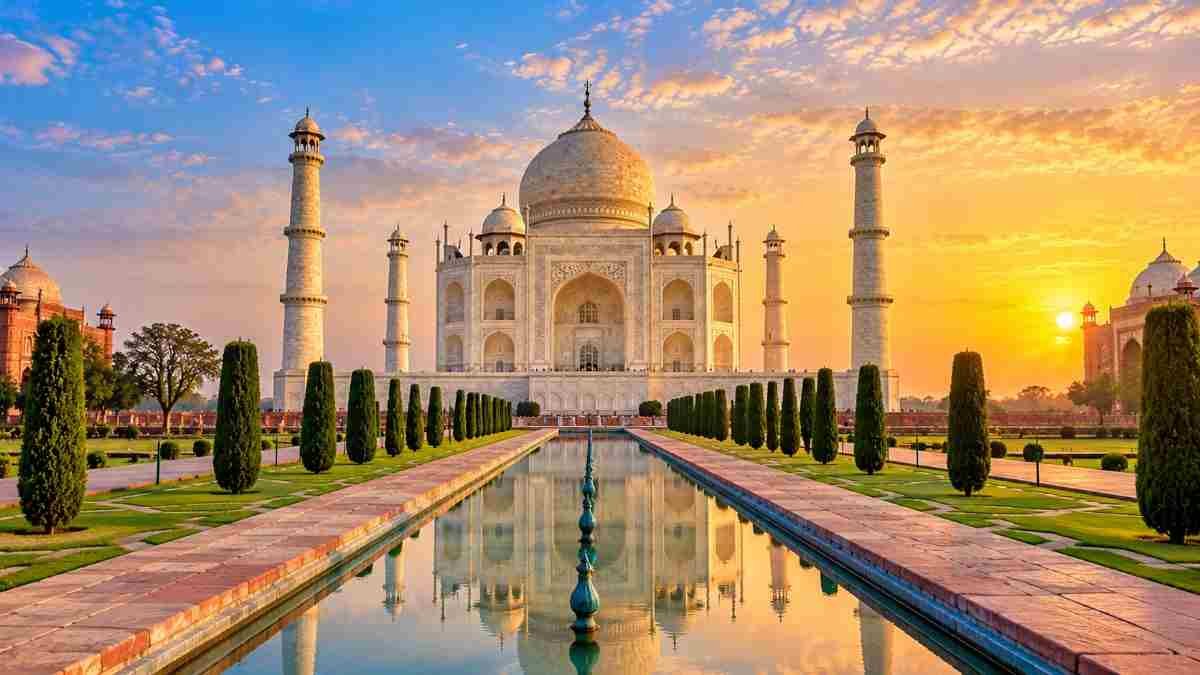
The Taj Mahal is the highlight of most Golden Triangle itineraries and a must-see attraction for first-time visitors to India.
Commissioned by Mughal emperor Shah Jahan in memory of Mumtaz Mahal, the monument is renowned for its white marble, symmetrical architecture, intricate inlay work and landscaped gardens.
Allow enough time to appreciate the complex rather than treating it as a quick photography stop. The changing views of the monument, architectural details and surrounding gardens make the visit rewarding for both first-time visitors and returning travellers.
If the Taj Mahal is the main attraction you want to experience, you can also explore Taj Explorer’s Golden Triangle Tour 5 Days, which combines Agra’s famous monument with sightseeing in Delhi and Jaipur.
Important: The Taj Mahal is normally closed to general visitors on Fridays. Confirm current entry arrangements, ticket availability and opening hours before finalising your travel dates.
Explore Agra Fort
After visiting the Taj Mahal, continue to Agra Fort, another important Mughal monument.
The complex includes historic gates, courtyards, palaces and audience halls that illustrate the power and architectural achievements of the Mughal Empire.
Agra Fort complements the Taj Mahal visit by providing a broader understanding of the city’s imperial history. Allow sufficient time for walking, security checks and transfers between the attractions.
Evening: Relax in Agra
After a day of sightseeing, enjoy dinner and relax at your hotel. If time permits, you can explore a local market or discover Agra’s traditional handicrafts.
Overnight: Agra.
Travel tip: If you want to see the Taj Mahal at sunrise, arrange your visit around the monument’s current entry schedule. An overnight stay in Agra makes an early visit more practical.
Day 3: Optional Sunrise at the Taj Mahal and Travel to Jaipur
Day 3 connects Agra with Jaipur, introducing you to Rajasthan’s royal heritage.
If you did not visit the Taj Mahal on Day 2, consider an early visit before breakfast. Otherwise, enjoy a relaxed morning and begin your journey towards Jaipur.
Optional: Experience the Taj Mahal at Sunrise
A sunrise visit can be particularly appealing to photographers and travellers who want to see the monument in the early morning light.
Weather conditions, visibility, ticket arrangements and visitor numbers affect the experience, so check the latest official information before making plans.
If you have already visited the Taj Mahal, use the morning to enjoy breakfast and prepare for the journey to Jaipur.
Optional Stop: Fatehpur Sikri
Travellers interested in Mughal history may consider a stop at Fatehpur Sikri on the way towards Jaipur.
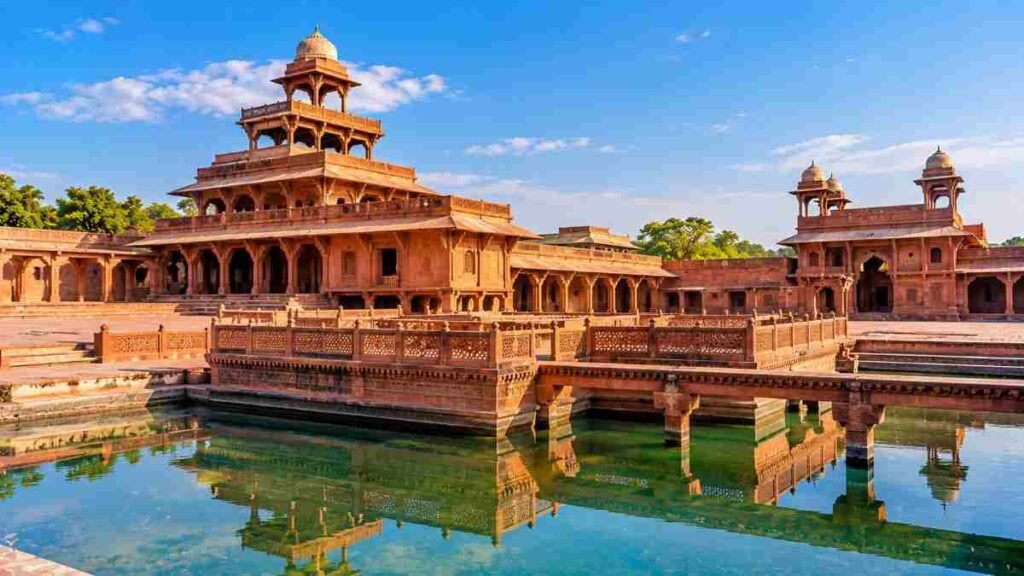
Associated with Emperor Akbar, this historic city contains significant architectural landmarks and offers another perspective on India’s Mughal past.
However, adding Fatehpur Sikri extends the journey. Include it only if you have enough time for sightseeing and the onward drive. Otherwise, travelling directly to Jaipur will make the day more comfortable.
Afternoon: Drive to Jaipur
Continue towards Jaipur, the capital of Rajasthan, widely known as the Pink City.
The drive from Agra to Jaipur generally takes around four to five hours when travelling directly, although traffic, road conditions and stops may affect the journey.
Upon arrival, check into your hotel and relax.
Evening: Discover Jaipur’s Local Culture
If you arrive early enough, enjoy a short walk or explore a local market. Jaipur is known for its traditional textiles, jewellery, handicrafts and regional shopping experiences.
Keep the evening flexible because the following day is dedicated to the city’s major forts and palaces.
Overnight: Jaipur.
Travel tip: Avoid scheduling several major sightseeing attractions on this transfer day. A relaxed arrival in Jaipur will make the next day’s sightseeing more enjoyable.
Day 4: Explore Jaipur’s Forts, Palaces and Royal Heritage
Spend Day 4 discovering Jaipur’s most famous attractions. The city combines Rajput architecture, royal residences, historic observatories and colourful markets.
Morning: Visit Amber Fort
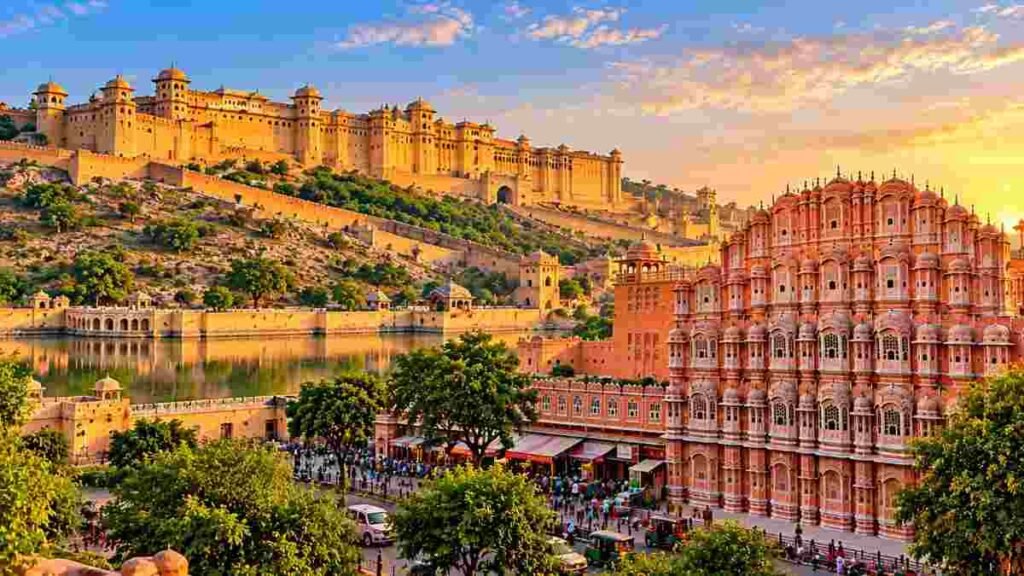
Begin at Amber Fort, situated on a hill outside Jaipur’s main city area.
The fort is known for its courtyards, impressive gateways, decorative halls and historic architecture. Explore the complex at a comfortable pace and allow time to appreciate its details.
Some sections involve steps and uneven surfaces, so travellers with mobility concerns should plan accordingly.
Stop at Jal Mahal
Continue towards Jal Mahal for photographs of the palace situated in the middle of Man Sagar Lake.
The lakeside viewpoint offers a distinctive perspective of the structure and its surroundings. Check local access arrangements before your visit, as viewing the palace from outside is different from entering the building.
Visit Hawa Mahal
Next, visit Hawa Mahal, one of Jaipur’s most recognisable architectural landmarks.
Its distinctive pink façade and intricate windows make it a favourite photography location. You can admire the exterior from the street or explore the interior if time and current access arrangements permit.
Discover City Palace
Continue to City Palace, a historic royal complex featuring courtyards, buildings and collections reflecting Jaipur’s royal heritage.
Allow enough time to explore the sections open to visitors. Entry arrangements and ticket prices can vary depending on the areas you wish to access.
Explore Jantar Mantar
If your schedule allows, visit Jantar Mantar, Jaipur’s historic astronomical observatory.
Its monumental instruments demonstrate how astronomers studied celestial movements and measured time before modern technology. This attraction adds a scientific and historical dimension to a day otherwise focused on forts and palaces.
Evening: Jaipur Markets and Local Cuisine
Finish your sightseeing with a market visit or a traditional Rajasthani dining experience.
You can browse textiles, jewellery, handicrafts and regional souvenirs. If you enjoy shopping, ask about materials, pricing and shipping options before purchasing valuable items.
If you would like more time to explore the region, compare Taj Explorer’s Golden Triangle Tour 5 Days with the all-inclusive Golden Triangle tour to see which itinerary and included services better suit your preferences.
Overnight: Jaipur.
Travel tip: Prioritise Amber Fort, Hawa Mahal and City Palace if you have limited time. Add Jal Mahal and Jantar Mantar according to your interests and schedule.
Day 5: Return to Delhi or Continue Your Journey
The final day depends on your departure arrangements.
If you are flying internationally from Delhi, allow several hours for the drive and leave a generous buffer for traffic and airport procedures.

Option 1: Return to Delhi
After breakfast, check out of your hotel and travel back to Delhi.
The journey commonly takes around five to six hours, but traffic and road conditions may extend it. Avoid booking a tight connection between your expected road arrival and an international flight.
If your flight is early, consider spending the final night in Delhi rather than returning from Jaipur on the same day.
Option 2: Depart from Jaipur
If your onward journey begins in Jaipur, you may have time for a relaxed breakfast or a short additional visit before leaving.
Confirm your airport transfer and departure arrangements in advance.
Option 3: Extend Your Golden Triangle Tour
If you have more time, consider extending your journey to explore additional destinations or spend longer in the cities already on your route.
Possible extensions include Rajasthan destinations or other parts of North India, depending on your interests and available days.
Use Taj Explorer’s custom India trip planner to discuss destinations, travel pace and itinerary options that fit your schedule.
Overnight: According to your departure arrangements.
5 Day Golden Triangle Tour Itinerary at a Glance
Discover Delhi, Agra and Jaipur on a five-day journey through India’s famous landmarks, Mughal heritage and royal architecture.
| Day | Destination | Main Attractions & Activities | Overnight Stay |
|---|---|---|---|
| Day 1 | Delhi | Qutub Minar, Humayun’s Tomb, India Gate and optional Old Delhi sightseeing. | Delhi |
| Day 2 | Delhi to Agra | Travel to Agra, visit the Taj Mahal and explore Agra Fort. | Agra |
| Day 3 | Agra to Jaipur | Optional sunrise visit to the Taj Mahal, optional stop at Fatehpur Sikri and onward travel to Jaipur. | Jaipur |
| Day 4 | Jaipur | Amber Fort, Jal Mahal viewpoint, Hawa Mahal, City Palace and Jantar Mantar. | Jaipur |
| Day 5 | Jaipur to Delhi or onward destination | Return journey to Delhi, departure from Jaipur or an extension to your India itinerary. | As required |
Sightseeing, transfer times and overnight arrangements may vary depending on your selected tour package. On mobile, swipe horizontally to see all columns.
This schedule is a suggested framework. The actual order of attractions should account for your arrival time, weekly closures, opening hours, traffic and onward travel.
How to Travel Between Delhi, Agra and Jaipur
Choosing the right transportation can make a significant difference to your Golden Triangle experience.
Private Car with Driver
A private car offers flexibility for travelling between cities, stopping for breaks and adjusting your sightseeing schedule.
It is particularly convenient for families, couples and small groups carrying luggage between hotels. Private transport can also make an optional stop at Fatehpur Sikri easier to arrange.
Before booking, confirm the vehicle category, passenger and luggage capacity, tolls, parking, driver arrangements and any additional charges.
For travellers who prefer an organised trip, Taj Explorer’s Golden Triangle Tour 5 Days is a relevant option to compare with an independently arranged itinerary.
Train Travel
Train travel can be a practical alternative for some intercity journeys.
However, you should consider station transfers, train schedules, luggage, local transport and the time required to reach your hotel or sightseeing attractions.
Compare the complete journey rather than looking at the train journey time alone.
Which Option Is Best?
Private transport is often convenient for a short five-day itinerary because it simplifies hotel transfers and allows greater flexibility.
Train travel may suit visitors who prefer rail journeys or want to manage transport costs separately.
The best choice depends on your budget, group size, travel preferences and comfort requirements.
Is Five Days Enough for the Golden Triangle?
Yes, five days can be enough to visit the principal attractions of Delhi, Agra and Jaipur.
However, it is a relatively compact itinerary covering three cities. You will need to prioritise the places that matter most and accept that some optional attractions may need to be skipped.
A five-day trip is suitable for travellers who want to see the Taj Mahal, explore Agra Fort, discover Delhi’s heritage and experience Jaipur’s main forts and palaces.
Consider a longer holiday if you want more time for shopping, museums, local food experiences or additional destinations.
If you are comparing a standard itinerary with a package that includes additional arrangements, review the details of Taj Explorer’s all-inclusive Golden Triangle tour before deciding which option best fits your needs.
Estimated Travel Times for the Golden Triangle Route
The following estimates are useful for initial planning. Actual travel times depend on traffic, road conditions, weather, stops and departure locations.
| Route | Approximate driving time |
|---|---|
| Delhi to Agra | 3–4 hours |
| Agra to Jaipur | 4–5 hours |
| Jaipur to Delhi | 5–6 hours |
Allow extra time for hotel pickups, meals, breaks and traffic entering or leaving major cities.
If you include Fatehpur Sikri on the Agra-to-Jaipur journey, the travel day will be longer. Avoid scheduling fixed activities too close to your expected arrival time.
Best Time to Take a 5 Day Golden Triangle Tour
The best time to visit depends on your weather preferences and sightseeing plans.
October to March
These months are generally popular for exploring Delhi, Agra and Jaipur because temperatures are often more comfortable for outdoor sightseeing.
Winter mornings can be cold, and fog may affect visibility or transport. Check conditions before travelling.
April to June
Summer can bring very high temperatures, particularly during the afternoon.
Plan outdoor visits early in the day, carry water, wear sun protection and schedule breaks where possible.
July to September
The monsoon season can bring rain, humidity and changing road conditions. Build flexibility into your schedule and be prepared to adjust outdoor activities.
Whatever season you choose, confirm current monument timings, ticket rules and temporary restrictions before departure.
How Much Does a 5 Day Golden Triangle Tour Cost?
The cost of a five-day Golden Triangle trip depends on the type of accommodation, transportation, sightseeing services and inclusions you choose.
Key factors include:
- Accommodation: Hotel category, room type and number of nights.
- Transportation: Private car, vehicle category, fuel, tolls and parking.
- Tour guides: Whether local guides are included at each destination.
- Monument tickets: Whether entry tickets are included or paid separately.
- Meals: Breakfast and other meals included in the package.
- Group size: The number of travellers sharing transport and other services.
- Additional experiences: Optional stops, sightseeing and activities.
When comparing packages, review the inclusions and exclusions carefully. Two tours with similar itineraries may offer different accommodation standards and services.
Taj Explorer offers a dedicated Golden Triangle Tour 5 Days and an all-inclusive Golden Triangle tour package. Compare their published details to determine which arrangement suits your preferences.
Before booking, request clarification on any services or charges that are not clearly listed.
What Should You Pack for a Golden Triangle Tour?
Pack according to the season and the activities you plan to enjoy.
- Comfortable walking shoes for monuments and forts.
- Lightweight clothing appropriate for the weather.
- A jacket or extra layer for cool winter mornings.
- Sunscreen, sunglasses and a hat.
- A refillable water bottle where practical and permitted.
- Travel documents, phone charger and power bank.
- Personal medication and essential toiletries.
- Modest clothing suitable for religious sites you plan to visit.
- A small day bag for sightseeing essentials.
Check monument security rules before arrival because certain belongings may be restricted.
Practical Tips for Planning Your Golden Triangle Tour
1. Check the Taj Mahal’s Weekly Closure
The Taj Mahal is normally closed to general visitors on Fridays. Arrange your Agra sightseeing around your intended visit date and verify current entry information.
2. Keep Transfer Days Flexible
Road travel between Delhi, Agra and Jaipur takes several hours. Avoid overloading transfer days with too many attractions.
3. Choose Hotels According to Your Route
Select accommodation that makes it convenient to reach your planned attractions and continue to the next destination. Confirm early check-in or late-arrival arrangements where necessary.
4. Plan a Sunrise Visit in Advance
If seeing the Taj Mahal at sunrise is important to you, arrange your overnight stay and entry plans accordingly.
5. Understand Your Package Inclusions
Confirm whether your tour includes hotels, meals, monument tickets, guides, airport transfers, tolls and parking.
6. Allow for Different Mobility Needs
Historic monuments and forts may involve stairs, uneven paths and extended walking. Families travelling with children and visitors with mobility concerns may need a modified itinerary.
7. Leave Time for Local Experiences
Markets, regional cuisine and traditional handicrafts can add depth to your trip. Include them where time allows without compromising important transfers.
Who Should Choose a 5 Day Golden Triangle Tour?
A five-day Golden Triangle itinerary can suit several types of travellers.
First-time visitors to India: Experience three of the country’s best-known destinations in one journey.
Couples: Combine famous monuments, cultural experiences and time to enjoy local dining.
Families: Explore the main attractions with a schedule adapted to children’s needs and travel pace.
History enthusiasts: Discover Mughal architecture in Delhi and Agra alongside Jaipur’s royal heritage.
Travellers with limited holiday time: See the main highlights without committing to a longer trip.
If you prefer a slower pace or want to explore additional destinations, consider discussing a customised itinerary through Taj Explorer’s India trip planner.
Frequently Asked Questions
Is a 5 day Golden Triangle tour enough?
Five days is generally enough to cover the main highlights of Delhi, Agra and Jaipur. It is a compact itinerary, so travellers who want more time for sightseeing may prefer a longer trip.
What is the best route for a 5 day Golden Triangle tour?
A common route is Delhi → Agra → Jaipur → Delhi. This connects the three destinations in a practical sequence, although your arrival and departure arrangements may require adjustments.
Can I visit the Taj Mahal and Agra Fort in one day?
Yes. Many travellers visit both attractions on the same day. Start early and allow sufficient time for sightseeing, security checks and transfers.
Can I see the Taj Mahal at sunrise?
Yes, subject to the monument’s current entry arrangements, ticket availability and your travel dates. Staying overnight in Agra makes an early visit more convenient.
Is a private car recommended for the Golden Triangle?
A private car can simplify intercity travel and hotel transfers. It also offers flexibility for optional stops. Train travel is another option for travellers who prefer rail journeys.
Should I include Fatehpur Sikri in the itinerary?
Fatehpur Sikri can be a worthwhile addition between Agra and Jaipur, particularly for travellers interested in Mughal history. It extends the transfer day, so include it only if time permits.
How many nights are required for a five-day tour?
Four nights is a common arrangement: one night in Delhi, one in Agra and two in Jaipur. Your final arrangement will depend on your arrival and departure schedules.
What is included in a Golden Triangle tour package?
Inclusions vary by package. Accommodation, breakfast, private transport, guides and monument tickets may be included, but you should check the published details before booking.
Can I customise my Golden Triangle itinerary?
Yes. Your itinerary can be adapted to your travel dates, sightseeing interests, preferred travel pace and accommodation requirements. Start with Taj Explorer’s custom India trip planner to discuss possible arrangements.
Where can I book a five-day Golden Triangle tour?
You can review Taj Explorer’s Golden Triangle Tour 5 Days for itinerary and package information. Compare the listed inclusions and contact the tour operator to clarify anything you need before booking.
Plan Your 5 Day Golden Triangle Tour with Taj Explorer
A five-day journey through Delhi, Agra and Jaipur offers a memorable introduction to North India. From Delhi’s historic landmarks to the Taj Mahal’s white-marble architecture and Jaipur’s royal forts and palaces, each destination offers a different perspective on India’s history and culture.
The key to enjoying the journey is balancing sightseeing with realistic travel times. Prioritise the attractions that matter most, check current visitor arrangements and leave enough flexibility for transfers and rest.
If you are ready to organise your journey, explore Taj Explorer’s Golden Triangle Tour 5 Days or compare the all-inclusive Golden Triangle tour package.
If you need a different route or travel schedule, use the custom India trip planner to discuss your preferences.
Plan your trip around the experiences you value most and discover Delhi, Agra and Jaipur with a well-organised Golden Triangle itinerary.