

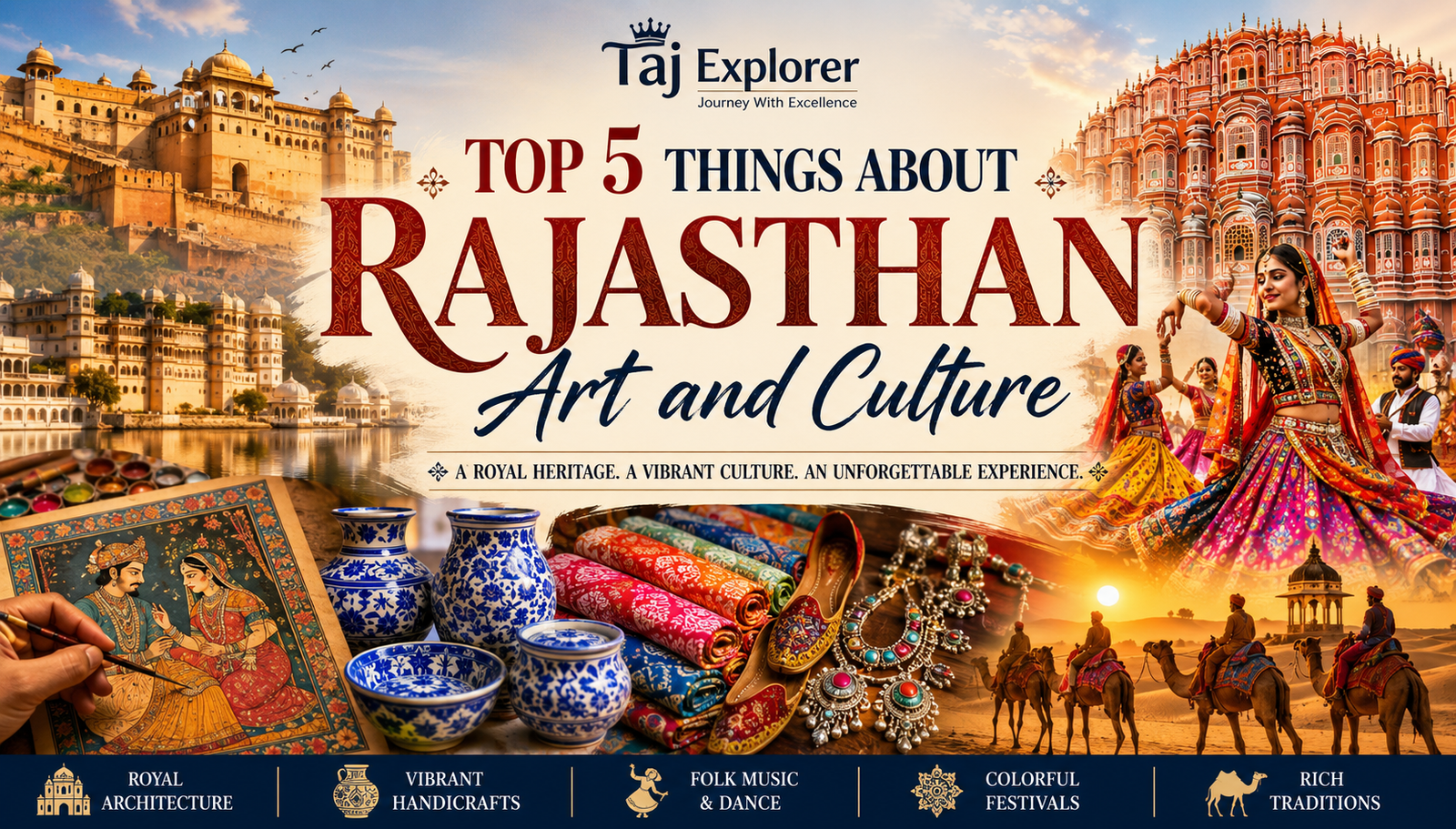
Rajasthan is more than just magnificent forts and royal palaces—it’s the cultural heartbeat of India. Every city, village, and marketplace tells a story through vibrant paintings, handcrafted textiles, mesmerizing folk music, and centuries-old traditions. Whether you’re strolling through Jaipur’s colorful bazaars, admiring the miniature paintings of Udaipur, or watching folk performers beneath the golden skies of Jaisalmer, you’ll discover why Rajasthan art culture continues to captivate travelers from around the world.
For visitors seeking authentic experiences, Rajasthan offers far more than sightseeing. It invites you to step into living traditions where artisans continue practicing age-old crafts, musicians preserve legendary melodies, and festivals transform entire cities into spectacular celebrations of color and culture.
If you’re planning to explore the royal heritage of India, our Rajasthan tour packages offer personalized journeys through the state’s most iconic cultural destinations.
At Taj Explorer, we believe every journey should go beyond monuments. Our personalized Rajasthan tours connect travelers with the region’s extraordinary heritage, allowing you to experience the true soul of India’s royal state.
Why Rajasthan Art and Culture Are Famous Around the World
Rajasthan has preserved its traditions remarkably well despite centuries of changing empires and modern development. The state’s cultural identity reflects the legacy of brave Rajput kingdoms, artistic patronage, desert lifestyles, and spiritual devotion.
Unlike many destinations where traditions survive only in museums, Rajasthan’s artistic heritage remains an essential part of everyday life. Visitors encounter beautifully painted homes, craftsmen working by hand, women wearing colorful Bandhani textiles, and musicians performing centuries-old compositions in village squares.
Some of the reasons travelers love Rajasthan include:
- Royal forts and magnificent palaces
- Traditional miniature paintings
- World-famous handicrafts
- Rich folk music and dance traditions
- Vibrant local festivals
- Colorful markets filled with handmade treasures
- Luxury heritage hotels
- Authentic cultural experiences
This perfect combination makes Rajasthan one of India’s most rewarding destinations for heritage tourism and cultural travel.
1. Marvel at Rajasthan’s Royal Architecture and Living Heritage


One of the greatest expressions of Rajasthan art culture is its breathtaking architecture. Every palace, fort, temple, and haveli reflects centuries of artistic excellence, combining Rajput, Mughal, and local architectural styles.
Unlike ordinary historical monuments, Rajasthan’s royal buildings were designed as complete works of art. Intricately carved balconies, mirror-inlaid halls, painted ceilings, marble courtyards, and elaborate gateways showcase extraordinary craftsmanship.
Among the finest examples are:
- Amber Fort
- City Palace Udaipur
- Mehrangarh Fort
- Junagarh Fort
Walking through these landmarks reveals beautiful frescoes, marble pavilions, stained-glass windows, decorative arches, and artistic details that continue inspiring architects worldwide.
Many heritage palaces have now become luxury hotels, allowing visitors to experience Rajasthan’s royal lifestyle while surrounded by authentic artwork and traditional décor.
Royal Patronage That Shaped Rajasthan’s Artistic Legacy
For centuries, Rajput rulers encouraged painters, sculptors, musicians, poets, and craftsmen by establishing royal workshops inside their palaces. These artists documented court ceremonies, festivals, mythology, hunting expeditions, and everyday royal life.
This royal support gave birth to some of India’s finest artistic traditions, many of which continue to flourish today.
Visitors can still admire these masterpieces in palace museums throughout Jaipur, Udaipur, Bikaner, and Jodhpur, where centuries-old paintings remain remarkably well preserved.
2. Discover Rajasthan’s World-Famous Traditional Paintings


No exploration of Rajasthan art culture is complete without experiencing its internationally celebrated painting traditions. Every brushstroke reflects storytelling, devotion, and royal elegance.
Mewar Miniature Paintings
Originating in Udaipur, the Mewar School is among India’s oldest painting traditions. These masterpieces feature bold colors, intricate landscapes, royal portraits, and scenes from the Ramayana, Mahabharata, and the life of Lord Krishna.
Artists traditionally used handmade paper, natural mineral pigments, vegetable dyes, and brushes crafted from squirrel hair, creating extraordinary detail that still amazes collectors today.
Pichwai Paintings
Created primarily in Nathdwara, Pichwai paintings are devotional artworks displayed behind the idol of Shrinathji, a form of Lord Krishna.
These paintings feature lotus ponds, cows, peacocks, monsoon scenes, and festive celebrations, making them both spiritual masterpieces and decorative treasures.
Today, Pichwai artwork has become one of Rajasthan’s most sought-after luxury collectibles.
Shekhawati Frescoes
The Shekhawati region is often called the “Open-Air Art Gallery of Rajasthan.”
Hundreds of historic havelis display magnificent wall paintings illustrating mythology, trade journeys, royal processions, and even early trains and automobiles introduced during the colonial era.
Walking through towns like Mandawa and Nawalgarh feels like visiting an enormous outdoor museum where every street showcases artistic brilliance.
Why Rajasthan’s Paintings Are Still Relevant Today
Modern interior designers, luxury hotels, and international collectors continue embracing Rajasthani painting styles because they combine heritage with timeless elegance.
Contemporary artists have also adapted miniature painting techniques to create modern works while preserving traditional craftsmanship, ensuring these artistic traditions continue inspiring future generations.
Experience Rajasthan’s Culture Beyond the Monuments
One of the best ways to appreciate Rajasthan is by combining sightseeing with local experiences. Instead of only visiting forts and palaces, spend time exploring artisan villages, heritage museums, and bustling markets where craftspeople continue practicing centuries-old techniques.
With Taj Explorer’s customized Rajasthan journeys, travelers can enjoy private guided tours, authentic cultural encounters, and seamless travel experiences that reveal the deeper stories behind every destination.
3. Explore Rajasthan’s Famous Handicrafts and Traditional Crafts


The heart of Rajasthan art culture lies in its extraordinary handicrafts. Across the state, generations of skilled artisans continue to create handmade masterpieces using techniques passed down through centuries. Whether you’re exploring Jaipur’s bustling bazaars, wandering through Udaipur’s artisan streets, or visiting traditional villages near Jodhpur, you’ll find craftsmanship that reflects Rajasthan’s royal legacy and artistic excellence.
Shopping for authentic Rajasthan handicrafts is one of the highlights of any Rajasthan tour. Every handcrafted item tells a story of heritage, creativity, and local tradition, making it more than just a souvenir—it becomes a piece of India’s cultural history.
Block Printing: Rajasthan’s Timeless Textile Tradition
Among India’s most celebrated textile arts, Rajasthan block printing has earned worldwide recognition for its intricate patterns, natural dyes, and sustainable craftsmanship.
The villages of Bagru and Sanganer, located near Jaipur, remain the centers of this remarkable art form. Skilled artisans carefully carve intricate floral and geometric designs onto wooden blocks before hand-printing them onto cotton and silk fabrics.
Natural dyes extracted from flowers, vegetables, minerals, and tree bark give these textiles their rich and earthy colors while preserving eco-friendly production methods.
Today, block-printed fabrics are used in:
- Luxury home décor
- Fashion collections
- Scarves and dupattas
- Bed linens
- Table runners
- Cushion covers
- Designer garments
Many travelers enjoy visiting family-run workshops where they can watch artisans at work and even try block printing themselves.
Bandhani and Leheriya: Rajasthan’s Colorful Identity
No discussion of Rajasthan culture is complete without mentioning Bandhani and Leheriya, two iconic textile traditions.
Bandhani, also known as tie-and-dye, involves thousands of tiny knots tied by hand before dyeing the fabric. Once untied, the cloth reveals intricate dotted patterns that symbolize celebration, prosperity, and joy.
Leheriya, famous for its flowing wave-like stripes, is traditionally worn during monsoon festivals and weddings. Its vibrant colors perfectly capture Rajasthan’s festive spirit.
These textiles are commonly seen in:
- Sarees
- Turbans
- Dupattas
- Lehengas
- Stoles
- Home furnishings
Their timeless beauty continues inspiring international fashion designers and luxury brands.
Jaipur’s Blue Pottery: A Rare Artistic Treasure


One of Rajasthan’s most distinctive crafts is Jaipur Blue Pottery, known for its brilliant turquoise glaze and Persian-inspired floral motifs.
Unlike traditional pottery, Blue Pottery is made without clay. Instead, artisans use a unique mixture of quartz stone powder, glass, Fuller’s earth, gum, and natural ingredients before applying vibrant blue and green glazes.
Popular Blue Pottery items include:
- Decorative plates
- Vases
- Tea sets
- Bowls
- Tiles
- Lamps
- Home décor
Its elegance makes it one of the most sought-after handicrafts among international travelers visiting Rajasthan.
Royal Jewelry and Gemstone Craftsmanship
Jaipur is often called India’s Gem City, and for good reason. Rajasthan has perfected jewelry-making for centuries through techniques such as:
- Kundan Jewelry
- Meenakari Enamel Work
- Thewa Art
- Tribal Silver Jewelry
- Polki Diamond Craftsmanship
Royal families commissioned elaborate ornaments decorated with emeralds, rubies, pearls, sapphires, and diamonds, many of which are now displayed in palace museums.
Today’s master craftsmen continue producing exquisite jewelry using these traditional techniques, blending heritage with contemporary design.
For travelers seeking authentic luxury shopping, Jaipur remains one of India’s finest destinations.
Metalwork, Wood Carving, and Leather Crafts
Beyond textiles and jewelry, Rajasthan also excels in traditional craftsmanship involving metal, leather, and wood.
Artisans create:
- Hand-engraved brassware
- Decorative lanterns
- Camel leather products
- Wooden furniture
- Carved doors
- Puppet dolls
- Marble inlay work
Each region specializes in unique artistic traditions that have been preserved for generations.
Buying directly from artisan cooperatives not only guarantees authenticity but also supports local communities and helps preserve Rajasthan’s living heritage.
4. Experience Rajasthan’s Mesmerizing Folk Music and Traditional Dance


Music and dance form the emotional soul of Rajasthan art culture. Every celebration, wedding, festival, and royal ceremony is accompanied by performances that have entertained audiences for centuries.
Unlike staged performances found elsewhere, Rajasthan’s folk traditions remain deeply connected to community life.
Whether you’re enjoying dinner at a heritage palace or camping beneath the stars in the Thar Desert, live cultural performances become unforgettable travel memories.
Ghoomar: Rajasthan’s Most Elegant Folk Dance
Recognized worldwide, Ghoomar is Rajasthan’s signature dance performed by women dressed in beautifully embroidered ghagras.
As dancers gracefully spin in colorful circles, their flowing skirts create mesmerizing patterns accompanied by traditional folk songs.
Originally performed inside royal palaces, Ghoomar is now showcased during weddings, festivals, and cultural events across Rajasthan.
Kalbeliya: UNESCO-Recognized Cultural Heritage
Among Rajasthan’s most spectacular dance forms is Kalbeliya, performed by the traditional snake-charmer community.
Its graceful, serpentine movements imitate the motion of snakes while dancers wear striking black costumes decorated with colorful embroidery and mirrors.
The dance has received international recognition for preserving one of India’s most unique cultural traditions.
Kalbeliya dance has received international recognition through the UNESCO Intangible Cultural Heritage programme for preserving this unique cultural tradition.
Traditional Folk Music That Tells Rajasthan’s Stories
The legendary Manganiyar and Langa musicians preserve Rajasthan’s oral history through songs that celebrate:
- Rajput bravery
- Royal romance
- Desert life
- Spiritual devotion
- Local folklore
- Ancient legends
Their performances feature traditional instruments such as:
- Kamayacha
- Sarangi
- Algoza
- Dholak
- Khartal
- Morchang
Listening to these musicians beneath the desert sky is one of Rajasthan’s most authentic cultural experiences.
Best Places to Enjoy Live Cultural Performances
Visitors looking to experience authentic Rajasthan culture should include these venues in their itinerary:
- Bagore Ki Haveli – Evening folk dance and puppet performances.
- Chokhi Dhani – Traditional Rajasthani village experience with music, dance, crafts, and cuisine.
- Jaisalmer Desert Festival – Folk performances, camel races, and cultural competitions.
- Sam Sand Dunes – Desert camps featuring live folk music under the stars.
These venues offer travelers an unforgettable glimpse into Rajasthan’s vibrant performing arts.
5. Celebrate Rajasthan’s Festivals and Living Traditions
Festivals are among the most colorful expressions of Rajasthan art culture. Throughout the year, cities and villages come alive with elaborate processions, traditional costumes, devotional ceremonies, music, dance, and local fairs.
Every festival reflects the region’s deep-rooted traditions while offering visitors an immersive cultural experience.
Pushkar Camel Fair


The famous Pushkar Camel Fair is one of India’s largest cultural gatherings.
Originally established as a livestock trading fair, it has evolved into a spectacular celebration featuring:
- Camel parades
- Folk music
- Traditional dance
- Mustache competitions
- Rural sports
- Handicraft markets
- Spiritual rituals at Pushkar Lake
Thousands of visitors from around the world travel to Rajasthan specifically to witness this unforgettable event.
Diwali, Gangaur, and Teej
Rajasthan celebrates India’s major festivals with exceptional grandeur.
During Diwali, entire cities sparkle with lamps, beautifully decorated homes, colorful rangoli, and festive markets.
Gangaur, dedicated to Goddess Gauri, showcases magnificent processions where women wear colorful traditional attire while carrying beautifully decorated idols through historic streets.
Teej, celebrated during the monsoon season, fills Jaipur with decorated elephants, music, dances, and vibrant cultural performances that attract photographers and travelers from across the globe.
These celebrations provide visitors with an authentic opportunity to witness Rajasthan’s living traditions in their most colorful form.
Why Rajasthan’s Art and Culture Deserve a Place on Every Traveler’s Bucket List


Exploring Rajasthan art culture is far more than visiting historical landmarks—it’s about connecting with traditions that have been carefully preserved for centuries. Every destination introduces travelers to master artisans, vibrant festivals, magnificent architecture, and welcoming communities that proudly share their heritage.
Whether you’re admiring intricate miniature paintings inside royal palaces, watching folk dancers perform beneath desert stars, or shopping for handmade crafts in centuries-old markets, every moment offers a deeper understanding of Rajasthan’s remarkable identity.
Unlike many destinations where traditions have faded over time, Rajasthan continues to celebrate its customs in everyday life. This living heritage transforms every journey into a memorable cultural experience.
Experience Rajasthan Like Royalty with Taj Explorer
At Taj Explorer, we believe the best journeys combine comfort, authenticity, and unforgettable experiences. Our carefully designed Rajasthan tours go beyond standard sightseeing, allowing you to discover the region’s artistic and cultural treasures at your own pace.
Whether you’re traveling as a couple, family, solo explorer, or private group, our personalized itineraries ensure a seamless travel experience from arrival to departure.
Travelers looking to combine Rajasthan with Delhi and Agra can explore our 7-Day Luxury Golden Triangle Tour for an unforgettable heritage experience.
Why Choose Taj Explorer?
✔ Private air-conditioned transportation
✔ Knowledgeable local guides
✔ Luxury and heritage hotel options
✔ Flexible customized itineraries
✔ Authentic cultural experiences
✔ Comfortable and hassle-free travel
✔ Transparent pricing with no hidden costs
From Jaipur’s bustling artisan markets to Udaipur’s romantic lakes, Jodhpur’s majestic forts, and Jaisalmer’s golden desert villages, every destination becomes more meaningful with expert local insights.
Many travelers combine Rajasthan with India’s famous Golden Triangle for the ultimate heritage vacation, experiencing Delhi, Agra, and Jaipur in one unforgettable journey.
Authentic Cultural Experiences You Shouldn’t Miss
One of the greatest ways to appreciate Rajasthan culture is by participating in local experiences rather than simply observing them.
Here are some unforgettable activities to include during your trip:
Join a Block Printing Workshop
Learn the traditional Bagru or Sanganeri printing techniques directly from skilled artisans and create your own handcrafted textile.
Visit Local Artisan Villages
Meet families who have preserved centuries-old crafts including pottery, wood carving, weaving, miniature painting, and jewelry making.
Stay in a Heritage Haveli
Spend the night inside beautifully restored palaces and havelis where hand-painted walls, antique furniture, carved balconies, and royal hospitality recreate Rajasthan’s regal past.
Enjoy Traditional Folk Performances
Watch mesmerizing Ghoomar and Kalbeliya dancers accompanied by Manganiyar musicians while dining under the stars in the Thar Desert.
Explore Colorful Local Markets
Shop for authentic:
- Bandhani textiles
- Blue pottery
- Miniature paintings
- Leather goods
- Handcrafted jewelry
- Marble handicrafts
- Wooden décor
- Camel leather products
Buying directly from artisans supports local communities while preserving Rajasthan’s artistic heritage.
Best Time to Experience Rajasthan Art and Culture
The ideal time to explore Rajasthan is between October and March, when pleasant weather makes sightseeing and outdoor cultural experiences comfortable.
This season also coincides with many of Rajasthan’s most spectacular festivals, including:
- Pushkar Camel Fair
- Jaisalmer Desert Festival
- Gangaur
- Teej
- Diwali
During these months, visitors enjoy pleasant temperatures, vibrant celebrations, and excellent photography opportunities.
You can also check the official Rajasthan Tourism website for seasonal festivals, travel updates, and cultural events before planning your trip.
Sustainable Tourism: Protecting Rajasthan’s Living Heritage
Responsible tourism plays an important role in preserving Rajasthan’s traditions for future generations.
While traveling, consider:
- Purchasing authentic handmade products instead of factory-made souvenirs.
- Respecting local customs and religious traditions.
- Hiring certified local guides.
- Supporting artisan cooperatives and family-run businesses.
- Choosing eco-conscious accommodations whenever possible.
Every thoughtful decision helps preserve the state’s remarkable artistic legacy while directly benefiting local communities.
Final Thoughts
Rajasthan is a destination where history, creativity, and tradition exist in perfect harmony. From magnificent forts and royal palaces to vibrant handicrafts, colorful festivals, soulful music, and world-renowned artwork, every experience reveals another chapter of India’s cultural heritage.
Whether you’re planning your first visit or returning to discover more, exploring Rajasthan art culture promises unforgettable memories, inspiring encounters, and meaningful connections with one of the world’s richest living traditions.
If you’re looking for a personalized journey through Rajasthan’s royal cities, historic landmarks, artisan villages, and cultural festivals, Taj Explorer offers thoughtfully designed private tours that combine luxury, comfort, and authentic local experiences.
Ready to experience the vibrant Rajasthan art culture? Contact Taj Explorer today and let our travel experts create your perfect customized itinerary.
Frequently Asked Questions (FAQs)
What is Rajasthan famous for in terms of art and culture?
Rajasthan is renowned for its miniature paintings, blue pottery, Bandhani textiles, block printing, folk music, Ghoomar and Kalbeliya dances, magnificent forts, royal palaces, and vibrant cultural festivals.
Which city is best for experiencing Rajasthan art culture?
Each city offers something unique:
Jaipur – Blue pottery, jewelry, block printing, royal architecture
Udaipur – Miniature paintings, palaces, performing arts
Jodhpur – Folk music, Bandhani textiles, handicrafts
Jaisalmer – Desert culture, camel safaris, folk performances
Bikaner – Traditional crafts and heritage architecture
Where can I buy authentic Rajasthan handicrafts?
Government emporiums, artisan workshops, local cooperatives, heritage markets, and certified handicraft stores in Jaipur, Udaipur, Jodhpur, and Jaisalmer are excellent places to purchase genuine handmade products.
What are Rajasthan’s most famous traditional dances?
The most popular dance forms include:
Ghoomar
Kalbeliya
Bhavai
Chari Dance
Terah Taali
Each represents unique regional traditions and cultural heritage.
When is the best time to visit Rajasthan?
The best time to visit is from October to March, when temperatures are comfortable for sightseeing, wildlife safaris, festivals, and outdoor cultural experiences.