


Luxury travel in India can mean a private tour of Mughal monuments, a stay in a restored Rajasthan palace, or a carefully planned journey through historic cities with a knowledgeable local guide. The best luxury India tours balance comfort with meaningful encounters, giving you time to understand the places you visit rather than rushing from one attraction to the next.
For travellers planning a heritage holiday, the Golden Triangle of Delhi, Agra and Jaipur is a natural starting point. From there, you can add Rajasthan’s palace hotels, a wildlife safari, Varanasi’s riverfront, Kerala’s backwaters or a Himalayan retreat, depending on your interests and available time.
This guide explores 10 luxury travel experiences in India, with practical advice on routes, trip length, transport and choosing a tour package. Whether you are researching luxury holidays in India, planning a private India tour or comparing luxury Golden Triangle tour packages, use these ideas to shape a journey that suits your pace and priorities.

What should you expect from luxury travel in India?

A well-planned luxury trip to India starts with the details that shape your comfort: hotel location, private transport, guide arrangements, sightseeing time and the pace of travel. Luxury does not have to mean filling every day with expensive experiences. For many travellers, it means having a reliable driver, a knowledgeable guide, thoughtful hotel choices and enough time to enjoy each destination.
Some travellers prioritise palace hotels and fine dining. Others care more about private transfers, specialist guides, photography opportunities or time to explore historic sites without rushing. Decide what matters most before comparing luxury India travel packages.
Ask for a day-by-day itinerary, named hotels where possible, the vehicle category, guide arrangements and a written list of inclusions and exclusions. These details make it easier to compare packages fairly and understand what the quoted price covers.
The Golden Triangle connects three of North India’s best-known heritage destinations. It is a practical introduction to Mughal architecture, Rajasthan’s royal history and the historic quarters of Delhi, and it can be adapted for couples, families, first-time visitors and travellers seeking a private luxury tour of India.
About Taj Explorer: Heritage Journeys Planned Around You

Taj Explorer helps travellers discover India’s history, architecture and living traditions through thoughtfully planned heritage journeys. For us, a memorable trip is about more than travelling between monuments: it is about understanding the stories behind them while enjoying practical comforts and a pace that feels right for you.
Our approach centres on personal planning, private transport where requested, locally informed guides and time to explore. The details depend on your route, travel dates and chosen package, so ask us to confirm the specific services available for your journey before booking.
Plan a Bespoke Luxury India Itinerary

No two travellers have exactly the same idea of a perfect luxury holiday in India. Your itinerary may focus on Mughal architecture, royal residences, local crafts, food, photography, wildlife or a slower pace with time to relax between visits.
Personalising your luxury travel India itinerary
Start by sharing your travel dates, group size, interests and approximate budget. You can contact the Taj Explorer team to discuss route options and the level of support you need. A clear brief makes it easier to plan realistic travel times and choose suitable accommodation and experiences.
Transport, visas and trip support
Before departure, check the current entry rules that apply to your nationality and travel documents through the official Indian e-Visa website. Confirm whether your chosen package includes airport transfers, intercity transport, a private chauffeur, guides, entrance tickets and on-trip assistance; these inclusions can vary between itineraries.
Contact Taj Explorer to discuss your preferred route and travel style.
1. Explore Delhi, Agra and Jaipur on a Luxury Golden Triangle Tour

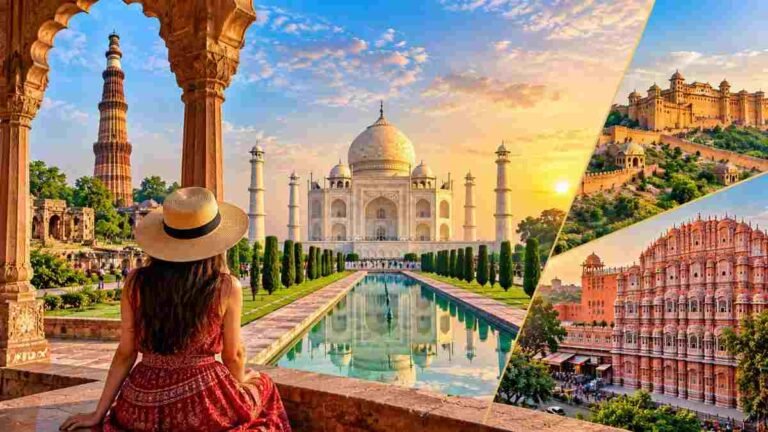
The Golden Triangle is one of the most practical routes for first-time visitors planning luxury travel in India. Delhi, Agra and Jaipur bring together historic city districts, Mughal monuments, Rajput architecture, traditional markets and a wide range of accommodation options. The route can work well for couples and families, especially when travel times and sightseeing are planned realistically.
Delhi: Explore historic landmarks and the Old City

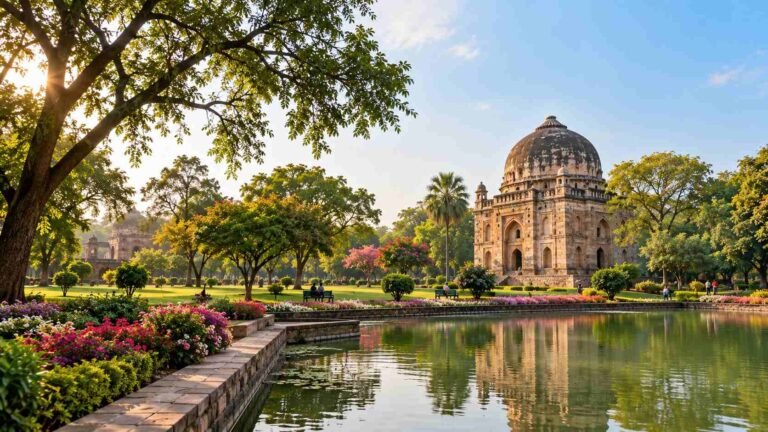
Delhi’s history spans several periods, visible at the Qutub Minar complex, Humayun’s Tomb, the Red Fort and the lanes of Old Delhi. A guide can help explain the architecture and historical context, while a carefully paced itinerary leaves room for local food or a walk through a historic neighbourhood.
Traffic can significantly affect travel times, so avoid scheduling too many distant attractions on the same day. If you are arriving on an international flight, consider keeping the first day light.
Agra: Visit the Taj Mahal and Agra Fort

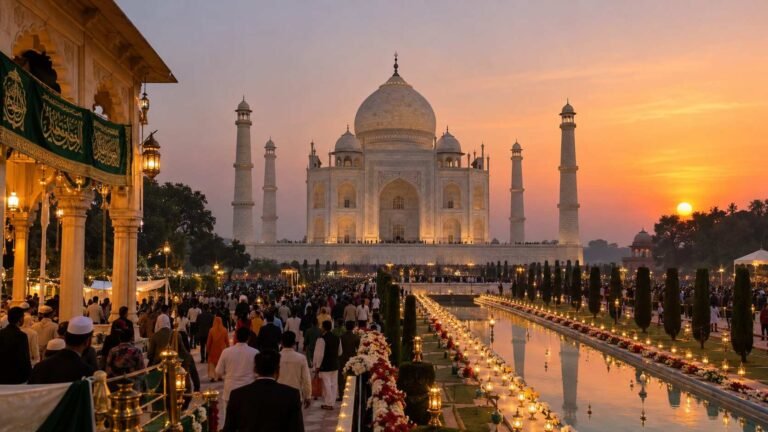
The Taj Mahal is the centrepiece of many Agra itineraries. Built by Mughal emperor Shah Jahan in memory of Mumtaz Mahal, it was constructed between 1632 and 1648. Read the UNESCO World Heritage profile of the Taj Mahal for further historical and architectural context. Agra Fort adds another important chapter to the city’s Mughal history.
If you are travelling from Delhi and prefer a private premium-vehicle experience, consider the Taj Mahal luxury car tour from Delhi by Mercedes or BMW. It is a relevant option for travellers who want a more comfortable road journey to Agra without arranging every transfer independently. Check the current itinerary and inclusions before booking.
Plan monument visits around official opening times, seasonal weather and your preferred pace. The Taj Mahal is closed to visitors on Fridays, so check the current visitor guidance when choosing your date.
Jaipur: Discover Amber Fort and royal heritage

Jaipur adds a distinctive Rajput architectural style to the route. Amber Fort, the City Palace area and Jantar Mantar are useful starting points. Leave time for the city’s markets and crafts, particularly if you are interested in textiles, jewellery, block printing or regional food.
Best for: First-time visitors, couples and travellers seeking a balanced introduction to India’s best-known heritage cities.
Explore Taj Explorer’s Golden Triangle tour packages to compare possible routes.
2. Stay in Rajasthan’s Heritage Palaces

Rajasthan is a natural choice for luxury heritage holidays, thanks to its forts, historic cities and hotels housed in former royal residences or traditional havelis. Jaipur, Jodhpur and Udaipur each offer a different atmosphere, so choose the cities that best match your interests rather than trying to cover the entire state in a few days.
Jaipur is known for its planned historic centre and nearby forts. Jodhpur’s Mehrangarh Fort rises above the blue-painted old city, while Udaipur appeals to travellers drawn to lakeside views, palaces and a slower pace. A heritage hotel can add character to the journey, but check the specific property’s location, room category, dining, accessibility and included services before booking.
Allow several nights if you want to visit more than one Rajasthan city without spending much of the holiday on the road. For a broader route, see Taj Explorer’s Rajasthan tour packages.
Best for: Couples, anniversary trips, architecture enthusiasts and travellers who enjoy historic accommodation.
3. Add Private Guided Heritage and Cultural Experiences
A luxury heritage trip becomes more rewarding when you leave time to understand the places beyond their most photographed landmarks. Depending on the destination, you could explore historic neighbourhoods with a local guide, learn about traditional crafts, visit a museum or spend time understanding the architecture of a fort, tomb or palace.
When arranging a private guide, ask about their subject knowledge, language, tour duration and what is included. If you are particularly interested in photography, textiles, food or architecture, share that preference in advance so the visit can be planned around it.
Best for: Curious travellers, repeat visitors, photographers and anyone who prefers context and conversation to a checklist of attractions.
4. Combine Heritage Cities with a Ranthambore Wildlife Safari

Ranthambore National Park in Rajasthan is known for its tiger habitat and historic ruins in and around the park. Adding a safari can bring a nature-focused contrast to a journey through Delhi, Agra and Jaipur.
Plan safari dates in advance and check current park access, permitted zones, booking rules and seasonal restrictions. Tiger sightings are never guaranteed, so choose the experience for the wildlife, landscape and opportunity to learn about the habitat rather than expecting a guaranteed sighting.
Early starts are common on safari days. Allow enough time between the safari and your next long transfer, and avoid making the itinerary so tight that a delay becomes stressful.
Best for: Wildlife enthusiasts, photographers and travellers who want a nature-focused break between heritage destinations.
Explore the Golden Triangle tour with Ranthambore if you would like to combine major heritage cities with a wildlife extension.
5. Experience Varanasi’s Riverfront and Living Traditions
Varanasi offers a different perspective on India’s cultural and religious heritage. The city’s ghats, temples and daily rituals are closely connected with Hindu religious life, and the atmosphere changes throughout the day as residents and visitors gather along the Ganges.
A sunrise boat ride offers a view of the riverfront as the city wakes, while an evening visit to the Ganga Aarti provides another perspective on local religious traditions. Follow local guidance, dress respectfully at religious sites and ask permission before photographing people, particularly during ceremonies.
Give Varanasi enough time to settle into its pace rather than treating it as a quick stop between long transfers. A guide familiar with local customs can help explain what you see and how to visit respectfully.
Best for: Travellers interested in religious history, living traditions, photography and cultural experiences.
Consider Taj Explorer’s Varanasi tour packages when planning this extension.
6. Explore Kerala’s Historic Towns and Backwaters
Kerala suits travellers who want a different setting after exploring North India’s forts and palaces. The region combines coastal history, waterways, historic towns, hill country and a distinct food culture. Kochi is a useful starting point for visitors interested in the historic port area and the cultural influences that shaped the city.
From Kochi, you can plan time in the backwaters or travel inland towards tea-growing areas, depending on your interests and trip length. A houseboat journey is one way to experience the waterways, but check the vessel, cabin arrangements, route, meals and overnight facilities before booking.
Kerala can work as a separate holiday or as an extension for travellers who have already visited the Golden Triangle. Allow enough days to make the additional travel worthwhile rather than trying to combine too many distant regions in one short trip.
Best for: Repeat visitors, couples and travellers looking for coastal heritage, waterways and a slower holiday.
7. Add a Himalayan Retreat to Your India Itinerary

Travellers looking for mountain scenery, quiet surroundings or a wellness-focused stay may want to add a Himalayan retreat. The best destination depends on the season, road conditions, altitude and the type of experience you want, from a historic hill-station hotel to time outdoors or optional yoga and Ayurveda sessions.
Check travel times carefully before adding the mountains to a packed itinerary. Road journeys can take longer than expected, and higher-altitude destinations require more planning than a city break. If rest is the main goal, leave unplanned time to enjoy the property and its surroundings.
Best for: Travellers seeking a slower pace, mountain scenery or a wellness-oriented stay.
8. Discover Historic Stepwells, Traditional Crafts and Lesser-Known Heritage
Beyond the headline monuments, India’s heritage includes stepwells, craft traditions, historic markets and neighbourhoods that reward a slower visit. Around Jaipur, for example, stepwells and traditional craft districts can add architectural and cultural detail to a Golden Triangle itinerary.
Choose experiences that fit your route and interests, and confirm opening arrangements, travel time and whether a guide or advance booking is needed. When visiting working craft communities, be considerate, ask before taking photographs and purchase directly only when you genuinely want to support the maker.
Best for: Architecture enthusiasts, culture-focused travellers, photographers and visitors who have already seen India’s best-known landmarks.
9. Choose More Responsible and Thoughtful Luxury Travel

Comfort and cultural discovery can go hand in hand with thoughtful travel choices. Look for accommodation that explains its environmental and community practices clearly, respect local customs, reduce unnecessary single-use waste and choose experiences that treat historic places and local residents with care.
Do not rely on a sustainability label alone. If this matters to you, ask a hotel or tour provider what it does in practice, such as managing water and energy use, supporting local employment or working with responsible local suppliers.
Best for: Travellers who want comfort while making considered choices about the places and communities they visit.
10. Make the Journey Part of the Experience with Private Road Travel
For some travellers, a private road journey is an important part of luxury travel in India. A chauffeur-driven car can make it easier to set your departure time, stop when appropriate and travel between destinations without coordinating multiple public transport connections. The best option depends on distance, road conditions, group size, luggage and budget.
For a Delhi–Agra visit focused on the Taj Mahal, see the Taj Mahal luxury car tour from Delhi by Mercedes or BMW. Before confirming any private tour, check the vehicle category, pickup and drop-off points, sightseeing arrangements, waiting time and what is included in the price.
Best for: Couples, families, small groups and travellers who value flexibility and a more private way to travel between heritage destinations.
How Long Should a Luxury India Trip Last?
Your available time should determine the route. These are planning guidelines rather than fixed tour durations; the right schedule depends on your arrival time, travel pace and the number of places you want to visit.
- About 3–5 days: Focus on Delhi and Agra, or choose a short Golden Triangle itinerary with limited sightseeing.
- About 6–8 days: Explore Delhi, Agra and Jaipur with time for the main heritage sites. See the 3-day Golden Triangle tour if you are comparing a shorter route, or the 7-day luxury Golden Triangle tour for a longer itinerary.
- About 10–12 days: Consider the Golden Triangle with a Rajasthan extension or a wildlife stay in Ranthambore.
- Two weeks or longer: You may have time to combine North Indian heritage with a separate region such as Kerala or Varanasi, allowing for the extra travel involved.
Avoid adding destinations simply because they look close together on a map. Travel, hotel check-ins and sightseeing all take time, and a more focused itinerary often feels more luxurious than a rushed one.
How to Choose a Luxury Travel Package in India
When comparing luxury India tour packages, look beyond the headline price and check what is actually included.
Accommodation: Ask for hotel names, room categories, meal inclusions, location and cancellation terms. If a property is described as a palace hotel, check the specific facilities and services rather than relying on the label alone.
Transport: Confirm whether private transfers are included, which vehicle category is provided, whether fuel and tolls are covered, and whether the driver stays with you throughout the itinerary.
Guides and sightseeing: Check which visits include a guide, which entrance fees are covered, whether experiences require advance reservations and how much time is allocated to each site.
Customisation: If you want to change the pace, add a destination or select a particular hotel, ask what can be changed and whether additional charges apply.
Support and communication: Confirm who to contact if a transfer is delayed, a booking changes or you need assistance during the trip. Make sure the itinerary and inclusions are provided in writing.
These checks make it easier to compare luxury travel packages in India on their actual merits and choose one that matches your expectations.
Luxury Travel India FAQs
What is the best time of year for luxury travel in India?
For many North Indian heritage routes, October to March is a comfortable period to consider, although conditions vary by destination. Summer can suit some Himalayan areas, while Kerala and other regions have different seasonal patterns. Check the local forecast and destination-specific advice before booking.
How many days do I need for a luxury Golden Triangle tour?
Around 6 to 8 days gives many travellers time to explore Delhi, Agra and Jaipur without rushing. A shorter trip is possible, but you may need to limit sightseeing. Add more days if you want a Rajasthan extension or a wildlife safari.
What is usually included in a luxury India tour package?
Inclusions vary by operator and itinerary. Ask for written confirmation of accommodation, meals, private transfers, vehicle category, guides, monument tickets, activities, airport transfers and on-trip assistance before booking.
Is a private car a good way to travel from Delhi to the Taj Mahal?
A private car can provide flexibility and a direct journey between Delhi and Agra. Travel time depends on traffic and road conditions. Confirm the pickup point, vehicle category, driver arrangements, sightseeing plan and what the quoted price includes.
Can I book a Taj Mahal luxury car tour from Delhi?
Yes. Taj Explorer has a dedicated page for its Taj Mahal luxury car tour from Delhi by Mercedes or BMW. Review the current tour details, availability and inclusions on the Taj Mahal luxury car tour page before booking.
How can I choose a reliable luxury travel package in India?
Compare day-by-day itineraries, named hotels, transport details, guide arrangements, included fees, cancellation terms and customer support. Ask the provider to confirm all inclusions and exclusions in writing so you can compare packages fairly.
Is luxury travel in India suitable for couples and families?
It can suit couples, families and small groups when the route, accommodation and pace are planned around their needs. Discuss room requirements, accessibility, travel times, children’s needs and preferred activities before finalising the itinerary.
What should I pack for a luxury heritage trip to India?
Pack comfortable walking shoes, clothing suited to the season, sun protection, any personal medication and suitable power adapters. Choose respectful clothing for religious sites and check local guidance for any specific dress requirements.
Conclusion: Plan a Luxury India Journey That Fits Your Interests
The most rewarding luxury travel in India is not necessarily the itinerary with the most stops. It is the one that gives you the right balance of comfort, cultural insight, well-chosen accommodation and time to experience each place. The Golden Triangle is a strong starting point, while Rajasthan, Ranthambore, Varanasi, Kerala and the Himalayas offer different ways to extend your trip.
If you want to explore Delhi, Agra and Jaipur, compare Taj Explorer’s 3-day Golden Triangle tour and 7-day luxury Golden Triangle tour. For a focused visit to Agra, see the Taj Mahal luxury car tour from Delhi by Mercedes or BMW.
Before booking, confirm your itinerary, accommodation, transport, guide arrangements and inclusions in writing. To discuss a route that suits your dates and interests, contact Taj Explorer or explore all available tours.