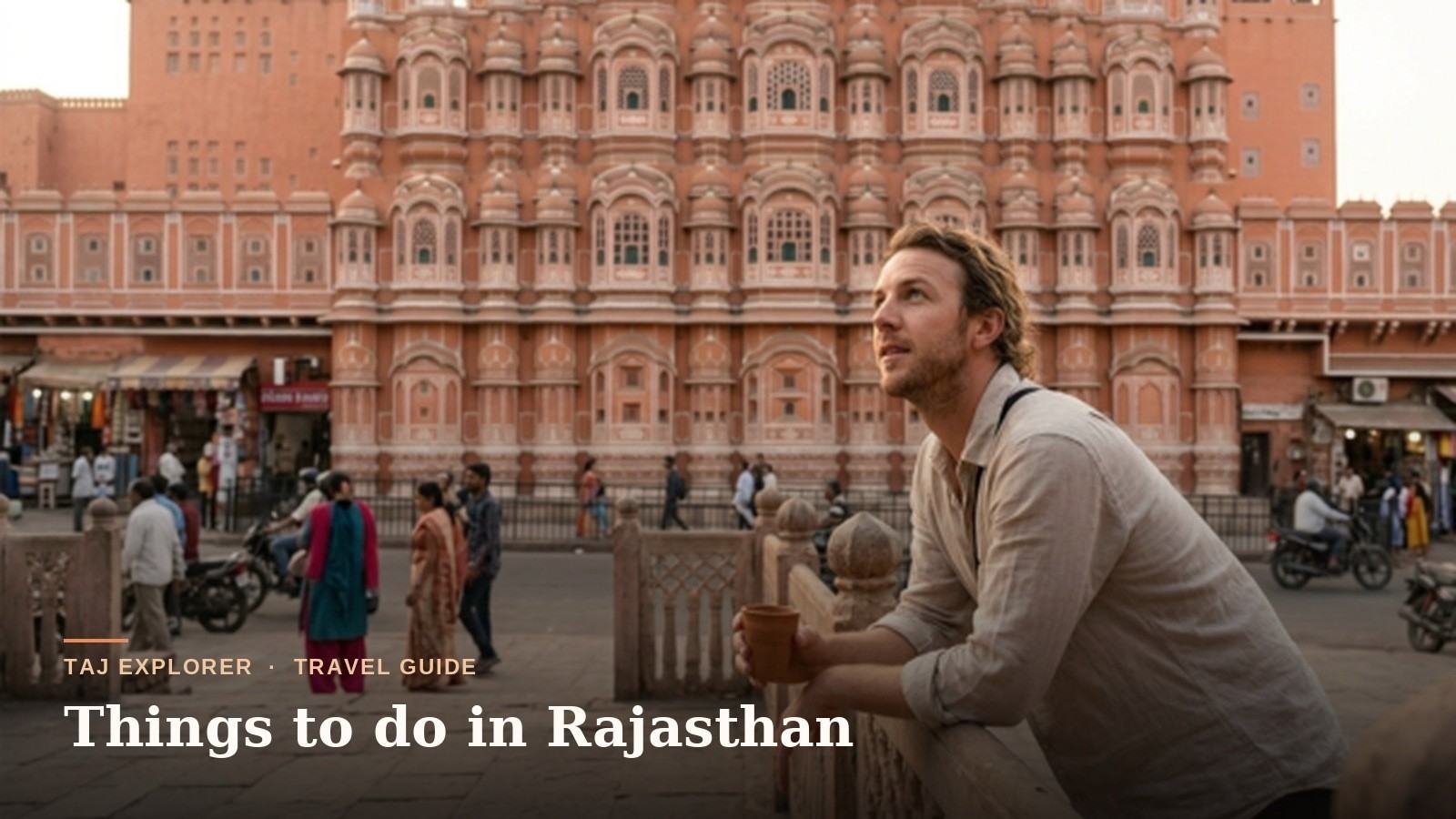
Rajasthan is big. Bigger than most first-time visitors expect.
So when people ask us for a list of things to do in Rajasthan, we don’t hand them a copy-paste list of forts. We tell them what we’d actually tell a friend: which places are worth the drive, which festivals are worth planning a trip around, and which “must-see” attractions you can honestly skip.
We’ve run tours across this state for years. Below is everything we point our guests toward, organized the way we’d explain it over a cup of chai, not a search engine.
Quick Answer: What to See in Rajasthan India
If you only have a few days, focus on these:
- Amer Fort and City Palace in Jaipur
- Mehrangarh Fort in Jodhpur
- Jaisalmer Fort and a night in the Thar Desert
- Lake Pichola in Udaipur
- Ranthambore National Park for a tiger safari
That’s the core. Everything else in this guide adds depth, culture and a few surprises most first-timers miss.
Forts and Palaces Worth Your Time
Rajasthan’s forts aren’t interchangeable. Each one has a different personality, and knowing which is which saves you from fort fatigue by day three.
Amer Fort, Jaipur
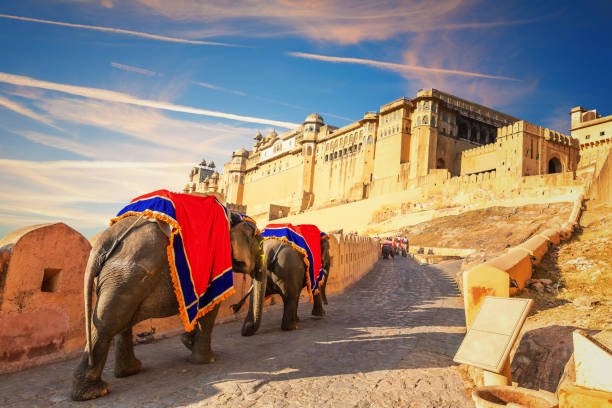
Amer Fort sits about 11 km from Jaipur, and it’s usually the first big “wow” of a Rajasthan trip. The Sheesh Mahal inside, with its mirrored walls and tiny inlaid glass, is the reason people come back with hundreds of photos from one room. Arrive by 8:30 AM if you want the courtyards without the crowds. The light and sound show in the evening is worth staying for if your itinerary allows it.
Mehrangarh Fort, Jodhpur
Perched above the Blue City, Mehrangarh has some of the best views in Rajasthan and a genuinely excellent audio guide included with the entry ticket. We usually recommend the zip line course here, which runs across the old ramparts and gives you a completely different angle on the fort.
Jaisalmer Fort
Unlike most Indian forts, Jaisalmer Fort is still a living fort, meaning families, shops and guesthouses operate inside its walls. Sunset from the ramparts, or from the nearby Bada Bagh cenotaphs, is one of those moments people remember years later.
City Palace, Udaipur
Overlooking Lake Pichola, City Palace is a maze of courtyards, museums and balconies. Most guests spend two to three hours here, longer if they linger over the lake views from Mor Chowk.
Chittorgarh Fort
One of the largest forts in India, spread across a hilltop that takes a full day to explore properly. It’s less polished for tourism than Amer or Mehrangarh, which is exactly why history lovers tend to prefer it.
Kumbhalgarh Fort
Home to the second-longest continuous wall in the world after the Great Wall of China. Kumbhalgarh is also the birthplace of Maharana Pratap. If you’re building your own answer to “coolest place in Rajasthan,” this one belongs on the shortlist.
Rajasthan’s Wildlife Side
Most people don’t associate Rajasthan with wildlife until they’ve seen a tiger walk past their jeep in Ranthambore.
Ranthambore National Park, near Sawai Madhopur, has one of India’s best chances of spotting a wild tiger. Morning safaris tend to have better sightings than afternoon ones, and the ruins scattered through the park add an atmosphere you won’t find in other reserves.
Sariska Tiger Reserve, closer to Alwar, is quieter and easier to combine with Jaipur if your schedule is tight.
Keoladeo National Park in Bharatpur is a bird watcher’s park, home to over 370 species. Visit between November and February to catch migratory birds arriving from as far as Siberia.
Bera, also known as Jawai, is the one most visitors haven’t heard of. It’s leopard territory, and the hills around the Jawai Dam make for one of the more unusual safaris in India.
Desert Experiences You Shouldn’t Skip
Jaisalmer and the Thar Desert are where Rajasthan starts to feel completely different from the rest of India.
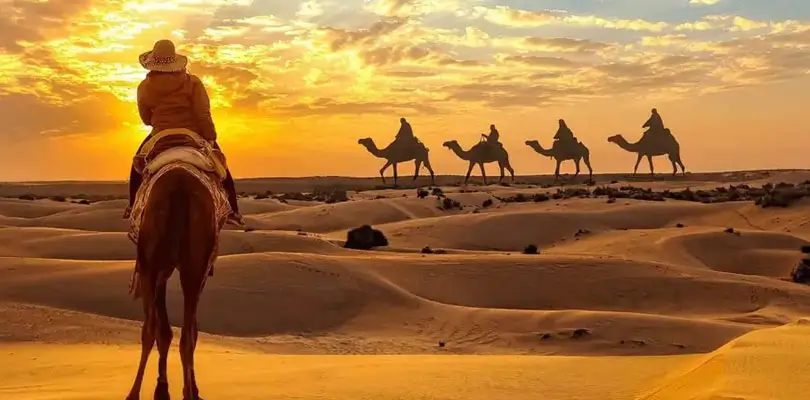
- Camel safari and desert camping in the Sam Sand Dunes. Most guests do this at sunset and stay overnight in a desert camp.
- Dune bashing, essentially a 4×4 ride over the sand dunes, if you want something with more adrenaline than a camel can offer.
- Hot air ballooning over Jaipur or Pushkar, best done early morning when the air is still.
- Quad biking near Sam, a popular add-on for younger travelers.
We usually suggest one night in the desert, not two. It’s a memorable experience, but the novelty of a tent camp wears off faster than people expect.
Culture, Temples and Local Life
Brahma Temple, Pushkar
One of the very few temples in India dedicated to Lord Brahma. It sits beside Pushkar Lake and draws heavy crowds during the Pushkar Fair in October or November.
Govind Dev Ji Temple, Jaipur
Tucked inside the City Palace complex, this temple houses one of the most revered Krishna idols in India. Evening aarti here is quieter and more personal than most temple visits in Rajasthan.
Vishwas Swaroopam, Nathdwara
The world’s tallest Shiva statue, about 45 km from Udaipur. It’s a newer addition to Rajasthan’s landmarks, and the meditation room and elevator access make it accessible even if you’re not up for a long climb.
Chokhi Dhani, Jaipur
A recreated Rajasthani village experience with folk dance, puppet shows and a thali dinner that just keeps coming. It’s touristy, and it knows it, but most of our guests still list it as a highlight because the hospitality is genuine.
Kalbeliya Dance, Jodhpur
The Kalbeliya community’s snake charmer dance is one of the more hypnotic performances you’ll come across in Rajasthan. Worth catching if your Jodhpur evening is free.
Fairs and Festivals
If your travel dates are flexible, planning around a festival changes the whole trip.
- Pushkar Camel Fair (October/November): five days of camel trading, camel races and a genuinely wild atmosphere along the lake.
- Nagaur Fair: one of Rajasthan’s largest cattle fairs, held between Jodhpur and Bikaner.
- Gangaur Festival: celebrated after Holi, with processions of women in traditional dress worshipping Goddess Gauri.
- Kite Festival, Jodhpur: held around Makar Sankranti in mid-January, when the sky over the Blue City fills with kites.
- Kumbhalgarh Festival: a three-day cultural event held in December inside the Kumbhalgarh Fort courtyard.
Shopping in Rajasthan
Rajasthan is genuinely one of the best states in India for shopping, as long as you know where to go.
- Johri Bazaar, Jaipur for gemstones and gold and silver jewelry.
- Sadar Bazaar, Jodhpur for spices, textiles and leather goods, with bargaining expected.
- Bapu Bazaar, Jaipur for block-printed fabric and juttis (traditional Rajasthani footwear).
- Kagzi pottery markets, Alwar for the state’s distinctive paper-thin pottery, a souvenir you won’t find outside Rajasthan.
Food Worth Planning Around
A trip through Rajasthan is also a trip through some of India’s richest regional food.
- Dal Baati Churma, the state’s signature dish, best eaten fresh and hot with plenty of ghee.
- Laal Maas, a fiery mutton curry from the Mewar region.
- Pyaaz Kachori, a Jodhpur breakfast staple sold from street carts by mid-morning.
- Lassi at Lassiwala, Jaipur, specifically Shop No. 312 opposite Niro’s. There are copycat shops nearby, so check the number before you order.
A Few More Unique Activities
Beyond the obvious list, there are a handful of experiences that tend to surprise first-time visitors.
Spending a morning with elephants at Dera Amer, near Jaipur, where you can help bathe and feed the elephants instead of just riding one. It’s a slower, more respectful alternative to the elephant rides at Amer Fort.
Stepping into Chand Baori, an 8th-century stepwell in Abhaneri with over 3,500 narrow steps descending in a geometric pattern. Photos rarely capture how deep it actually is.
Trekking near Mount Abu, Rajasthan’s only hill station. Full-day and overnight treks pass through forest that feels nothing like the desert regions a few hours away.
Watching a puppet show at the Thar Heritage Museum, Jaisalmer, a small private museum where the owner often gives the tour himself.
Cycling through the old city of Jaipur, early morning, before the traffic and heat build up. It’s a genuinely different way to see the Pink City compared to a car window.
Getting Around Rajasthan
Distances between cities are longer than they look on a map. Jaipur to Jodhpur is roughly 6 hours by road, and Jodhpur to Jaisalmer adds another 5. Most of our guests travel by private car with a driver, which makes stops for photos, food and the odd roadside dhaba much easier than a train schedule allows.
Trains do connect the major cities and are worth considering if you’re traveling on a longer timeline or want an overnight option between two far-apart cities. Domestic flights connect Jaipur, Udaipur and Jodhpur if you’re short on days and want to skip the road time entirely.
A Word on Safety and Etiquette
Rajasthan is generally safe for travelers, including solo travelers, but a few habits go a long way.
- Dress modestly at temples and rural villages, covering shoulders and knees.
- Agree on a price before getting into an unmetered auto or before shopping in unmarked stalls.
- Carry cash in smaller denominations for markets and rural stops, since card acceptance drops outside the main cities.
- Stay hydrated, especially between March and June, when desert heat climbs fast by mid-morning.
Best Time to Visit Rajasthan
October to March is the window we recommend to almost every guest. Days are warm and pleasant, nights get cool enough for a jacket, and desert evenings are genuinely comfortable.
April through June gets extremely hot, often past 40°C in Jaisalmer and Bikaner. Monsoon season (July to September) brings relief from the heat but can affect road travel in rural areas.
If you want a festival in the mix, plan around Pushkar Fair (October/November) or the Jodhpur Kite Festival (January).
Places of Interest in Rajasthan: A Suggested Route
For travelers asking what to see in Rajasthan without a fixed plan yet, this is the route we build most often:
Delhi → Jaipur → Jodhpur → Jaisalmer → Udaipur, with Agra added at the start or end if you want the Taj Mahal in the same trip.
This route covers the Pink City, the Blue City, the desert, and the City of Lakes without excessive backtracking. If you’d rather have this mapped out day by day, our Ultimate Classic Rajasthan Tour follows almost exactly this path over 13 days, with private transport and a fixed hotel category so there are no surprises along the way.
If your time is shorter and you want Rajasthan combined with the Golden Triangle, our Golden Triangle Tour with Udaipur covers Delhi, Agra, Jaipur and Udaipur in a week, which works well if you’re short on vacation days but still want the lakes and palaces of Udaipur in the mix.
Frequently Asked Questions
What are the best things to do in Rajasthan?
Visiting Amer Fort and Mehrangarh Fort, taking a camel safari in the Thar Desert, spotting tigers in Ranthambore, and walking through Udaipur’s City Palace are the experiences most guests remember years later.
What is the coolest place in Rajasthan?
Jaisalmer, for the fort-in-the-desert setting alone. If you’d rather have wildlife over architecture, Bera’s leopard hills are the state’s best-kept secret.
What to see in Rajasthan if you only have five days?
Jaipur and Jodhpur, with a day trip to Pushkar if timing allows. Five days isn’t enough for the full desert-to-lakes route, so we usually recommend picking one region well rather than rushing through all of them.
Is Rajasthan worth visiting?
Yes. It’s one of India’s most visited states for a reason: the forts, the food, the festivals and the desert landscapes exist together nowhere else in the country.
How many days do you need in Rajasthan?
Ten to thirteen days covers the main circuit comfortably: Jaipur, Jodhpur, Jaisalmer and Udaipur, without feeling rushed. Our 13-day Rajasthan tour is built around exactly that pace.
Planning your own route through Rajasthan? Our team has been building itineraries across this state for years, and we’re happy to adjust any of the tours above around the specific things you want to see.